Did you know the average office worker generates 2 kg of waste daily? In a coworking space, this volume multiplies quickly, creating significant hygiene and sustainability hurdles. Implementing a structured system is the only way to maintain a professional environment while achieving essential ESG targets.
Start with a Baseline Waste Audit
Before investing in new infrastructure, you must understand exactly what your members are throwing away. A systematic waste audit allows you to identify the specific types and volumes of materials generated, providing the data needed to identify reduction opportunities and cut disposal fees. A standard assessment typically spans seven days to account for daily fluctuations in occupancy and member activity.
In a coworking environment, waste streams vary based on the businesses currently renting desks. You should gather a “green team” with management support to monitor these shifts. By weighing each category – such as paper, plastics, and organics – you can calculate your Diversion Rate. This baseline helps you right-size your waste services, which can reduce collection costs by 30% to 50% by lowering the frequency of general waste pickups.
Design for Compliance and High Traffic
Managing waste in shared spaces requires strict adherence to regional laws. The EU Waste Framework Directive mandates the separate collection of paper, metal, plastic, glass, and bio-waste. Failure to comply can lead to significant fines. For instance, in Denmark, facilities producing more than one ton of waste annually must utilize digital tracking systems, while in Sweden, separate food waste collection became mandatory for all businesses in 2024.
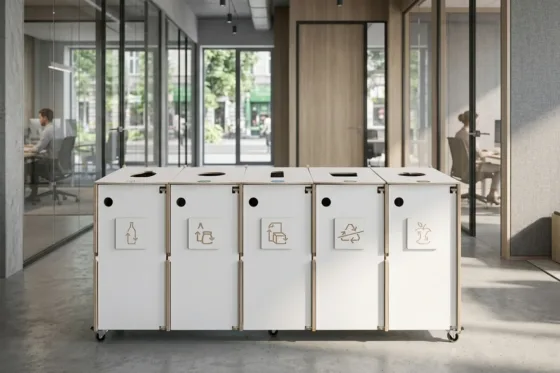
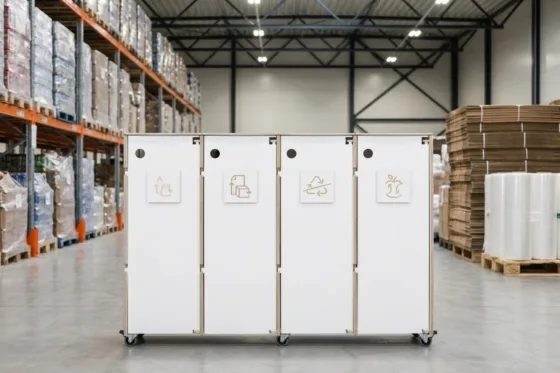
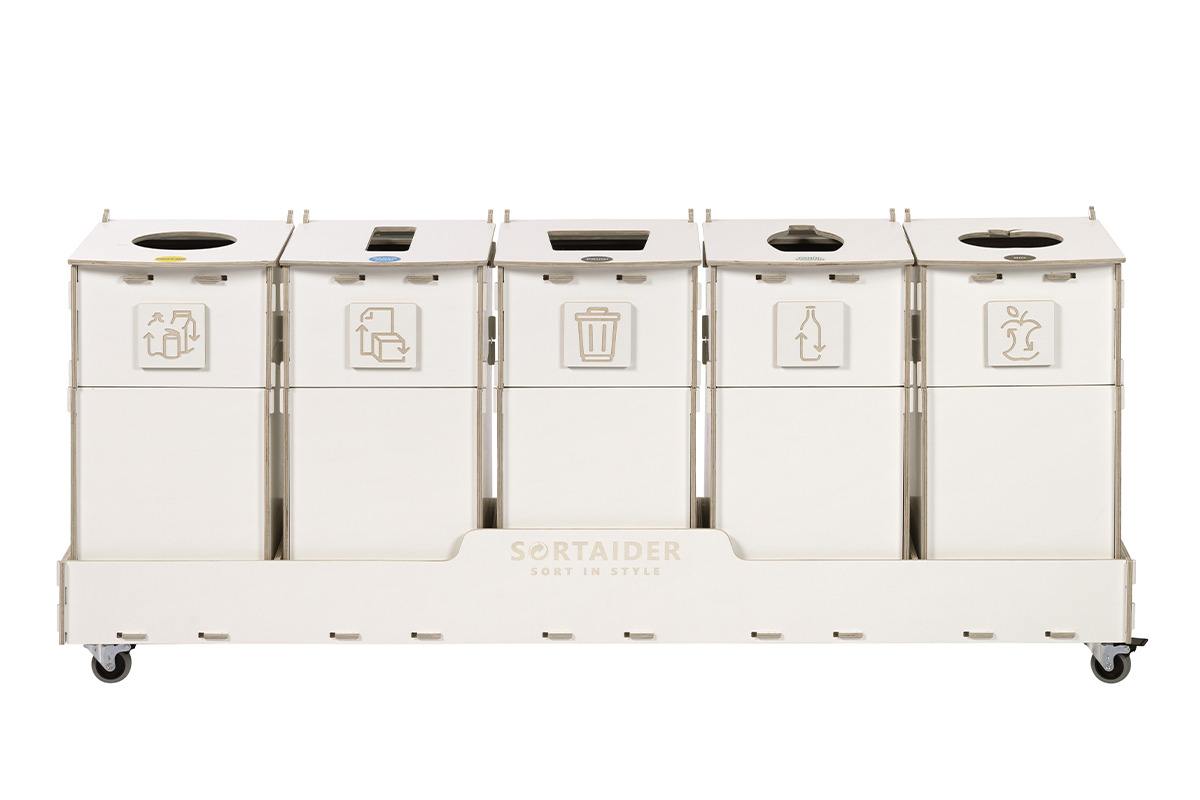
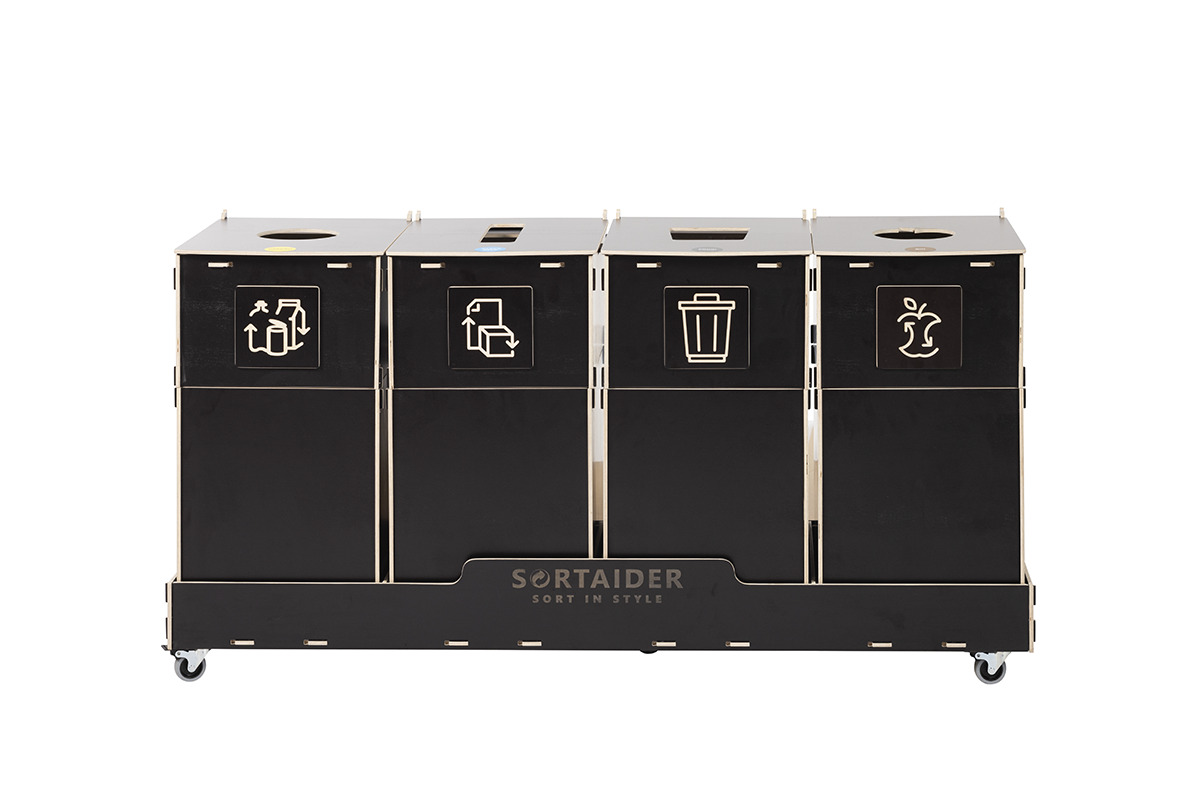
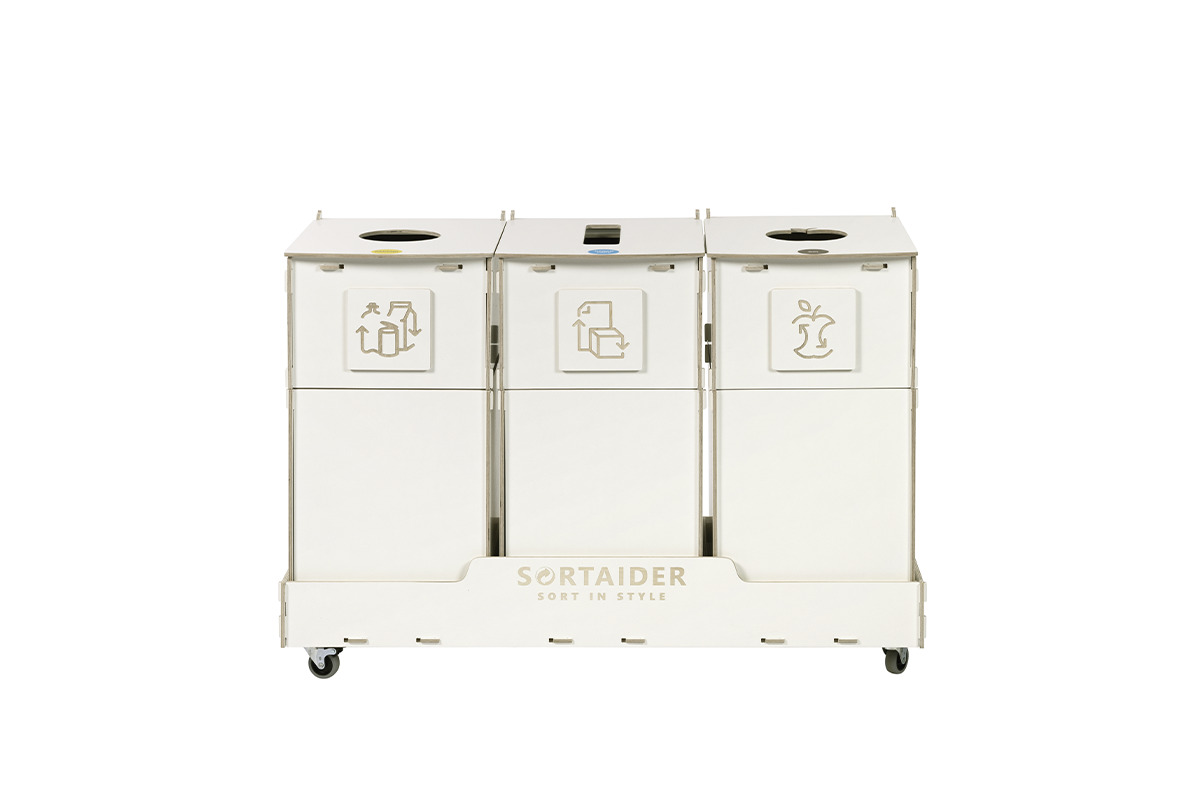
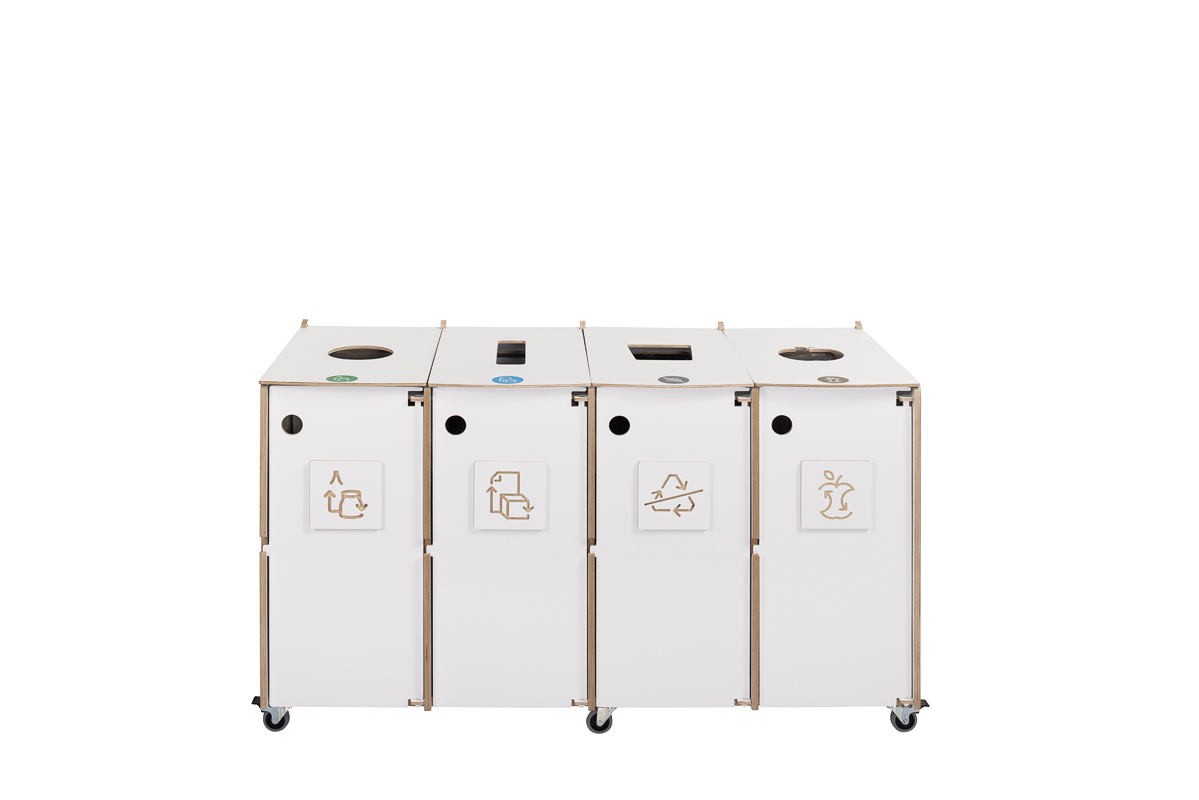
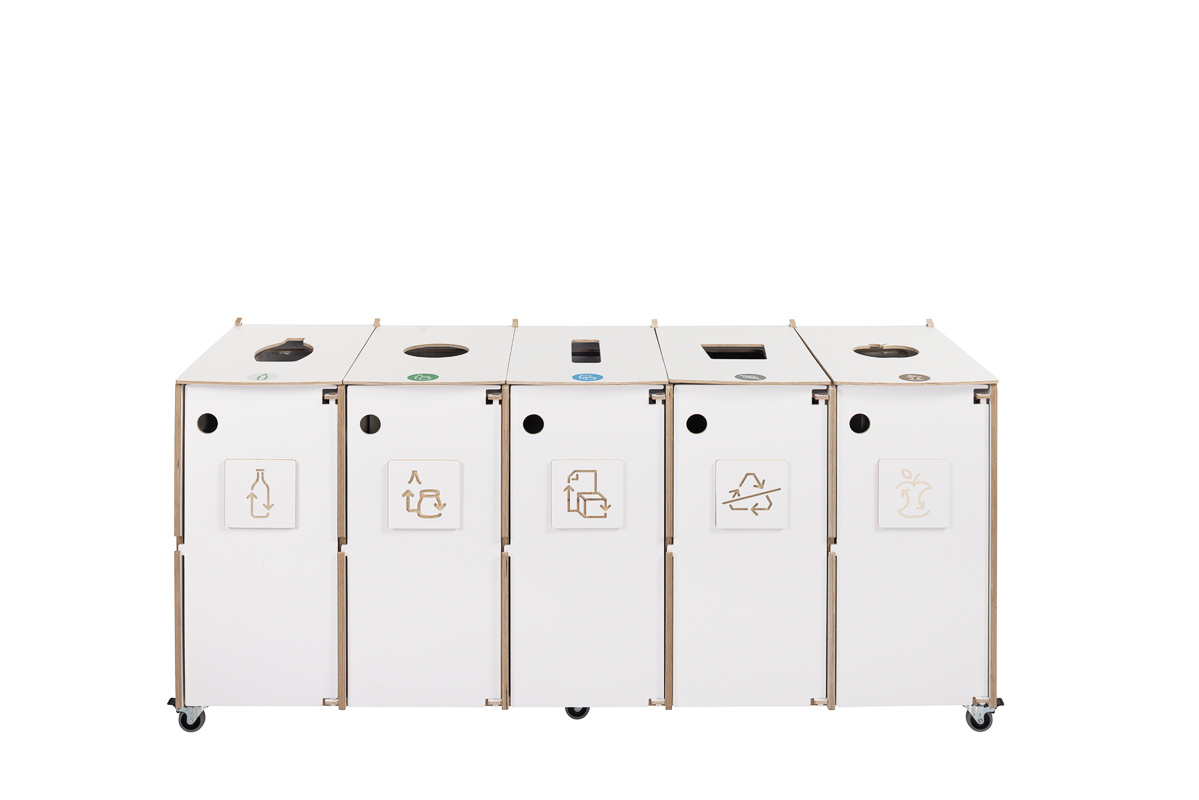
In the Baltic region, specific thresholds apply; Estonia requires separate bio-waste collection if your site generates more than 10kg per day. To meet these varying standards, operators should implement multi-compartment recycling bins that support three to five separate streams. This modular approach ensures that your sorting capacity can adapt as your member base grows.
Strategic Placement and Accessibility
Proximity is the most significant driver of recycling success in any office. Research indicates that strategic bin placement boosts participation by up to 50%. In a coworking layout, you should replace individual deskside bins with centralized recycling hubs in high-traffic corridors.
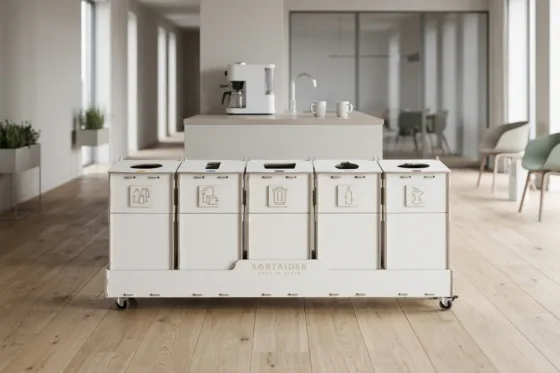
Effective stations should be located in specific zones to maximize impact. Kitchenettes and coffee stations should prioritize bio-waste and packaging, while printer rooms must focus on paper and cardboard collection. Main hallways and entrances are ideal for recycling bins for high-traffic zones that handle residual waste. Centralizing these points also streamlines the workflow for cleaning staff, allowing them to focus on high-capacity stations rather than emptying hundreds of small bins.
Overcoming Member Apathy with Visual Cues
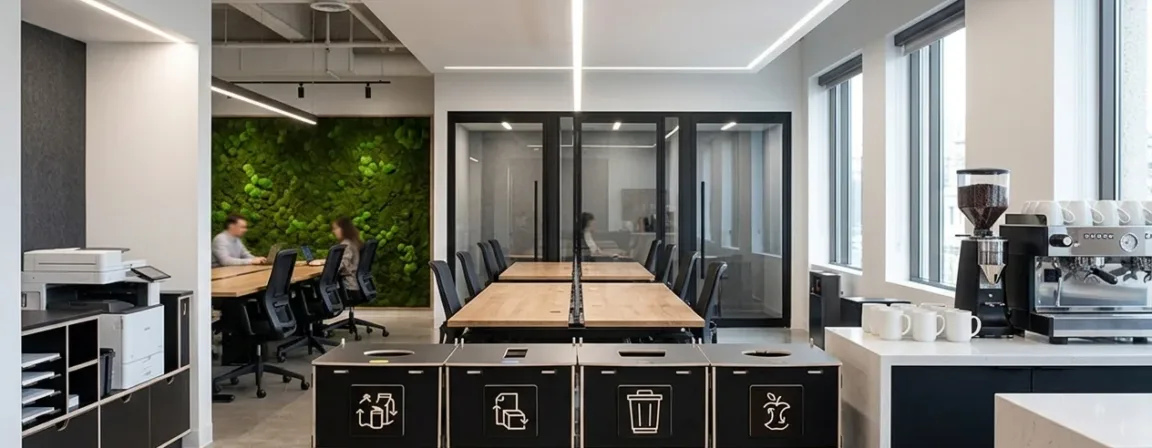
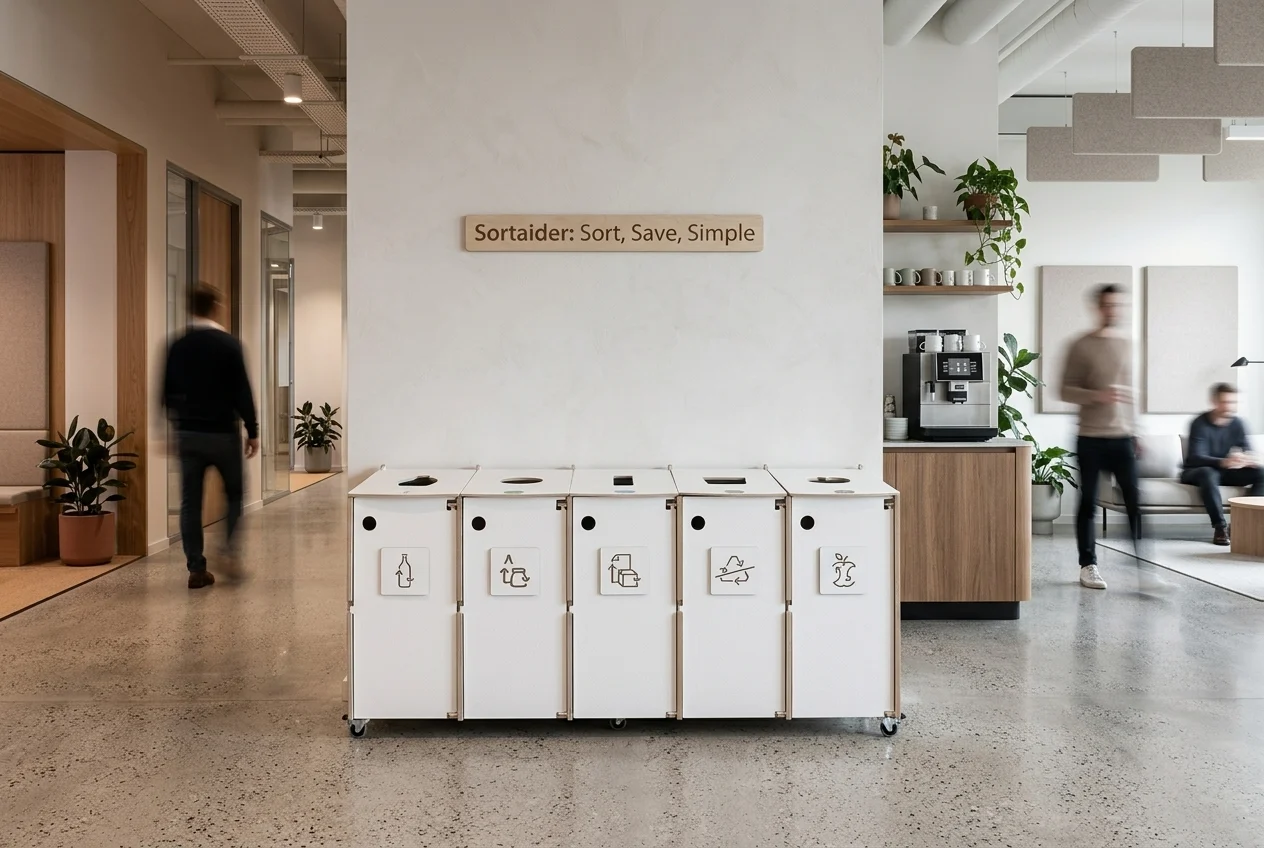
Coworking spaces house professionals from diverse companies and backgrounds, making clear communication essential. Relying on text-heavy labels often leads to contamination, which is costly. Most facilities will reject a load if contamination exceeds 3% to 5%. Using clear visual icons and pictograms can reduce sorting errors by up to 40% in multilingual European workplaces.
One of the most critical rules to communicate is the “Pizza Box” rule: only clean, ungreased cardboard is recyclable. Greasy portions must be diverted to residual waste to prevent contaminating an entire batch of paper. By using consistent color-coding and intuitive symbols throughout the entire facility – from the lounge to the dedicated office wings – you help members build sustainable habits through repetition.
Managing Specialty Waste: E-Waste and Batteries
Shared workspaces often generate “hidden” waste, such as exhausted batteries and small electronics from member devices. Lithium-ion batteries and consumer electronics should never go into general recycling bins due to fire risks and hazardous components. These items require dedicated collection points and must be brought to specialized electronics recyclers or hazardous waste facilities.
Establishing a clear protocol for e-waste not only keeps your facility safe but also helps your space align with green office certification standards. This demonstrates to current and prospective members that your brand prioritizes environmental health and safety, potentially boosting employee health and satisfaction scores.
Maintaining Hygiene and Aesthetics
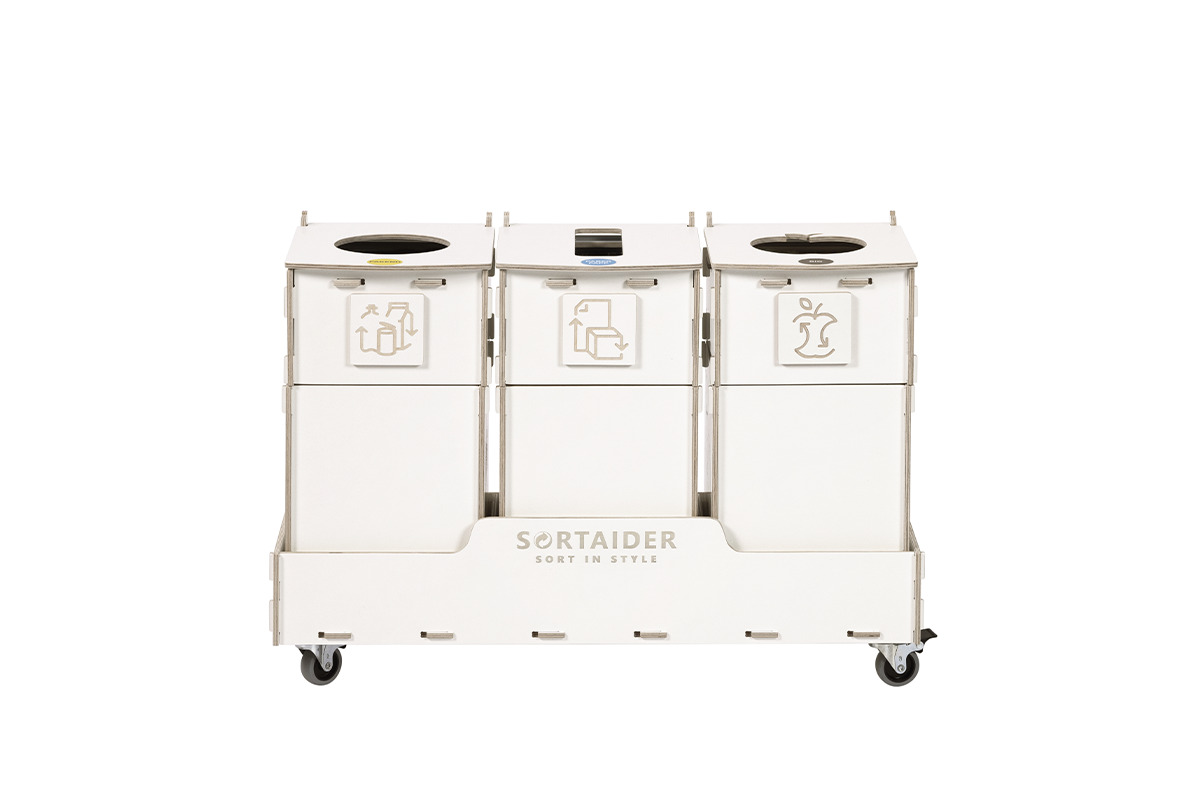
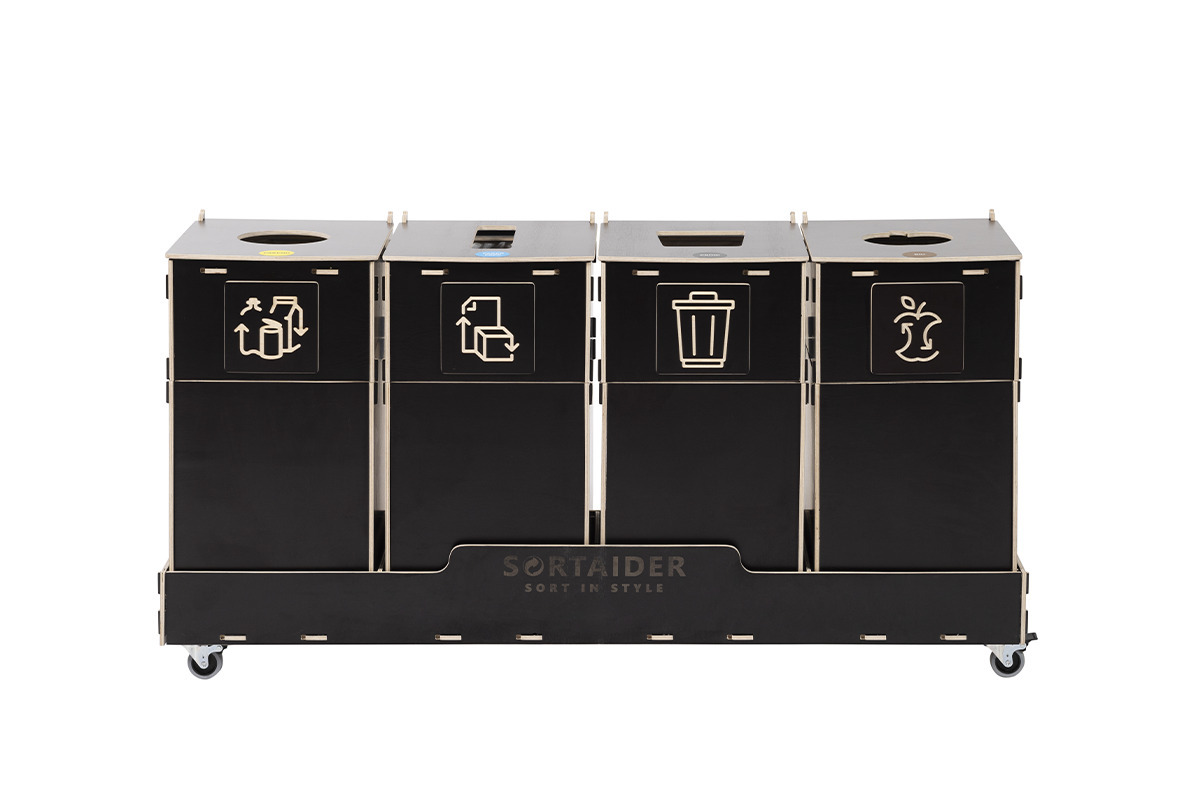
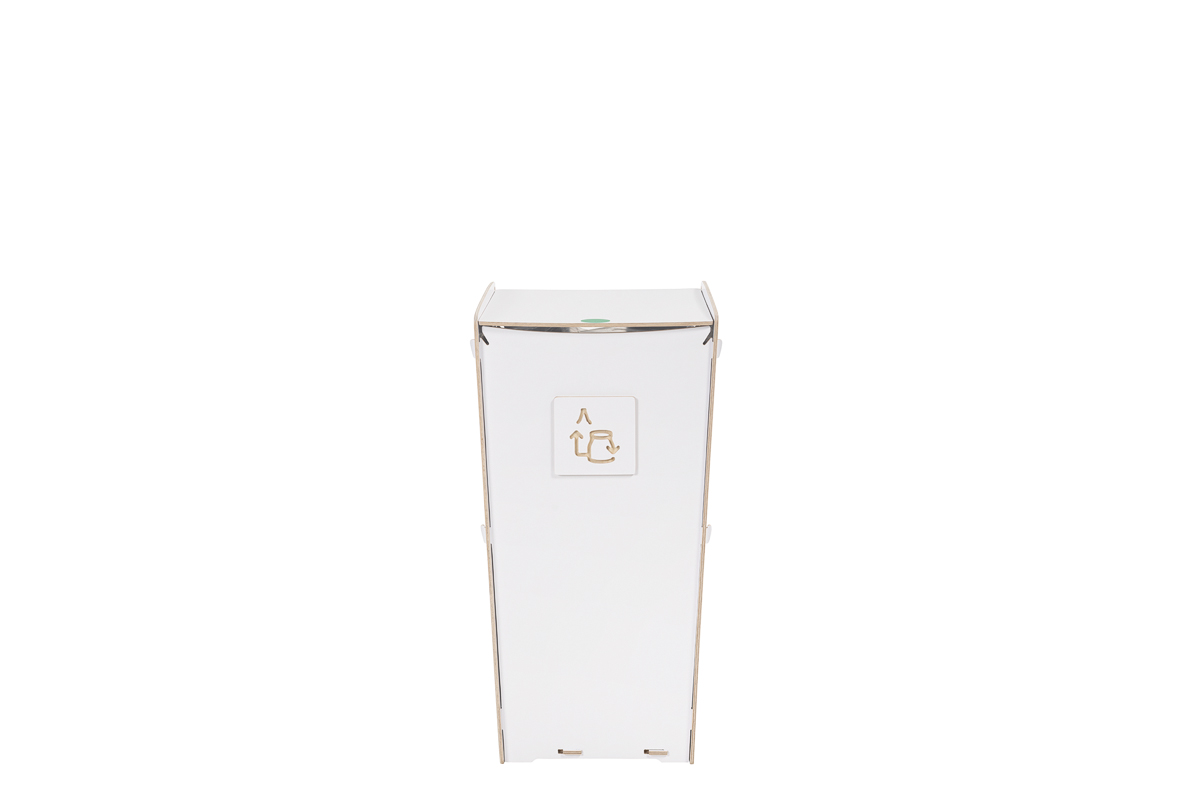
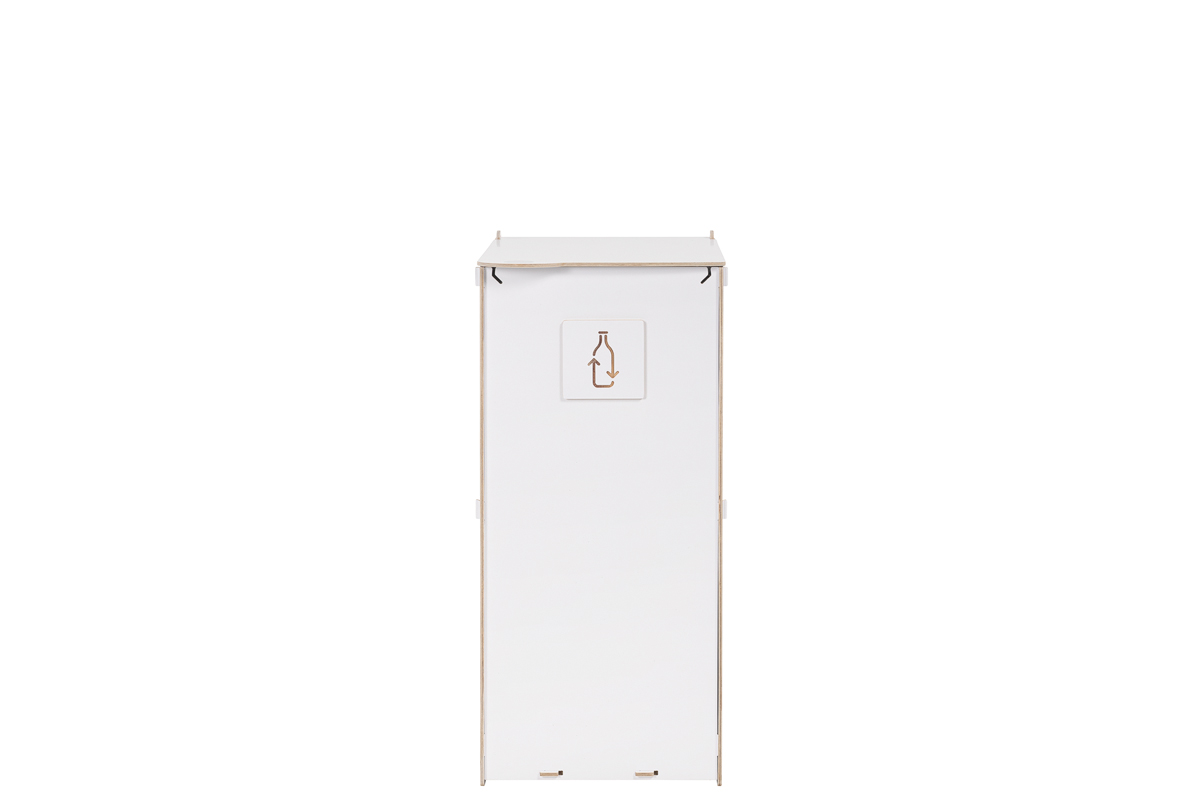
A waste system should never compromise the professional aesthetic of a premium coworking brand. Traditional plastic or metal bins can be noisy and difficult to clean. Choosing furniture-grade, moisture-resistant plywood solutions offers a durable alternative that integrates into modern interior designs. These sustainable materials, such as renewable birch plywood, can result in 2 to 4 times lower CO2 lifecycle emissions compared to plastic or metal.
For high-volume areas, consider systems that offer continuous bag solutions to ensure bins do not overflow during peak hours. High-quality designs, such as Red Dot Award-winning stations, provide a hygienic structure built to withstand daily professional use while maintaining the professional look of your shared environment.
Moving Toward a Circular Workspace
Effective waste management is a continuous process of auditing, adjusting, and educating. By moving beyond a single general waste bin and implementing a structured office waste management plan, you reduce disposal fees, improve your environmental footprint, and provide a cleaner space for your members.
To begin optimizing your facility’s waste flow, start by identifying the specific streams your members generate most. Select a modular sorting station that fits your space’s aesthetic and provides the capacity needed to handle daily volumes without compromising on design.