Did you know that the average hotel guest generates approximately one kilogram of waste every single night? For a 100-room property, this translates to over 36 tonnes of material annually, representing both a significant environmental burden and a massive opportunity for operational cost recovery through smarter diversion and sorting.
The Economic Reality of Hospitality Waste
In the hospitality sector, waste management has transitioned from a sustainability initiative to a critical operational lever. Research indicates that hotels can achieve disposal cost savings of 37% to 50% simply by diverting recyclable materials away from landfills. For instance, the Westin Boston reported a 37% drop in waste costs within six months after implementing a food donation and diversion program.
Industry benchmarks suggest a 30-50% diversion rate is now standard, while high-performing properties reach 60% or higher. Achieving these targets requires a sophisticated, multi-stream system that addresses the unique needs of different hotel zones. With organic waste accounting for nearly half of a hotel’s waste stream, implementing a robust separation strategy directly impacts your bottom line by reducing expensive landfill tipping fees.
Strategic Sorting: Front-of-House vs. Back-of-House
Effective waste management requires a tailored approach where equipment and processes are matched to the specific demands of the environment. The requirements for a guest-facing lobby differ significantly from the high-volume, moisture-heavy conditions of a commercial kitchen.
Public Spaces and Guest Experience
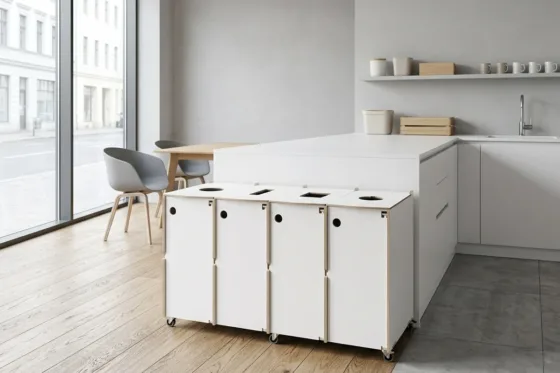
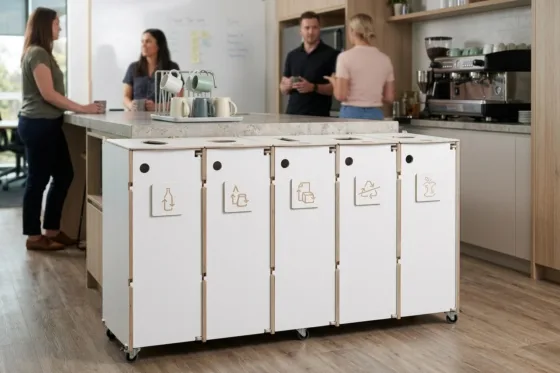
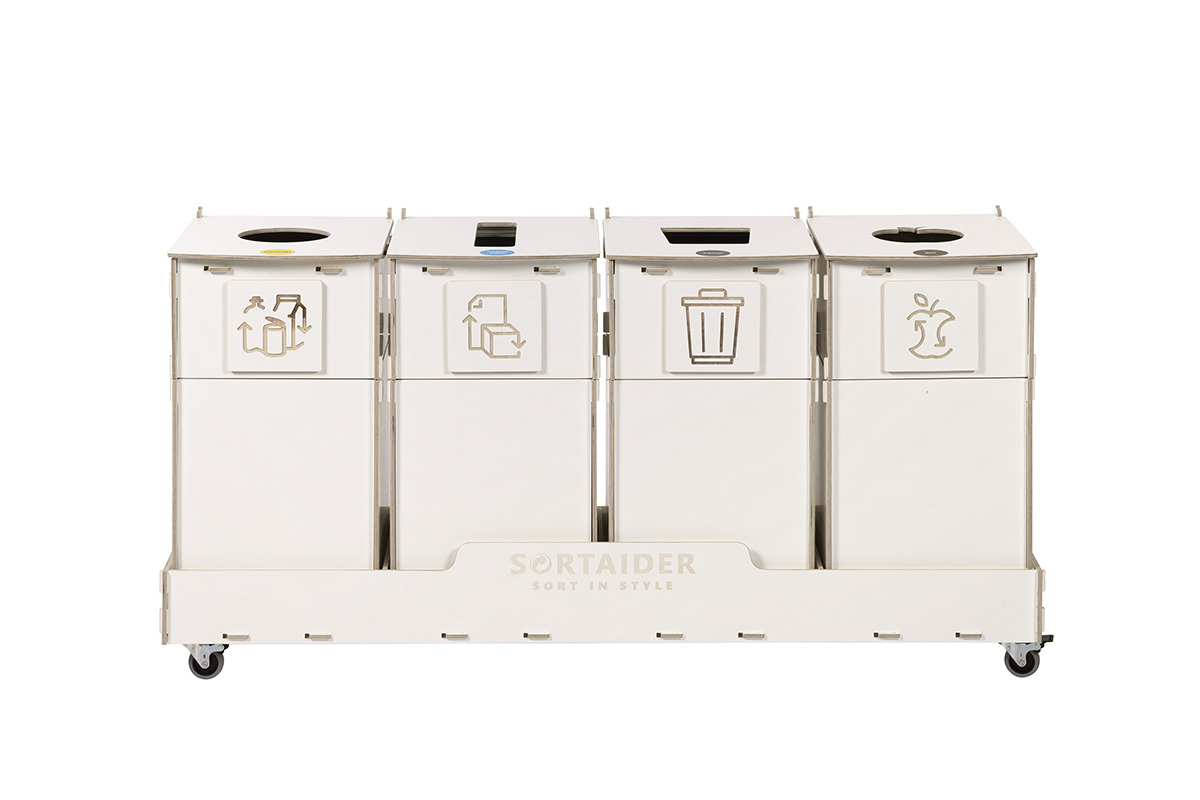
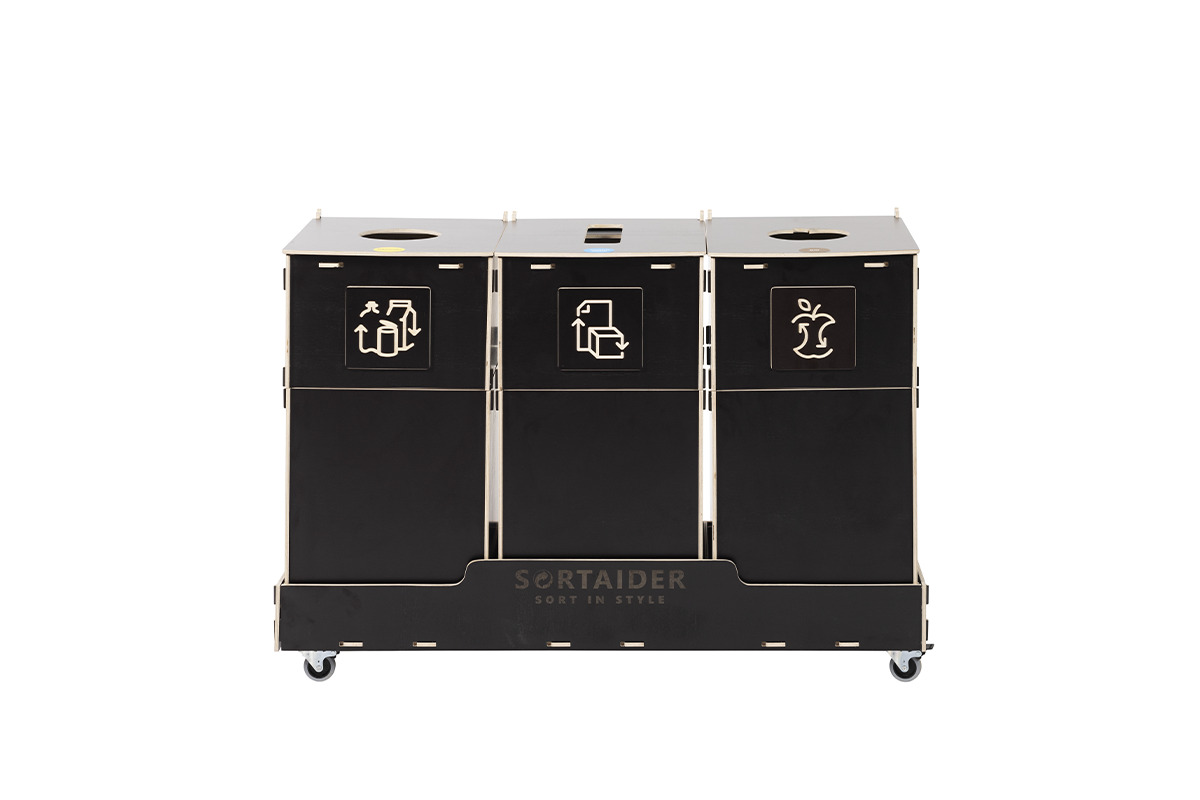
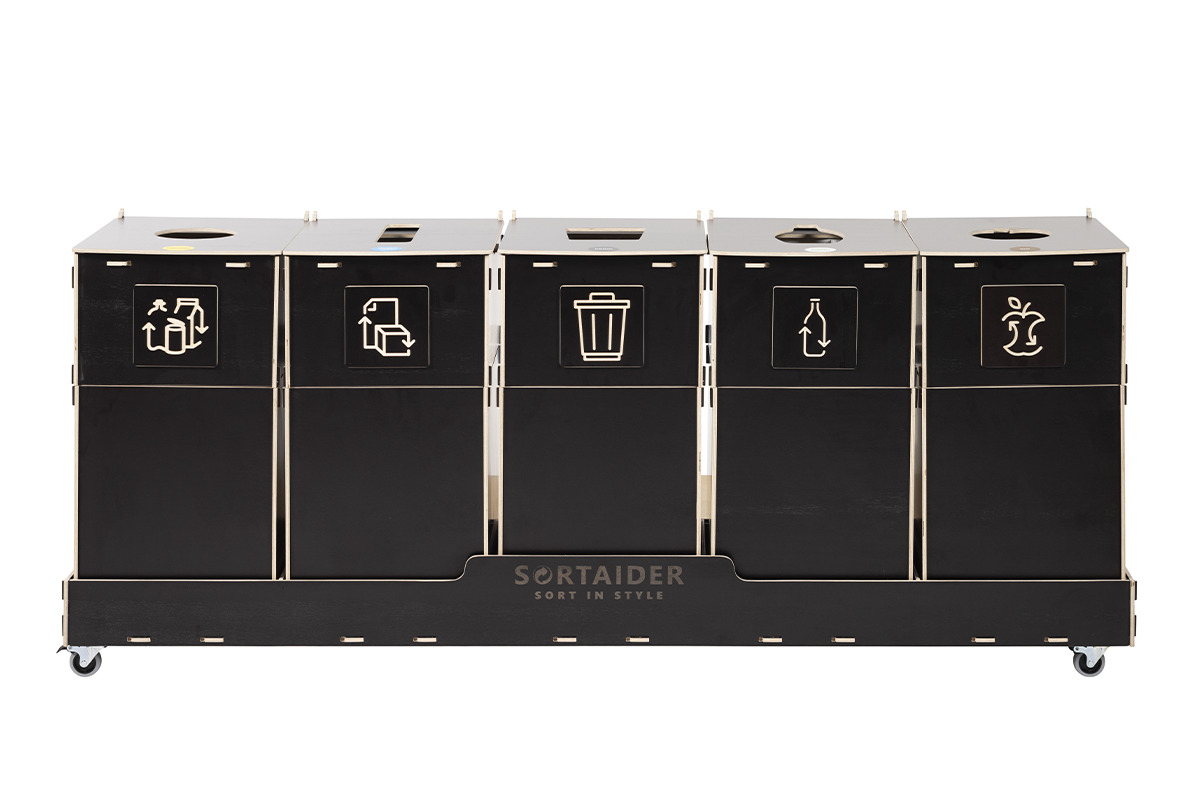
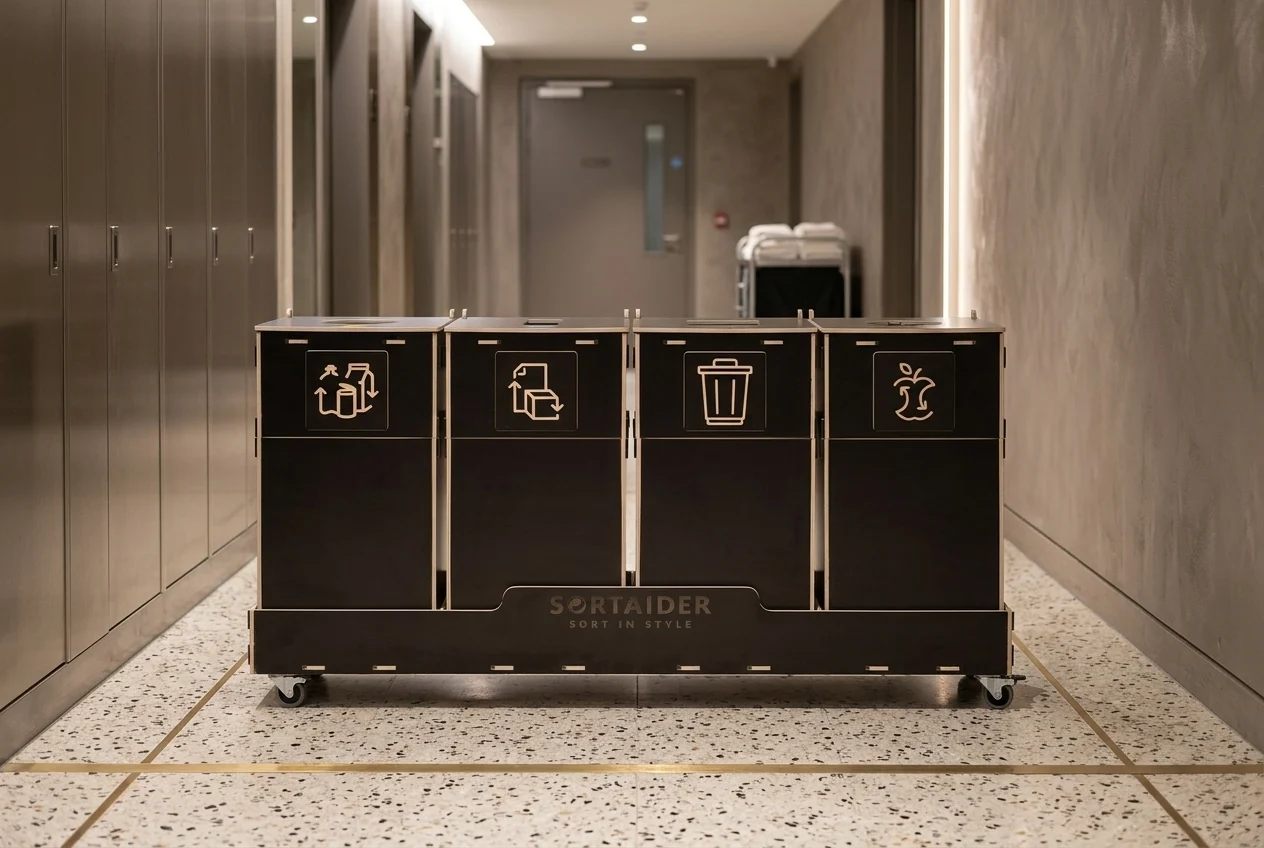
In lobbies, hallways, and breakfast areas, aesthetics are as vital as functionality. Guests are significantly more likely to sort correctly when bins are intuitive and visually integrated into the interior design. Utilizing recycling bins that feature clear pictograms and a minimalist Nordic design ensures that sustainability efforts enhance the guest experience rather than detracting from it.
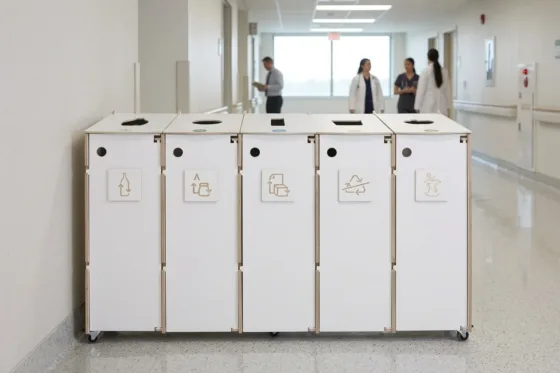
For high-traffic areas where floor space is limited, the Ecolong series provides a highly versatile solution. It is the first system globally to offer a 3-in-1 configuration, allowing facility managers to choose between continuous bag solutions, standard bags, or bag-free collection within a compact footprint that supports up to five separate waste streams.
Back-of-House and Kitchen Operations
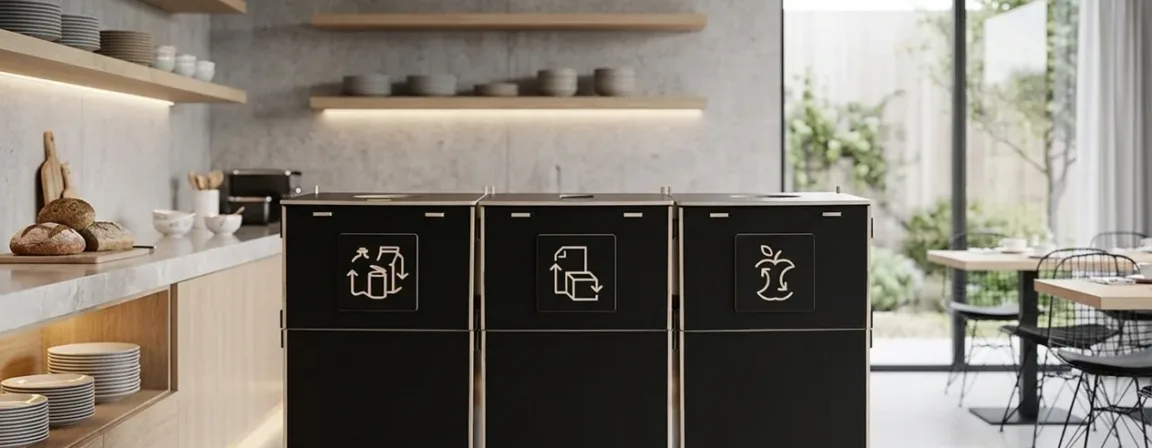
The kitchen is the engine of hotel waste generation, with food and organics often comprising 38-50% of the total volume. To prevent cross-contamination, facility managers should implement “trio-bin” systems that clearly separate organics, dry recyclables, and general waste. Daily audits in these areas can drastically reduce contamination rates, with some hotels cutting landfill volume by 96% through strict source separation.
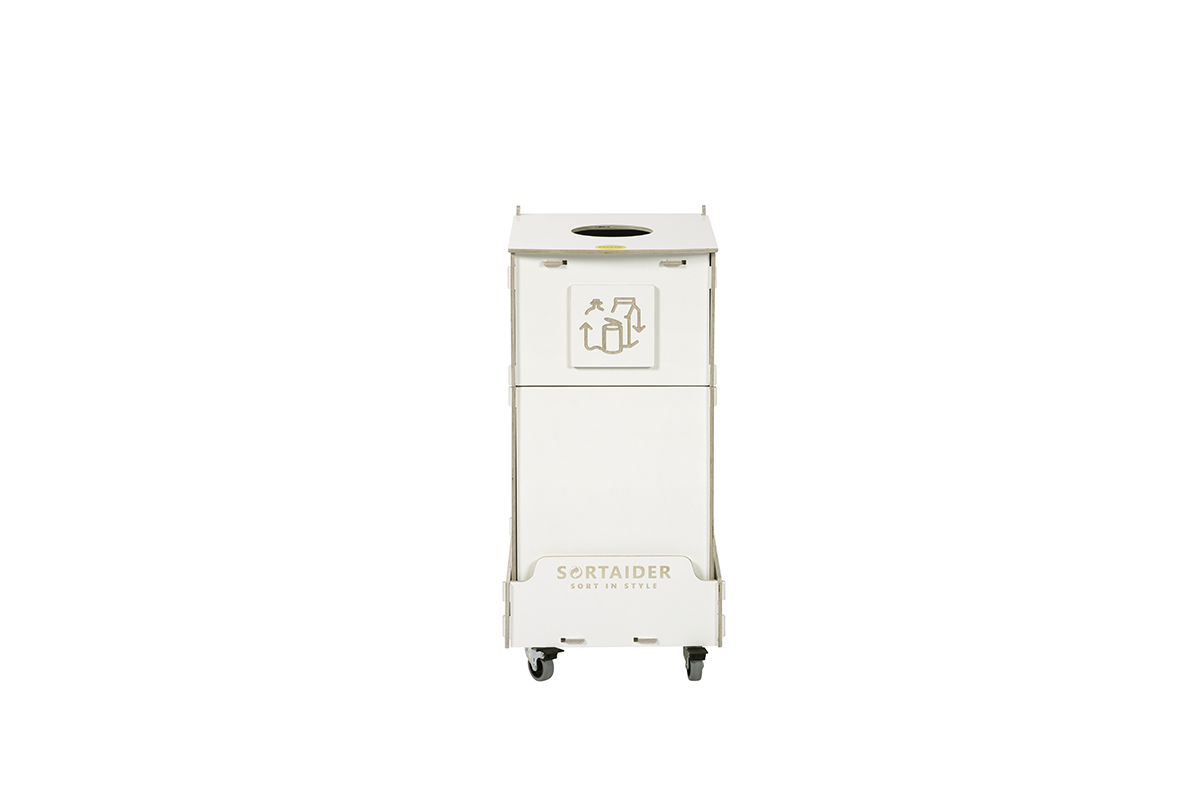
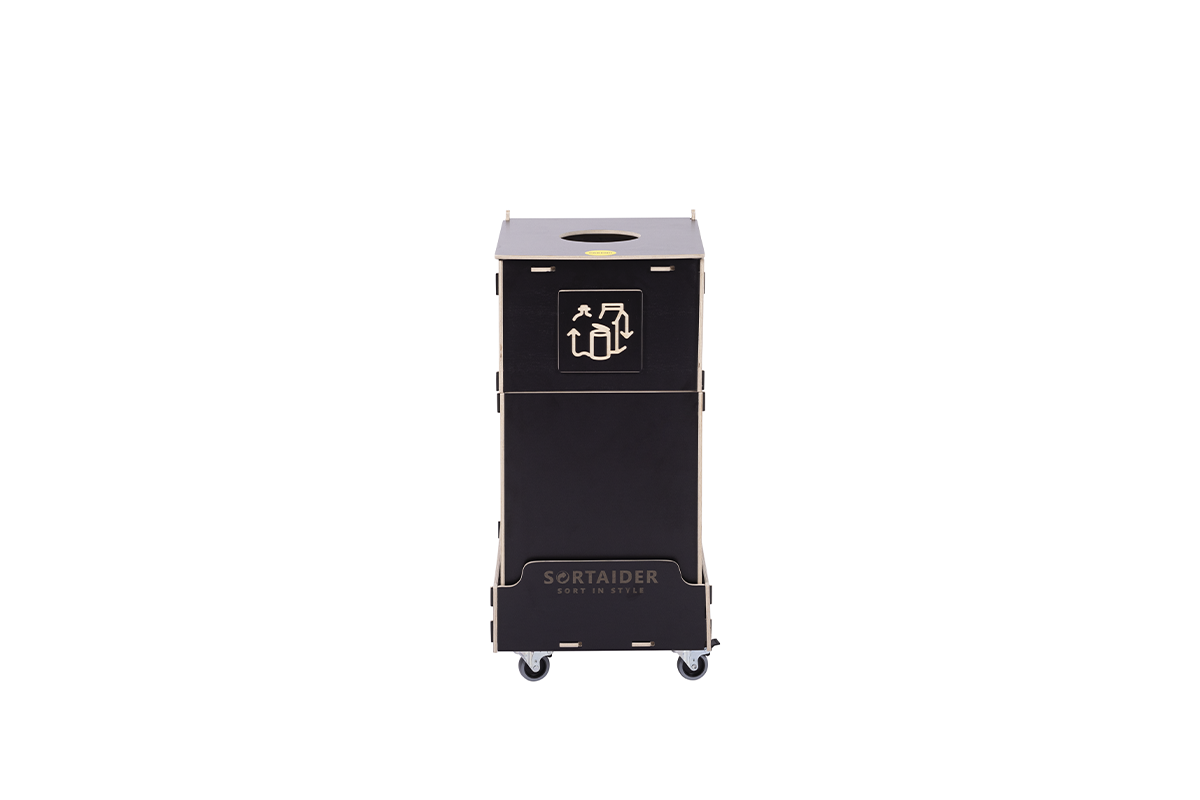
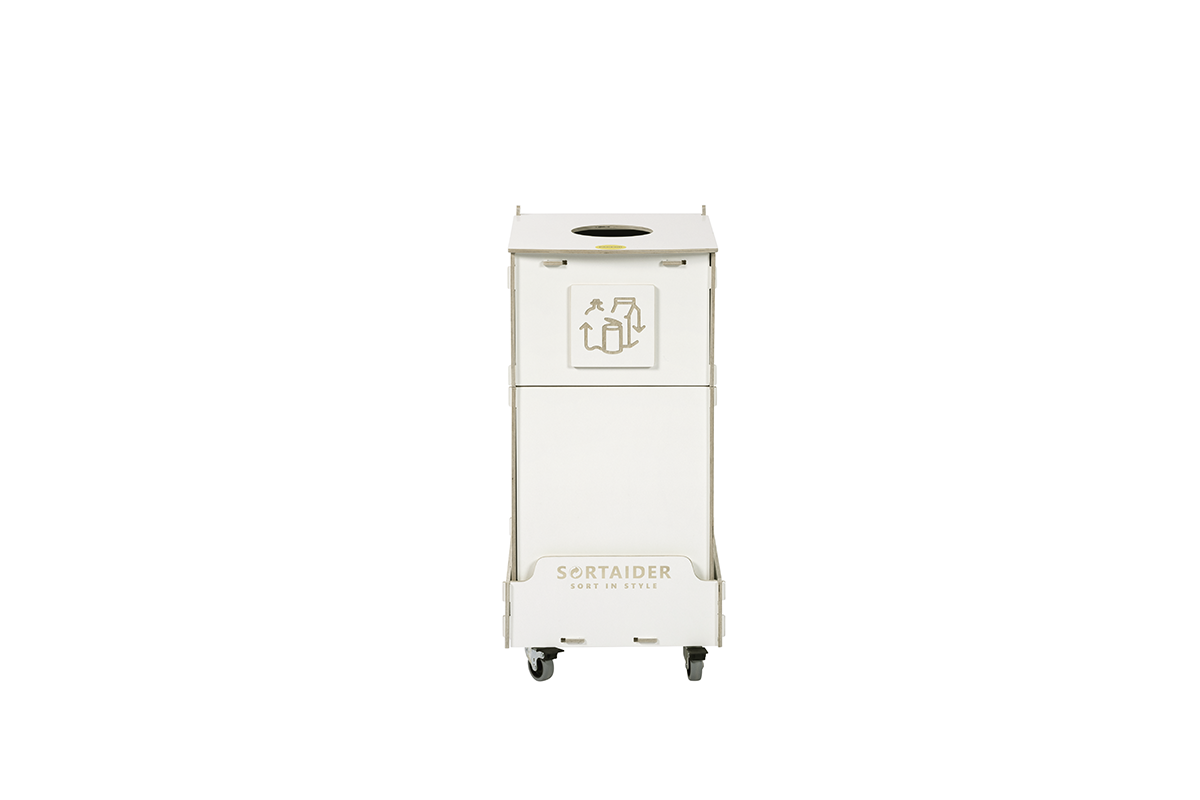
Because moisture and heavy use are constant factors in service environments, the Sorta series is specifically engineered for durability. Crafted from moisture-resistant laminated plywood rather than standard particle board, these units are built to withstand professional use. Furthermore, this plywood construction is significantly more environmentally friendly than plastic or metal alternatives, offering up to 4x lower CO2 lifecycle emissions.
Compliance and Regulatory Standards
Navigating the legal landscape is essential for modern hospitality operators. While the EU has established strict separate collection mandates, local regulations vary significantly across different markets. In many European regions, mandatory organics separation is now a legal requirement to prevent food waste from generating methane in landfills.
- Organics Mandates: Stricter collection laws are being adopted in markets like the Nordics and Baltics, requiring separate streams for all food scraps.
- Single-Use Plastic Bans: Numerous European markets have phased out miniature toiletries in rooms with over 50 guestrooms, pushing hotels toward bulk dispensers.
- FOG (Fats, Oils, and Grease): Strict local laws in cities like New York or London govern how used cooking oil is handled to prevent sewage blockages.
Selecting waste bins that meet these professional hygiene standards while utilizing renewable materials helps align your facility with both local law and corporate social responsibility (CSR) goals.
Operational Tactics for Facility Managers
To move toward a zero-waste goal, facility managers should begin with a comprehensive waste audit to track key performance indicators such as diversion percentages and waste-per-guest-night. Identifying that plastics make up roughly 12% of your stream or that glass is under-recycled allows for targeted bin placement. Because hotel layouts frequently change for events or seasonal reconfigurations, choosing Sorter series units with lockable wheels provides the necessary modular flexibility for effortless mobility.
Staff training remains the most critical component of any waste strategy. Housekeeping and kitchen staff are the primary enforcers of diversion; providing them with bilingual instructions and clear visual cues on all back-of-house sorting stations ensures consistency. Simultaneously, focusing on source reduction – such as working with suppliers to reduce packaging or transitioning to bulk amenities – prevents waste from entering the property in the first place.
-
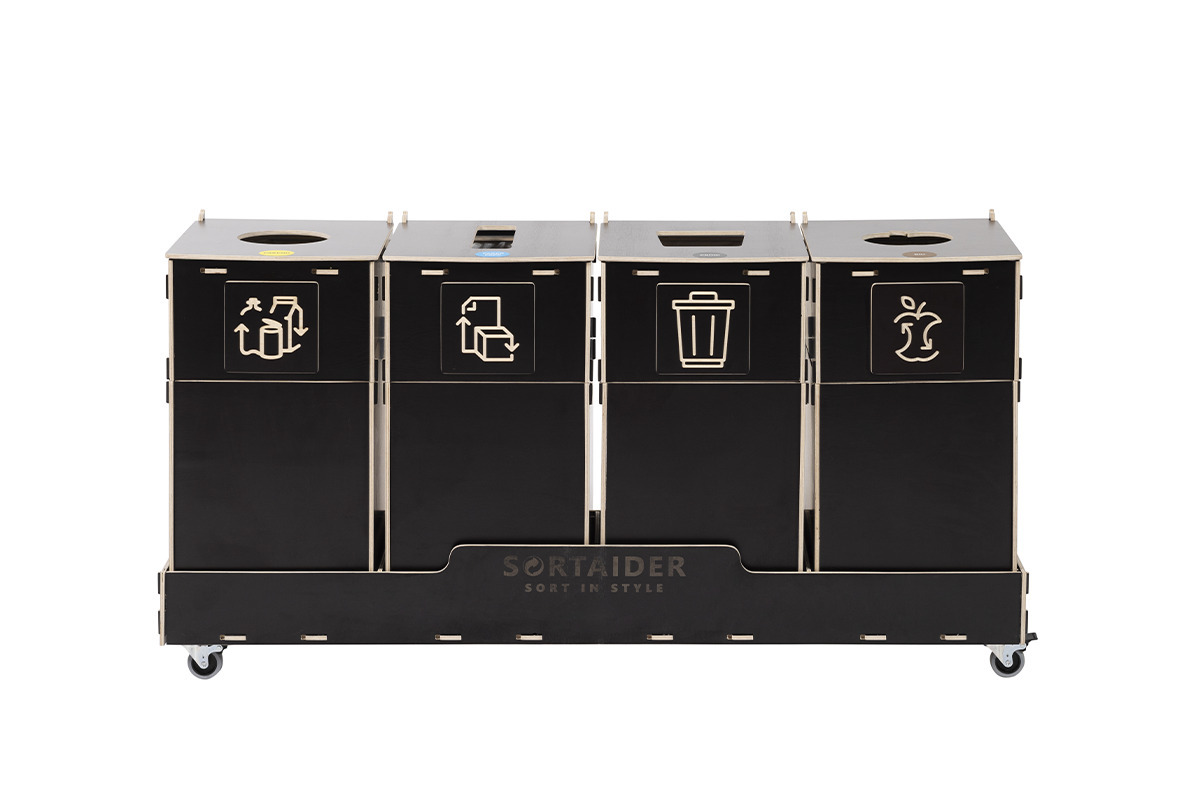
Recycling bin Sorter 40B4
4 types of waste 4 x 40 L1 289,60 € (incl. 24% VAT)1 040 € (excl. VAT) -
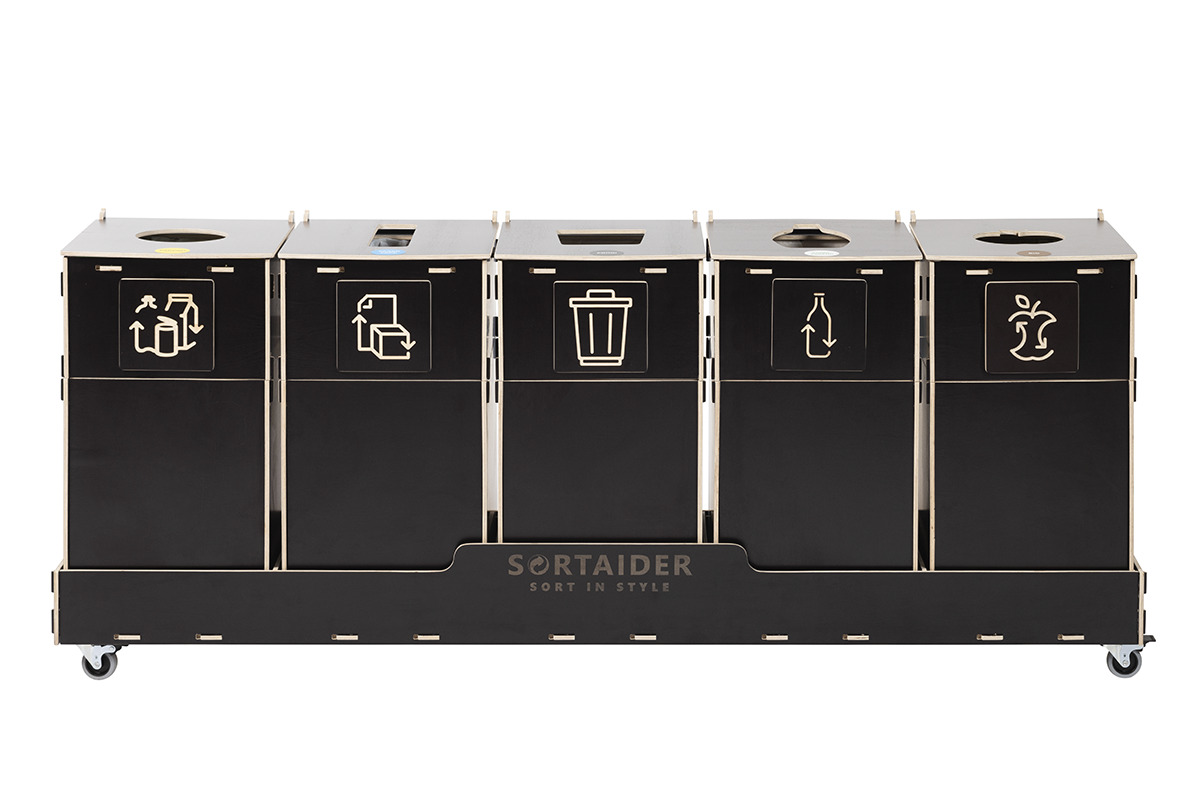
Recycling bin Sorter 40B5
5 types of waste 5 x 40 L1 525,20 € (incl. 24% VAT)1 230 € (excl. VAT) -
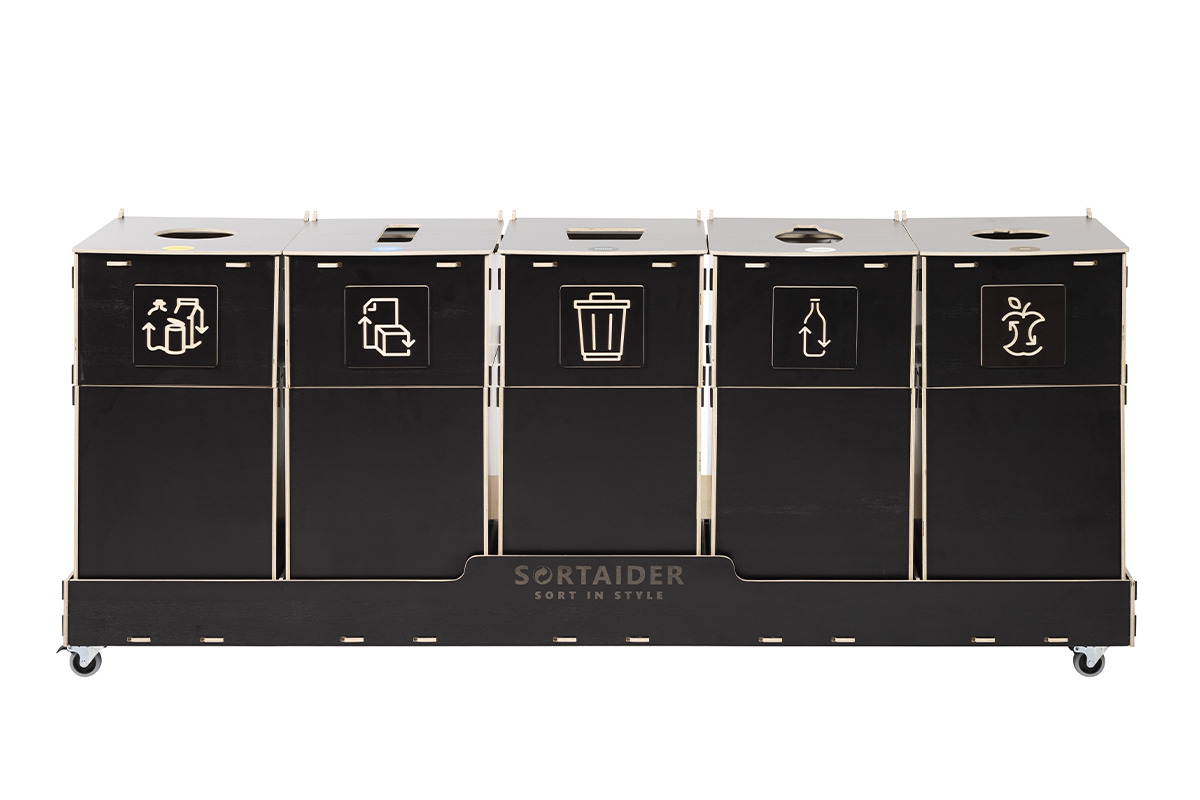
Recycling bin Sorter 60B5
5 types of waste 5 x 60 L1 785,60 € (incl. 24% VAT)1 440 € (excl. VAT) -
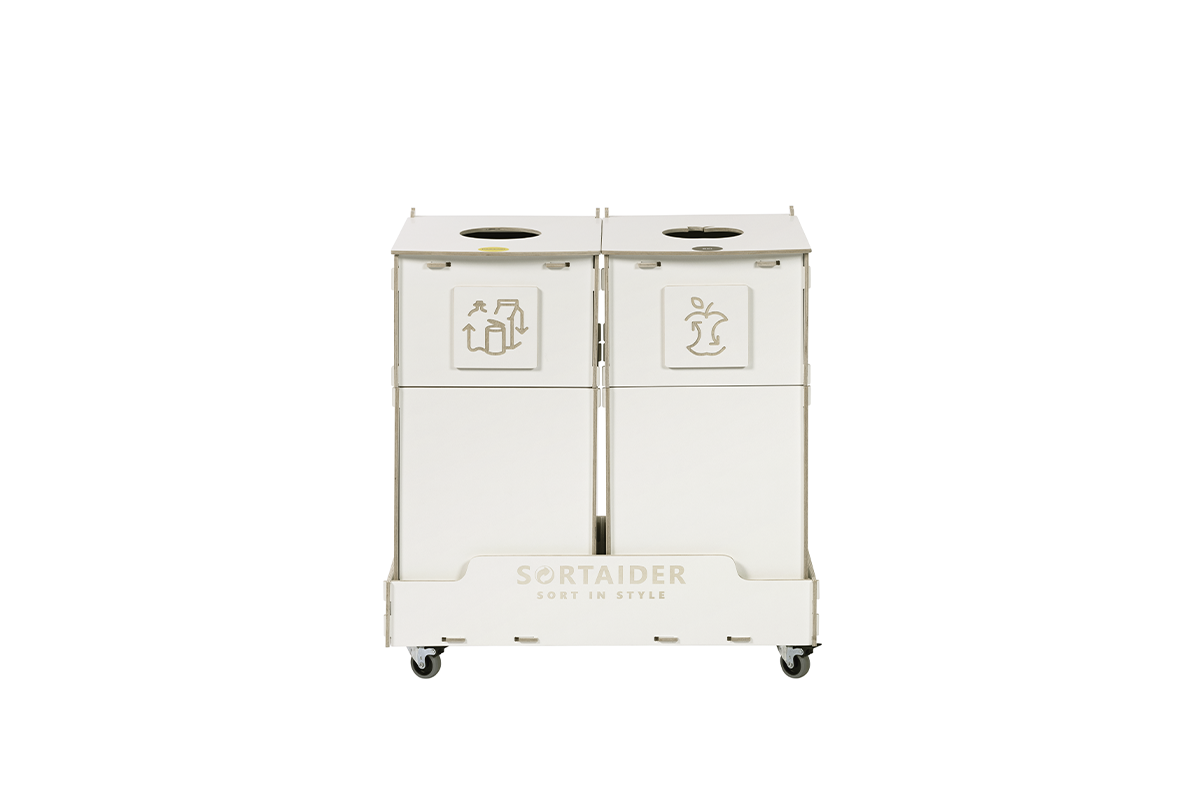
Recycling bin Sorter 60W2
2 types of waste 2 x 60 L793,60 € (incl. 24% VAT)640 € (excl. VAT)
By integrating high-capacity, durable sorting solutions into your daily operations, you can significantly reduce your environmental footprint while capturing substantial utility and disposal savings. Transitioning to a professional waste management system not only ensures regulatory compliance but also signals a commitment to quality and sustainability that modern guests increasingly expect. Explore our full range of award-winning, sustainable sorting solutions to find the right fit for your property’s specific needs.