
Did you know the average hotel guest generates one kilogram of waste every single night? For a 100-room property, this translates to over 36 tonnes of material annually, turning potential profit into disposal fees and environmental liability.
Audit Your Streams to Identify Inefficiencies
You cannot manage what you do not measure. A systematic waste audit for offices and hospitality venues identifies precisely where your money is being lost. By tracking your diversion rate – the percentage of waste successfully kept out of landfills – you can identify high-volume areas and right-size your collection services. In many European markets, aligning your service frequency with your actual output can reduce general waste fees by 30% to 50%.
To get an accurate picture of your facility’s output, you should focus your audit on high-traffic zones:
- Commercial kitchens, which act as the engine of hotel waste, often producing volumes where organics comprise up to 50% of the total.
- Lobbies and guest areas, where intuitive sorting systems are vital to encourage guest participation.
- Administrative hubs, where paper and cardboard typically represent the largest and most easily diverted volume.
Tackle the Challenge of Food Waste
Food waste is the most expensive stream in the hospitality industry. Research suggests that the average restaurant wastes between 4% and 10% of the food inventory it purchases, creating a dual financial loss from both the initial procurement and the subsequent disposal costs. Implementing hotel waste management best practices helps you prioritize source reduction and donation.
Regulatory pressure is also increasing across Europe. In Sweden, separate food waste collection became mandatory for all businesses in 2024, while in Estonia, businesses must separate bio-waste if the site generates more than 10kg daily. To meet these workplace recycling regulations, kitchens require high-capacity sorting stations capable of handling heavy organic loads while maintaining hygiene.
Design for Guest and Staff Participation
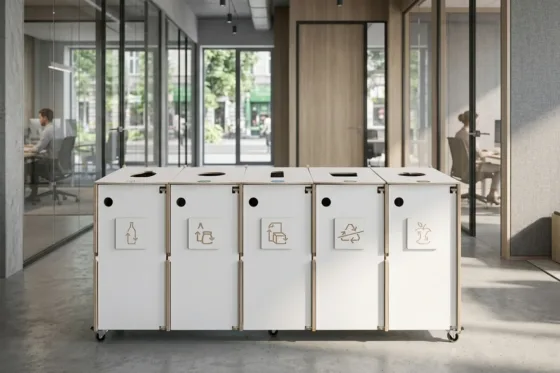
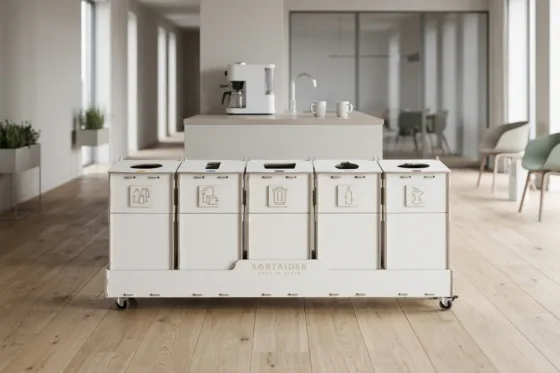
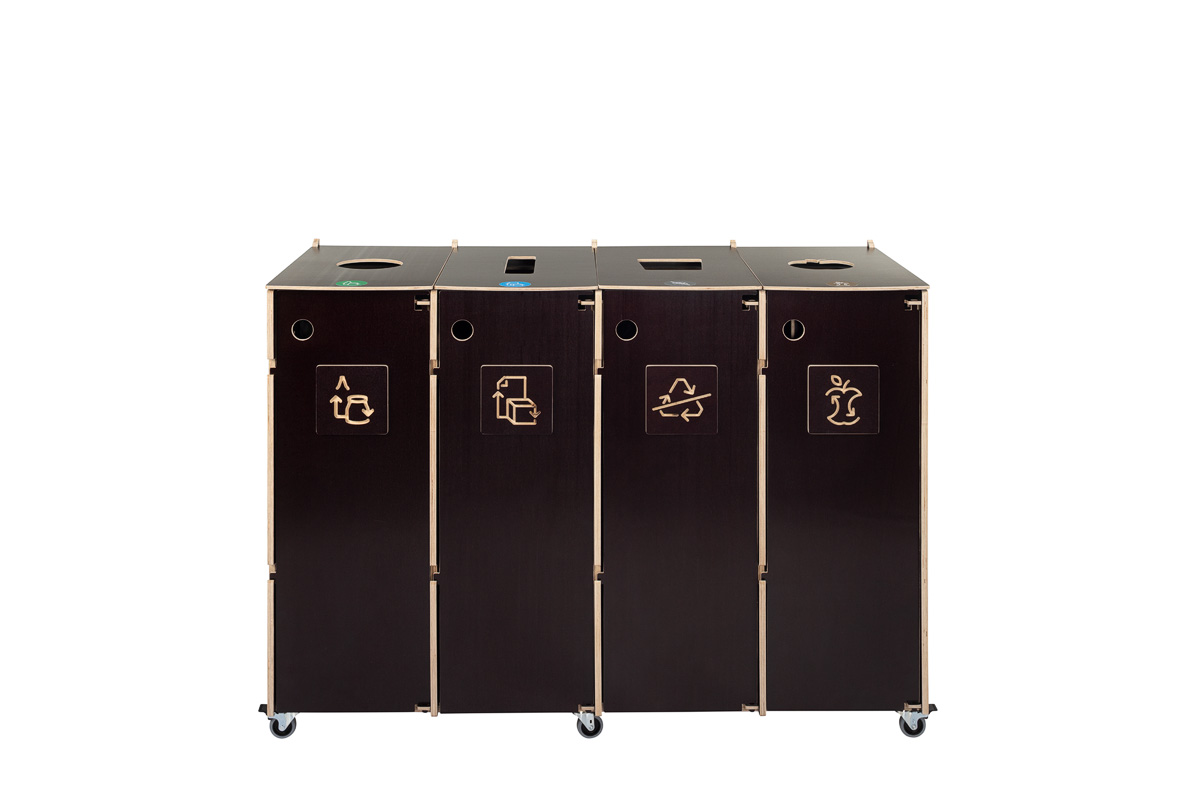
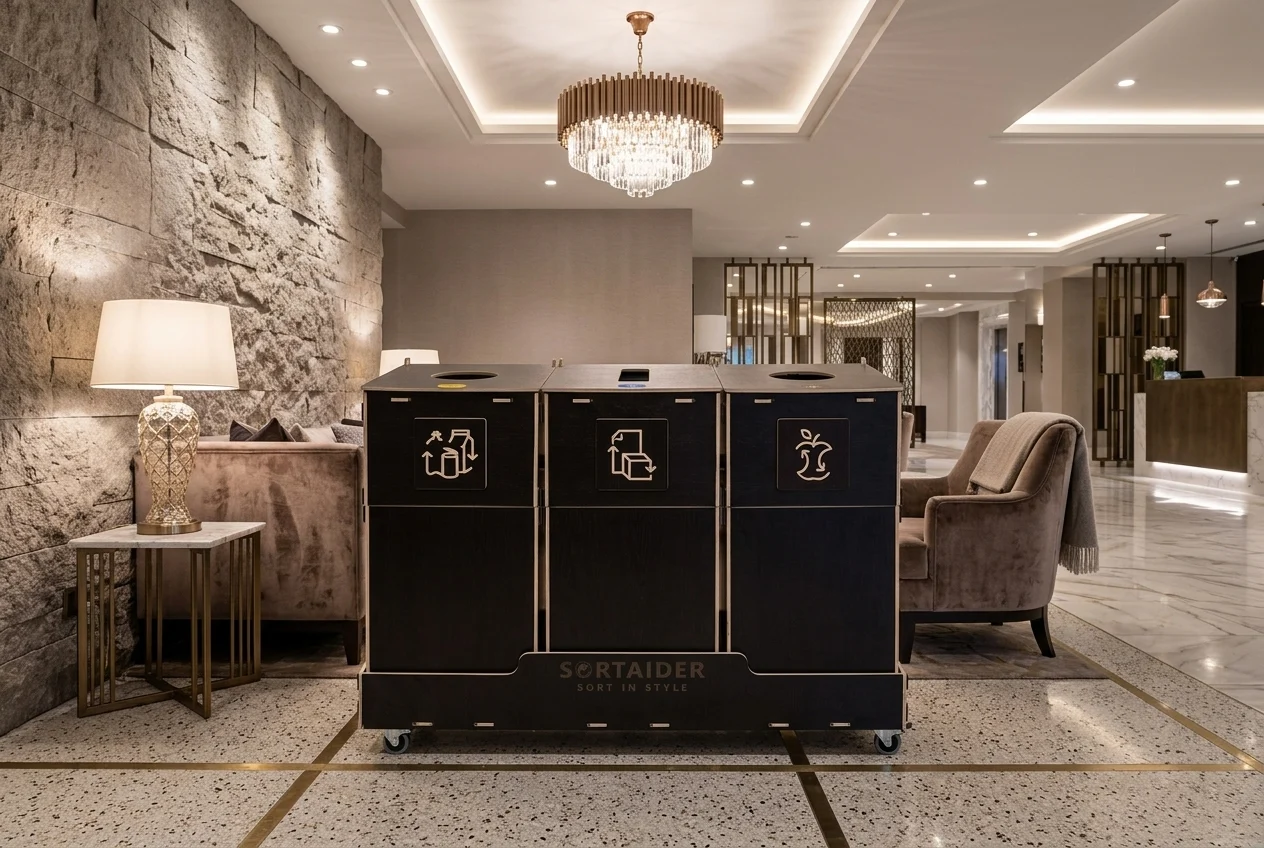
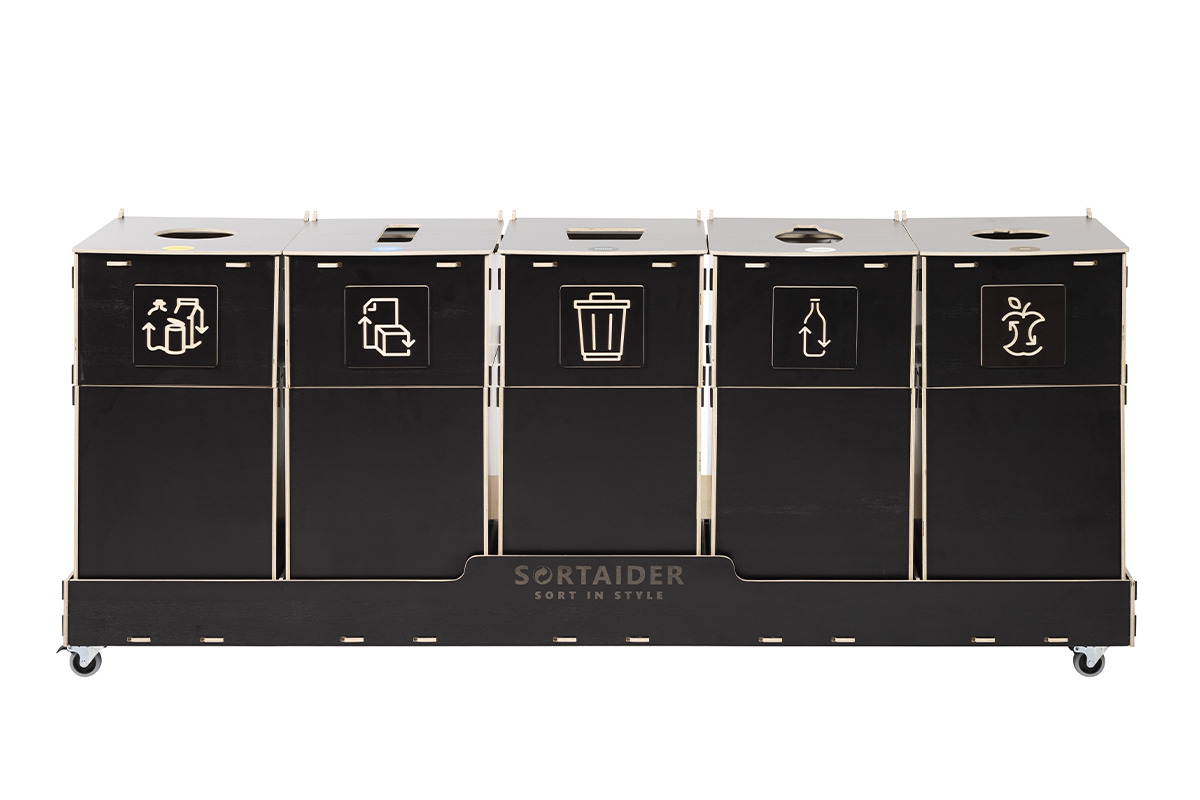
Participation rates depend heavily on proximity and aesthetics. Research shows that strategic bin placement can boost participation by 30% to 50%. In guest-facing areas, your waste strategy must balance functionality with luxury. Guests are significantly more likely to sort correctly when bins are visually integrated into the interior design rather than appearing as a utilitarian afterthought.
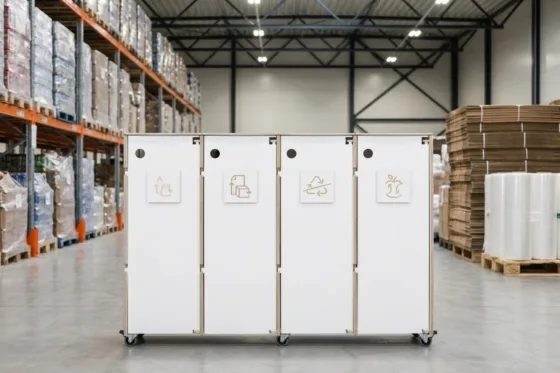
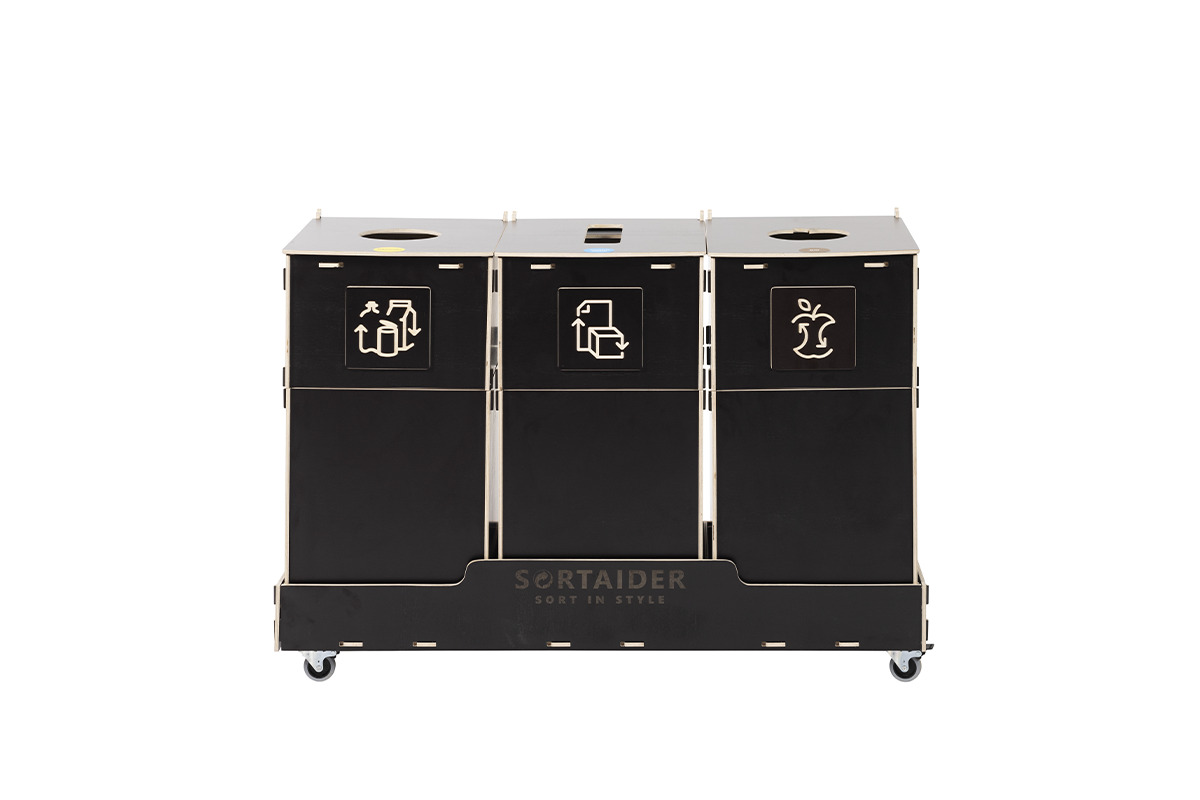
For back-of-house operations, durability and modularity are the primary requirements. Systems like the Recycling Bins Ecolong series offer a versatile 3-in-1 system. This allow staff to choose between continuous bag solutions, standard bags, or bag-free collection for paper within the same unit, adapting to the specific needs of different hotel departments.
Navigate European Regulatory Compliance
The EU Waste Framework Directive is driving a transition toward a circular economy, targeting a 65% municipal waste recycling rate by 2035. Most European hospitality businesses are now legally required to separate paper, metal, plastic, glass, and bio-waste at the source. Navigating these rules requires a comprehensive office waste management plan that accounts for national variations.
- Denmark often requires workplaces to utilize a minimum of four separate bins for compliance.
- Latvia applies Extended Producer Responsibility (EPR) for packaging that exceeds 300kg per year.
- Lithuania utilizes digital registries like APVIS to monitor waste activity and hazardous materials in real-time.
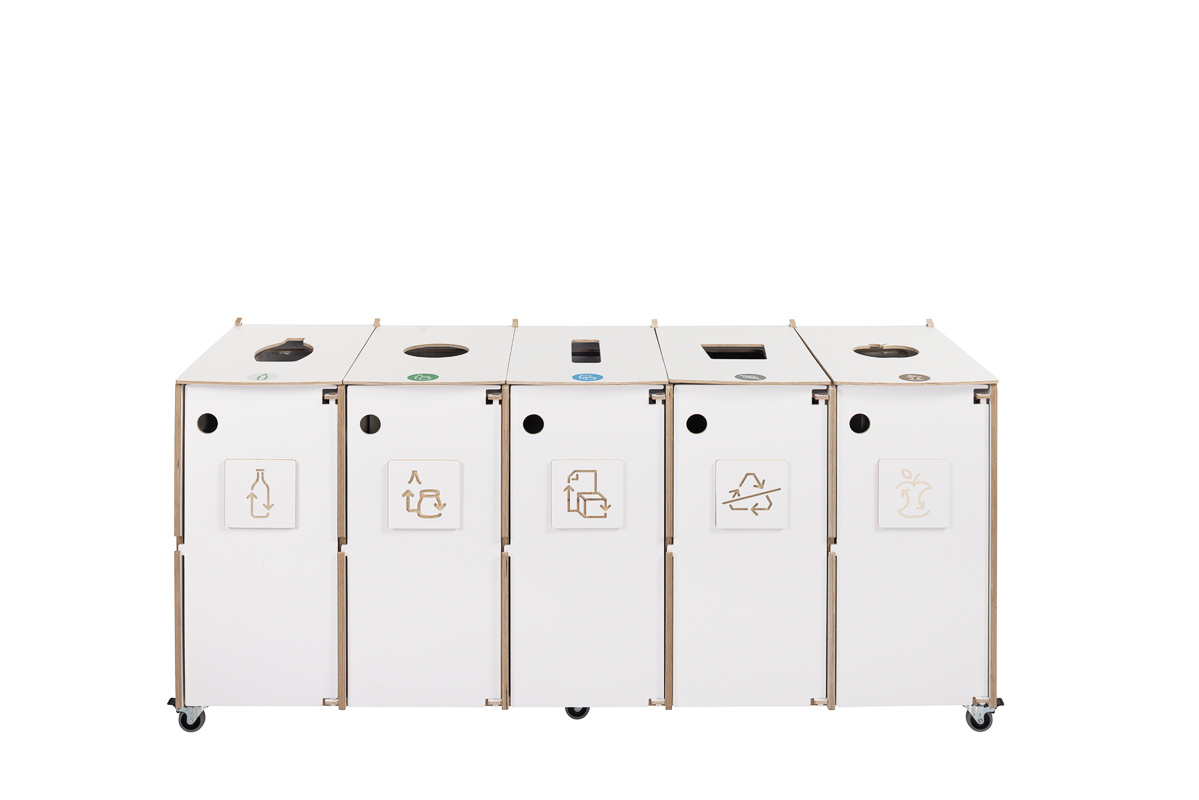
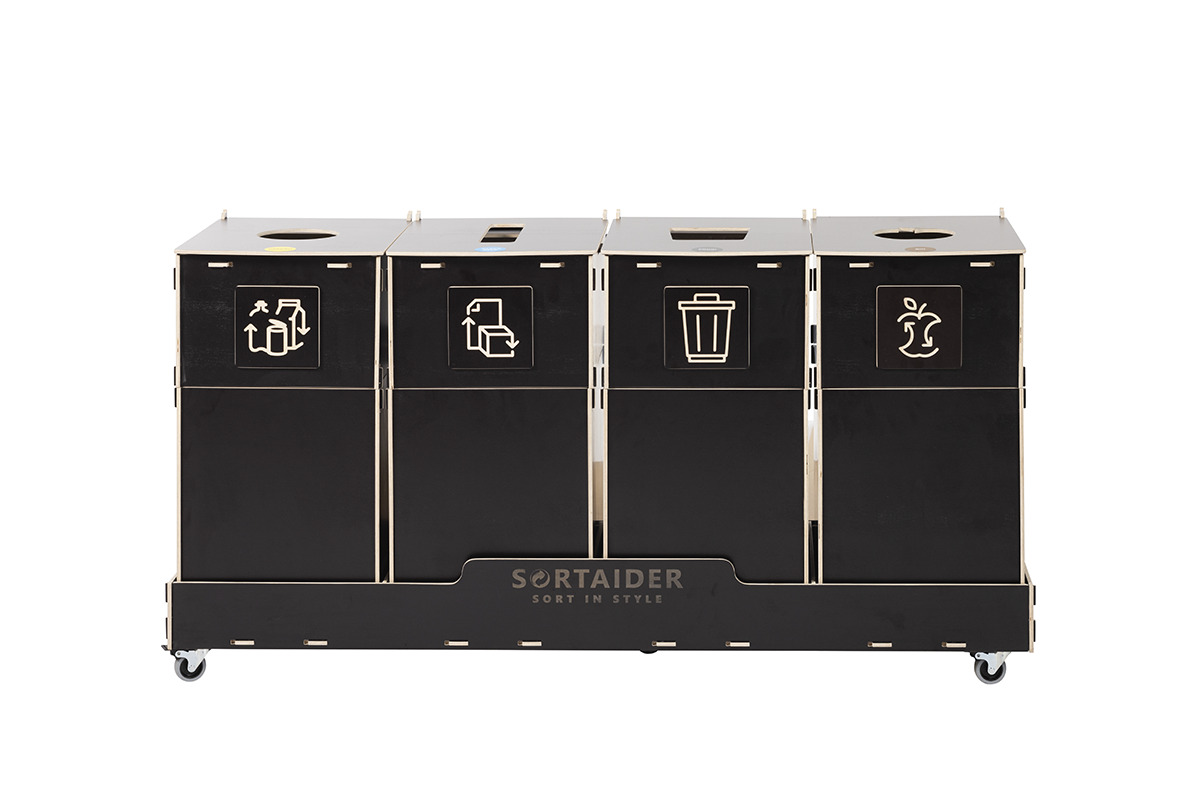
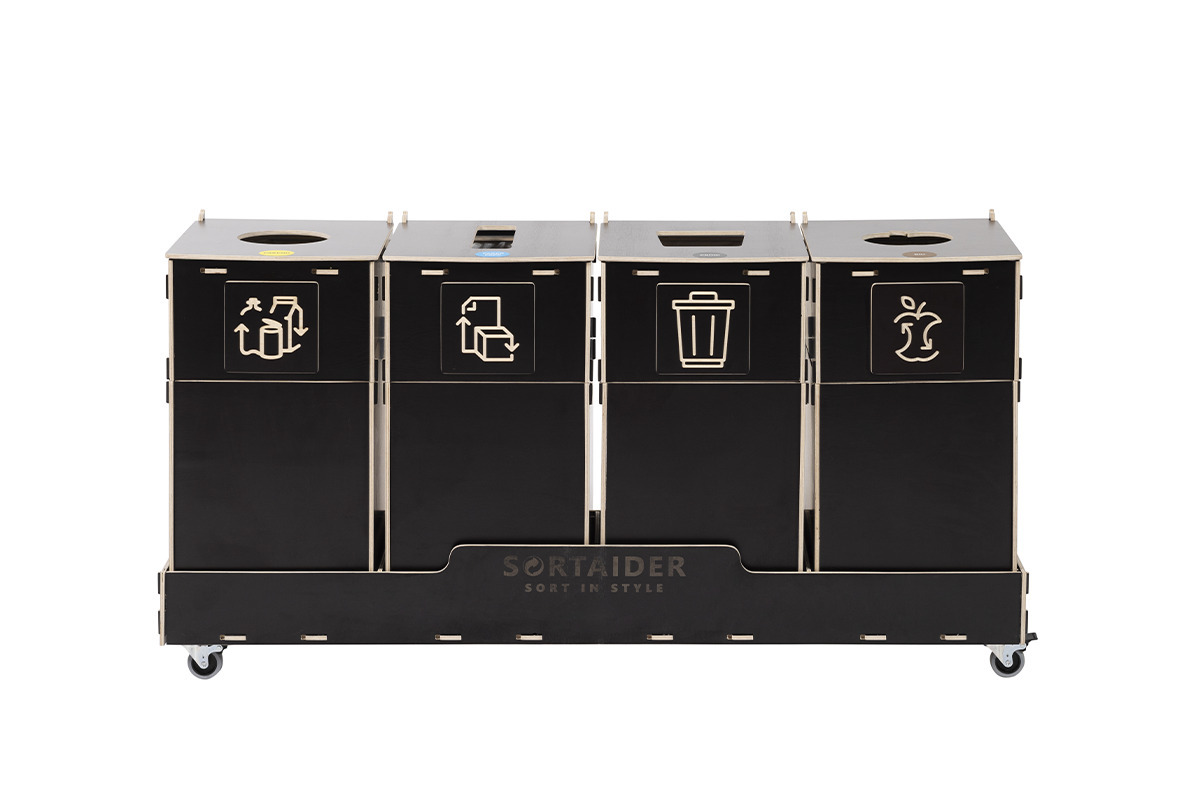
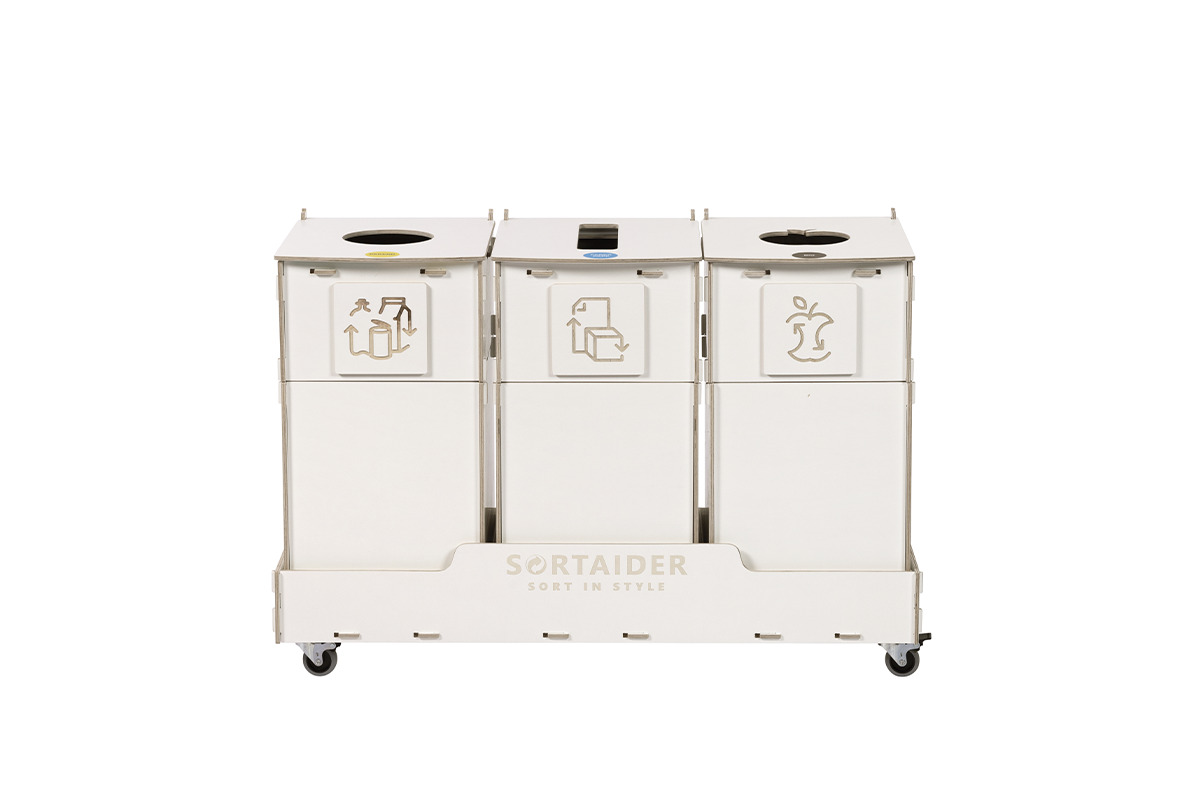
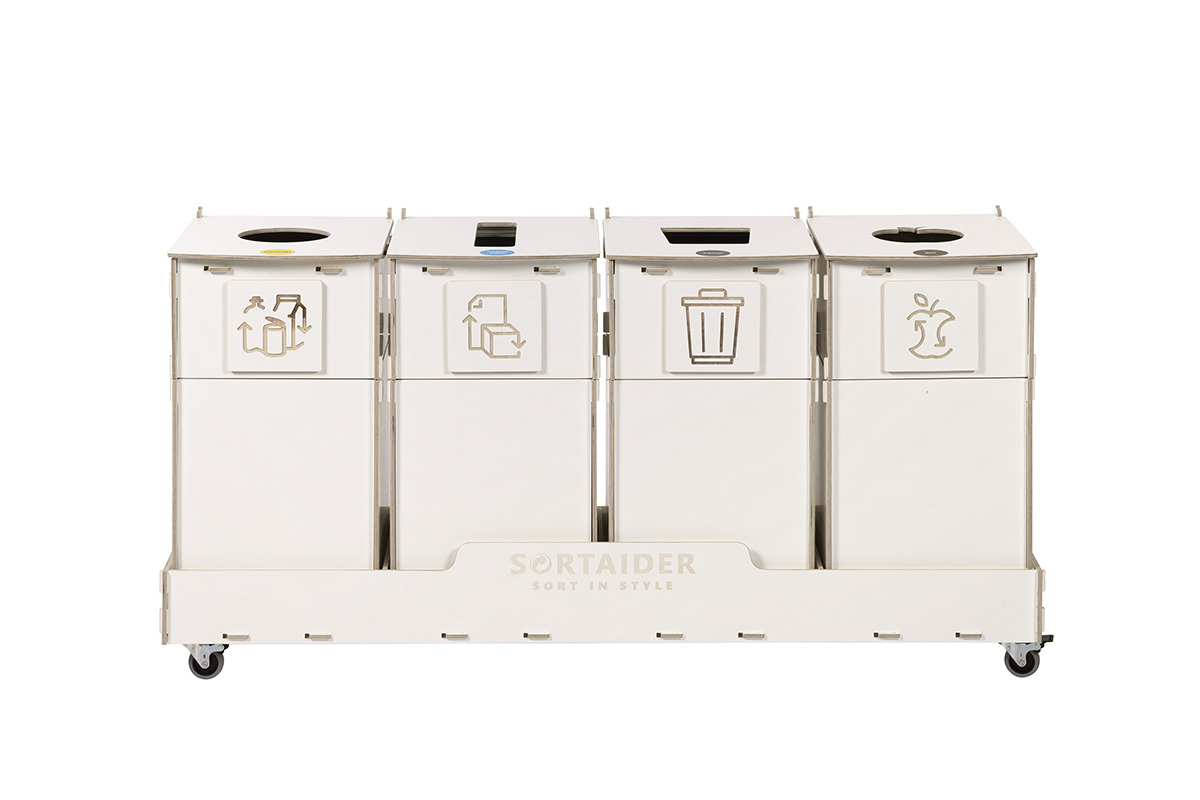
To avoid contamination fines, which can occur when a load exceeds a 3–5% threshold, ensure your sorting stations use clear, high-contrast pictograms. These visual cues are essential in multilingual environments, where they can reduce sorting errors by up to 40%.
Reduce Disposal Costs through Material Separation
Contamination is the primary driver of high disposal fees. When recyclables are soiled, they lose their value. A classic example is the “Pizza Box” rule: even a small amount of grease on cardboard can ruin an entire batch of paper recycling. When this happens, Material Recovery Facilities (MRFs) may reject the entire load, resulting in increased landfill tipping fees and lost revenue.
By utilizing multi-compartment recycling bins made from sustainable birch plywood, hospitality venues can lower their own carbon footprint while ensuring clean streams. These bins offer up to 4x lower CO₂ lifecycle emissions compared to traditional plastic or metal alternatives. Following the guidelines for what goes in each recycling bin ensures that your materials remain resalable and your operation stays cost-effective.
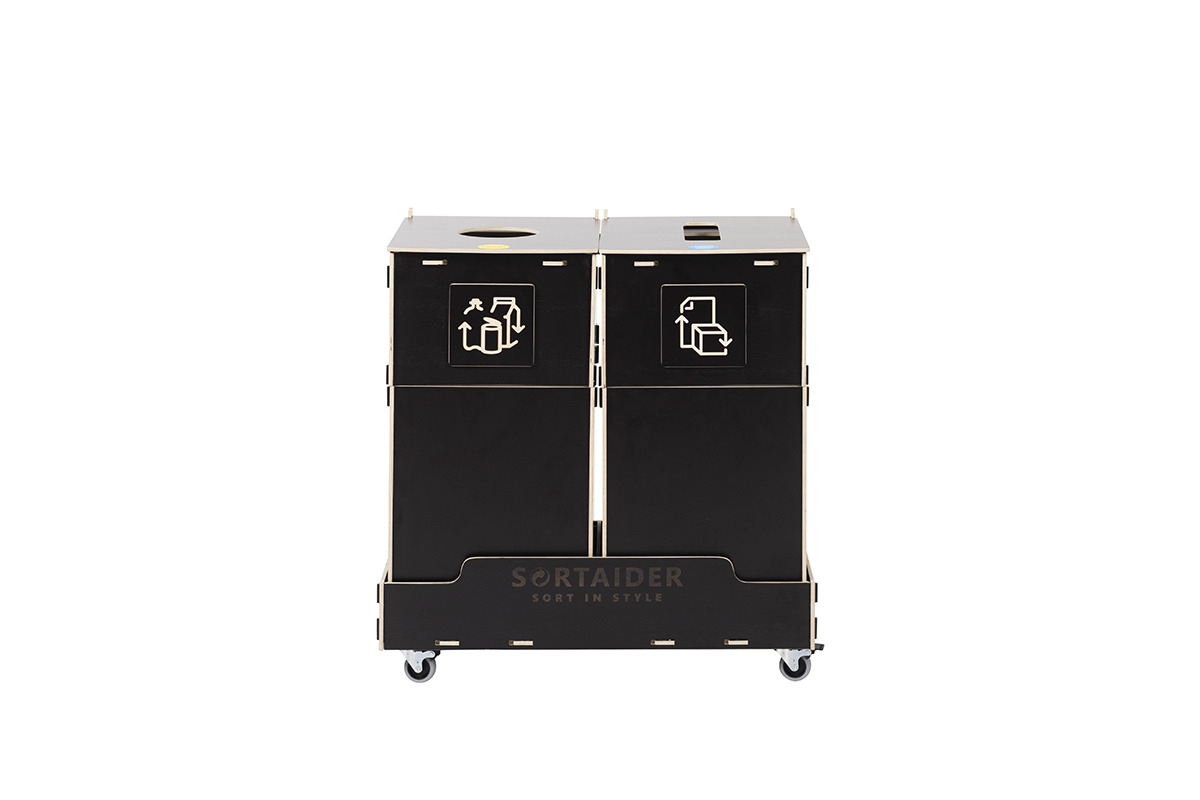
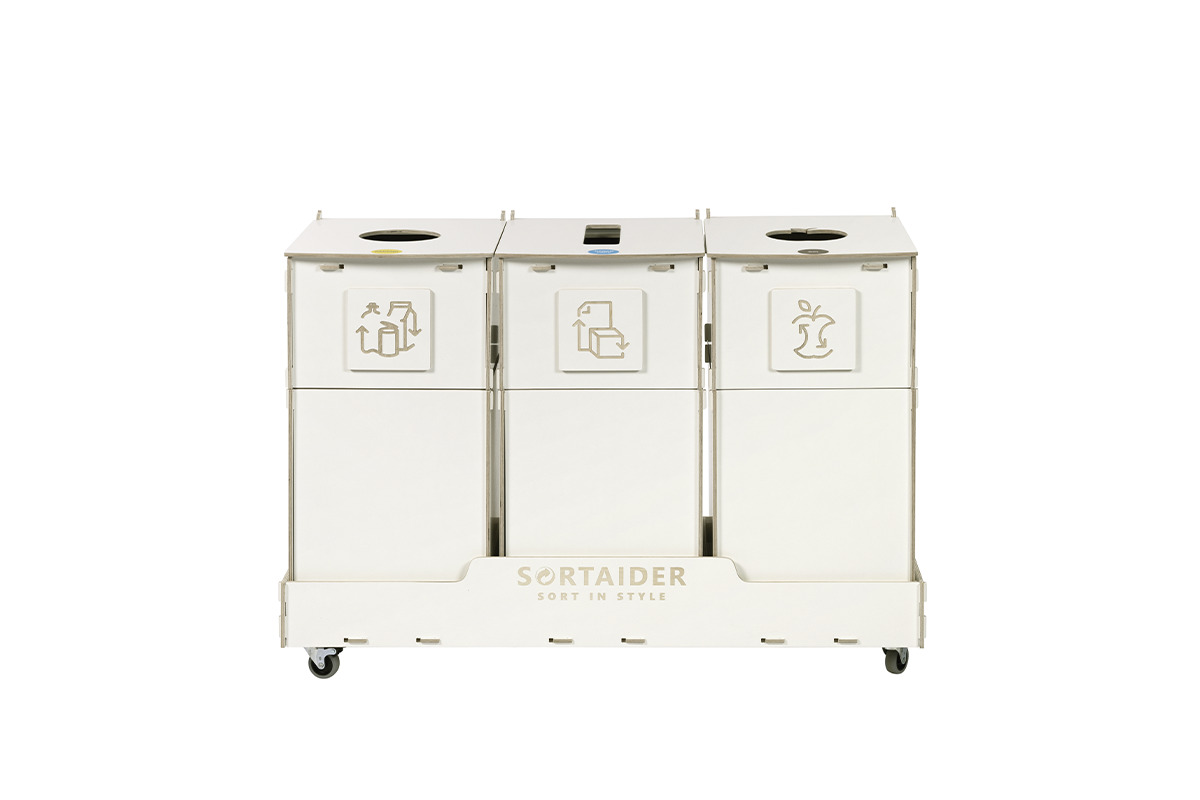
By auditing your current output and installing high-quality sorting infrastructure, you can transform your waste management from a mounting expense into a streamlined, compliant operation. Explore our Container series to find award-winning sorting solutions that fit your venue’s unique aesthetic and volume requirements.