
Did you know that certified green buildings can lower energy costs by 30% while significantly boosting employee health? Obtaining a green office certification provides a clear, documented roadmap to achieving your sustainability goals while enhancing your workplace’s environmental performance.
The Tangible Benefits of Sustainable Certification
Beyond the environmental impact, certifying your office offers measurable business advantages that affect both the bottom line and human capital. Research indicates that certified buildings typically see a 20% reduction in maintenance costs compared to conventional spaces. These savings are often driven by a 25–35% reduction in energy use, though some high-performing facilities reach as high as 50% energy savings.
The impact on personnel is equally compelling. In green-certified environments, 72% of employees report better health, which translates directly into organizational resilience. For instance, the Sherwin-Williams Centro América headquarters in San Salvador reported a 68% reduction in employee sick days after achieving LEED Gold certification, resulting in approximately $85,000 USD in annual savings. Furthermore, ESG-conscious tenants often seek out these spaces, increasing asset value and marketability, as 74% of consumers express a willingness to pay a premium for green building features.
Major Global Certification Programs
Several international standards dominate the landscape, each offering a different focus on building performance, operational efficiency, or occupant wellbeing.
- LEED Operations & Maintenance (O+M): Administered by the USGBC, LEED is the most widely recognized standard globally. It awards points across categories like energy, water efficiency, and indoor environmental quality to achieve Certified, Silver, Gold, or Platinum status.
- BREEAM In-Use: This international standard is widely utilized across Europe and assesses environmental sustainability alongside health. A notable success story is The Edge in Amsterdam, which achieved a record BREEAM score of 98.4% by integrating advanced technology with sustainable design.
- WELL Building Standard: While other programs focus on the building’s footprint, WELL focuses on the people inside. It evaluates ten concepts, including Air, Water, Light, and Movement, to ensure the workspace supports human biology and wellness.
- Fitwel: This program offers a more accessible path to wellness certification. It uses a point-based system (up to 144 points) and is known for a relatively efficient review process of 12 to 16 weeks.
- ENERGY STAR: A focus-driven program that uses benchmarking tools to track energy use and greenhouse gas emissions, requiring a score of 75 or higher for certification.
Core Requirements and Waste Management
While specific requirements vary, most programs demand rigorous documentation in areas such as energy atmosphere, water efficiency, and indoor environmental quality. Efficient water management systems can lead to a 39% reduction in consumption through reuse and high-efficiency fixtures. However, one of the most visible pillars of any certification is the “Materials and Resources” category.
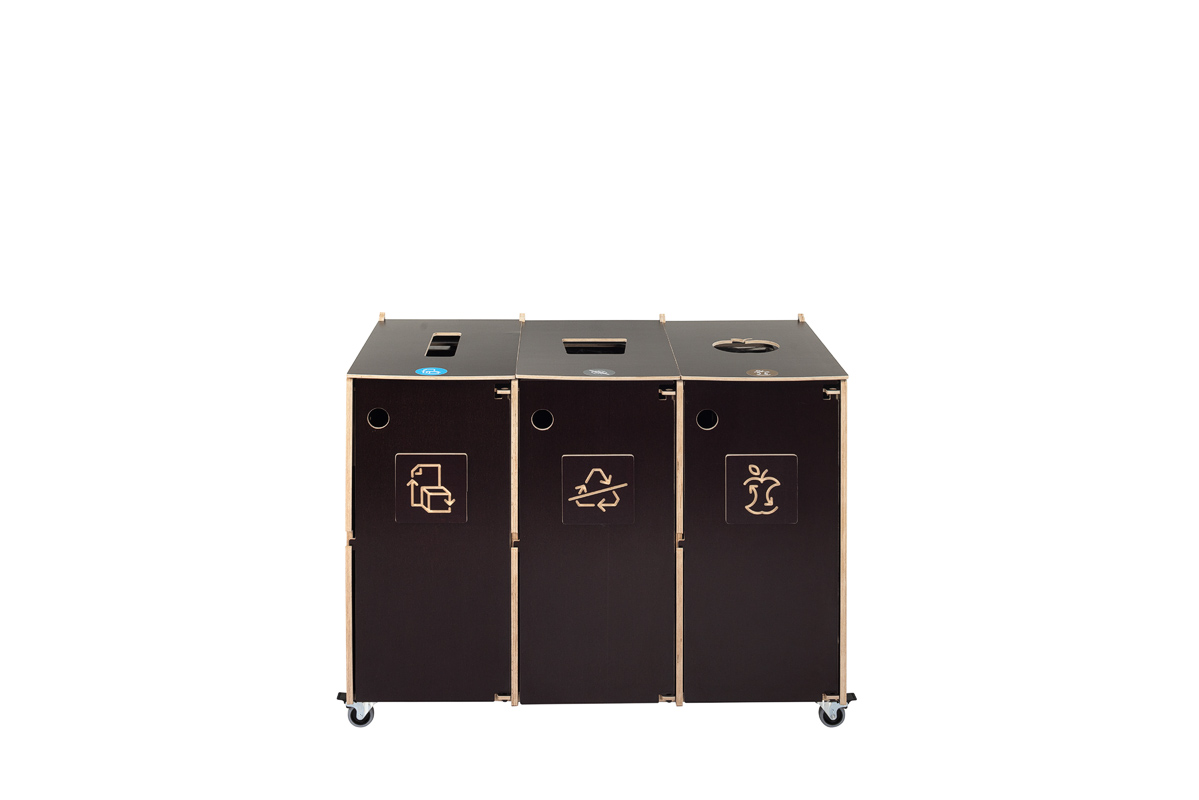
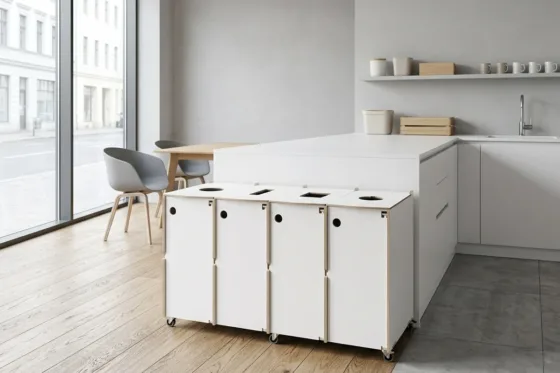
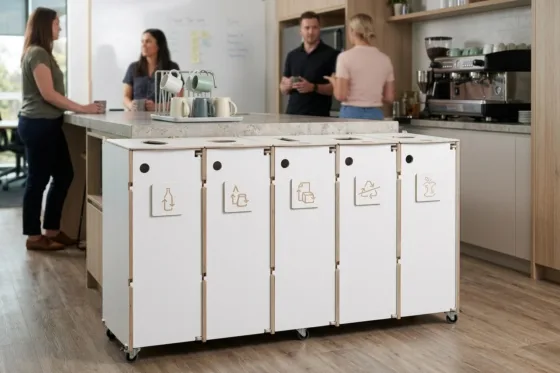
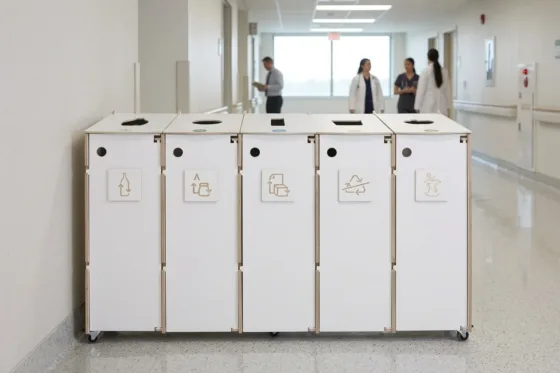
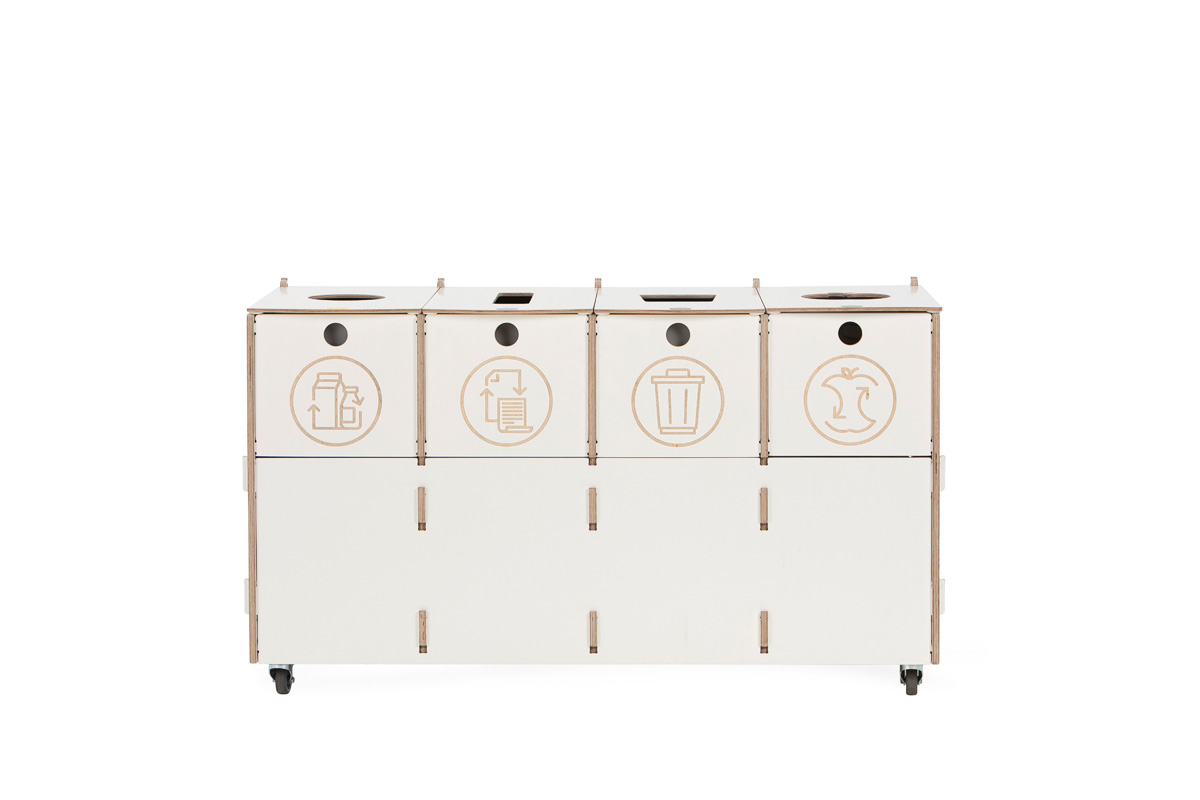
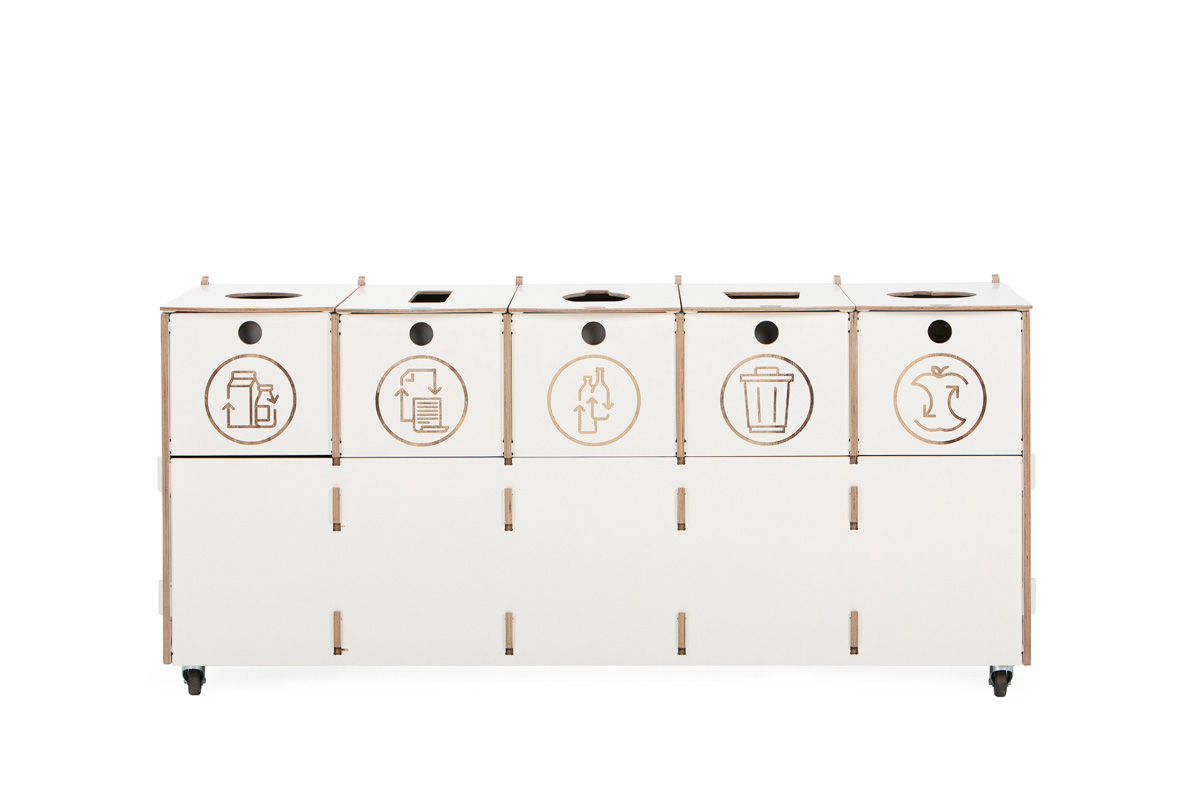
To satisfy these requirements, you must demonstrate high waste diversion rates and the use of sustainable interior materials. Selecting recycling bins made from renewable resources like birch plywood supports these credits. Unlike plastic or metal alternatives, plywood constructions offer significantly lower CO₂ lifecycle emissions.
A Roadmap to Certification Success
The journey to certification typically spans between three months and one year. Following a structured approach ensures that you capture necessary data without disrupting daily operations.
- Conduct a baseline assessment by identifying a sustainability champion and completing a self-assessment checklist.
- Set specific goals to determine which certification level, such as LEED Gold or BREEAM Outstanding, aligns with your ESG targets.
- Document resource consumption for energy, water, and waste during a baseline period of one to four weeks.
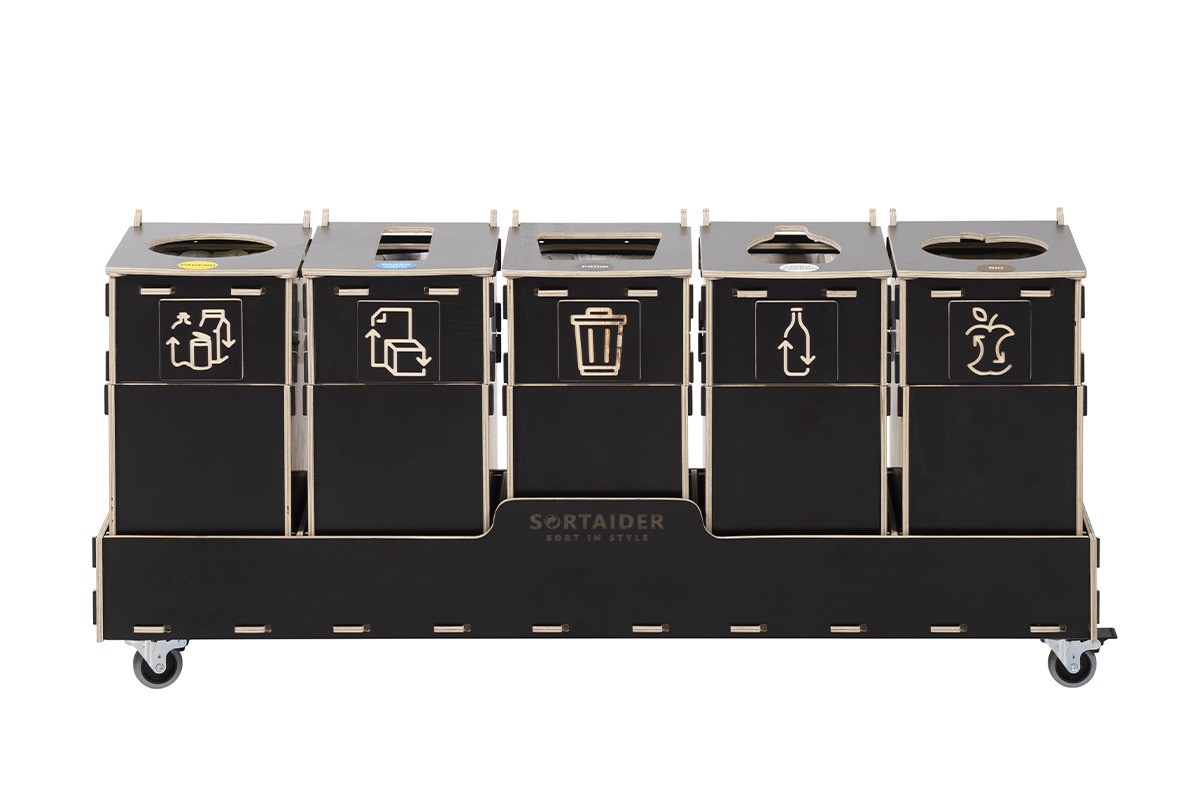
- Implement operational upgrades, such as installing high-efficiency lighting and Ecolong series waste-sorting hubs that support multiple waste streams in a compact footprint.
- Compile evidence, including environmental impact reports, maintenance records, and supply chain audits.
- Schedule an in-person consultation for a facility tour with a certification assessor.
- Complete a third-party audit where an external professional verifies your documentation and physical operations.
- Receive your official award and recognition materials based on the verified points achieved.
- Maintain your status through ongoing recertification, which typically occurs every three years for most major standards.
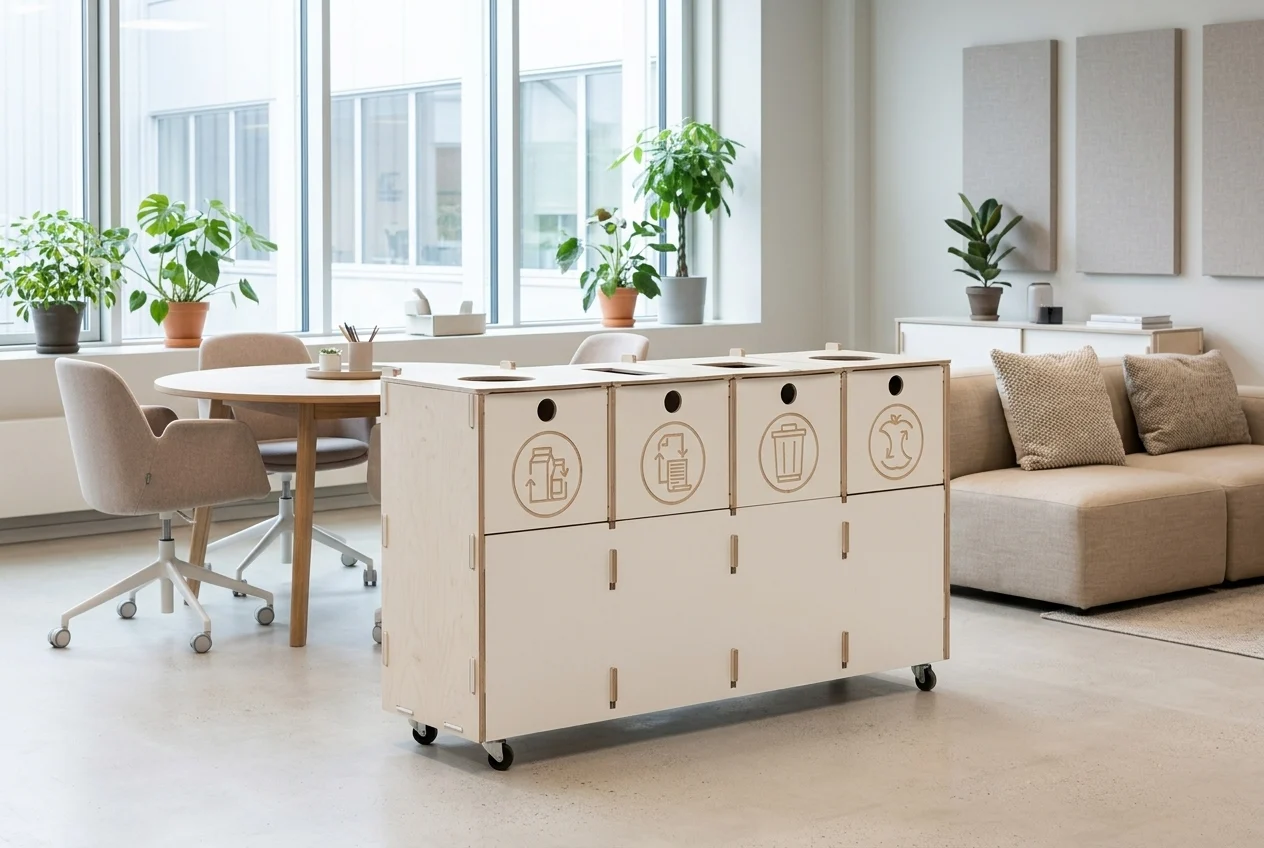
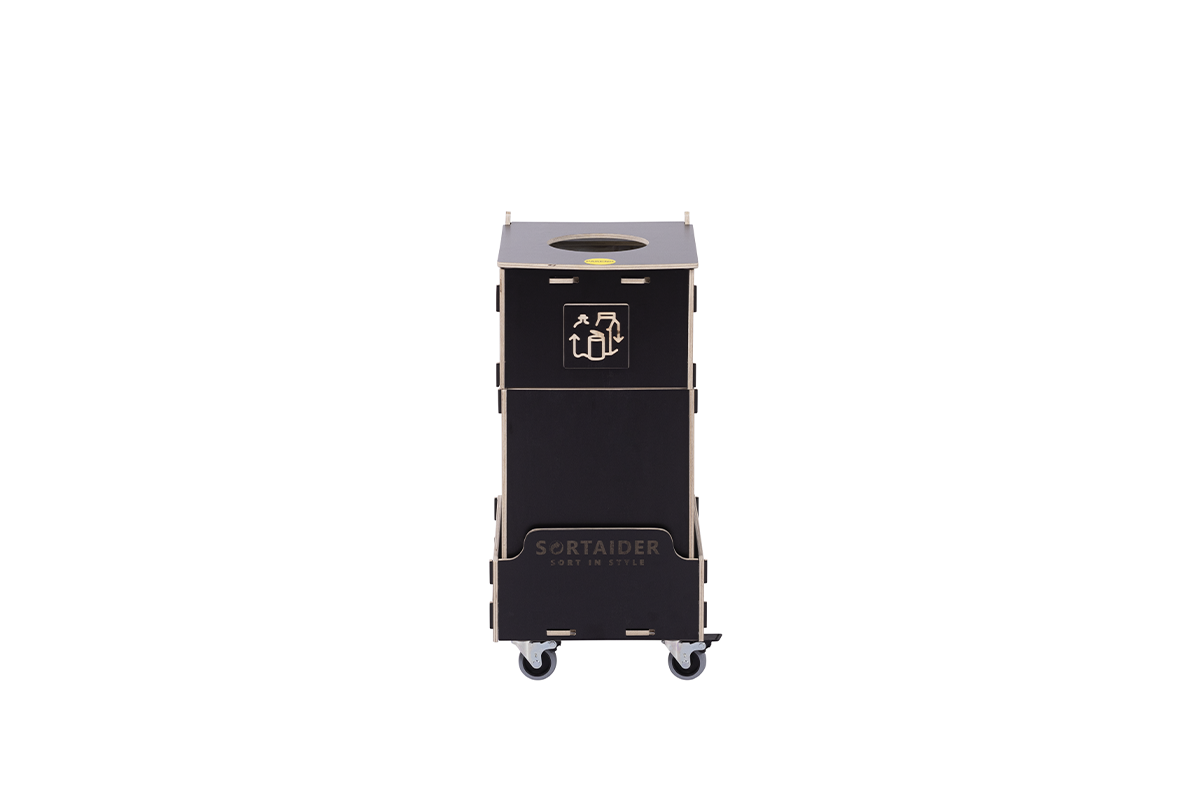
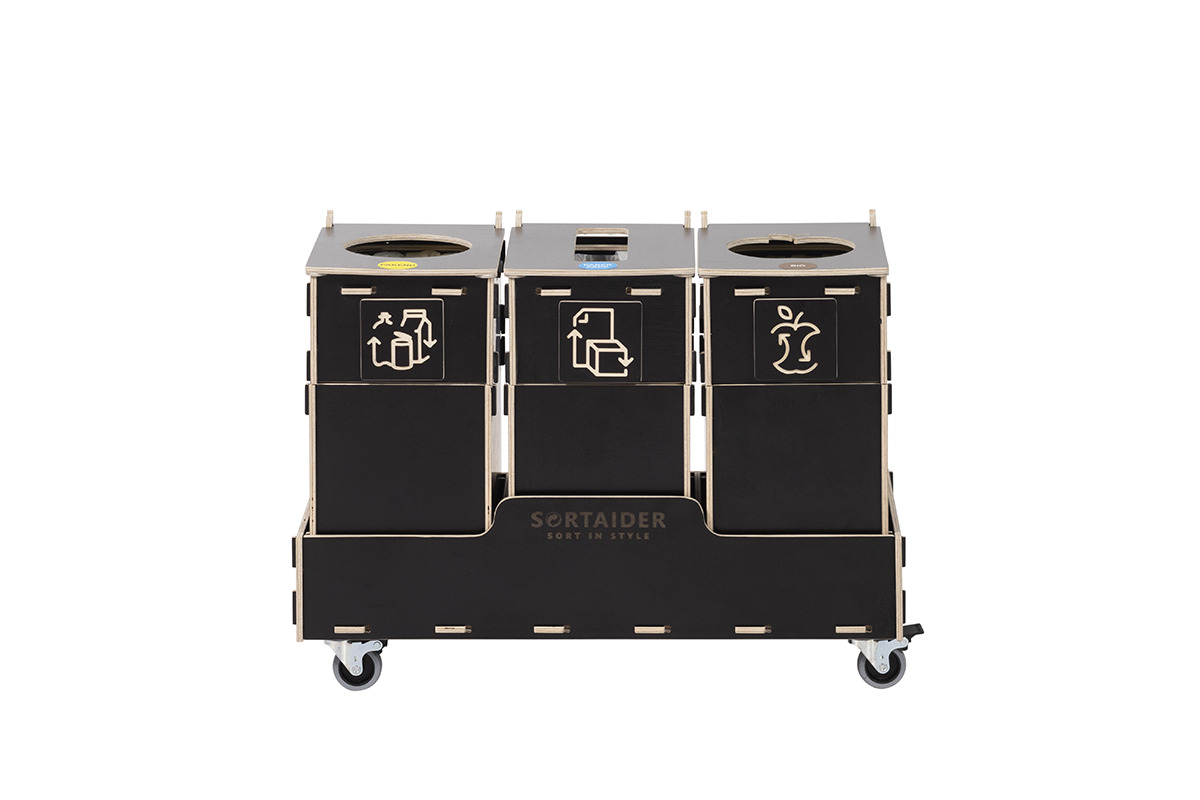
For premium environments that require high-capacity sorting without sacrificing aesthetics, the Container series provides a Red Dot-awarded solution that integrates seamlessly into modern office designs.
Navigating Costs and Regional Incentives
The investment required for certification depends heavily on the size of the office and the chosen standard. Small offices might utilize online, self-paced programs starting around $250. In contrast, achieving LEED Gold for a large-scale project can involve premiums between $450,000 and $900,000.
Fortunately, many European markets, particularly in the Nordic and Baltic regions, provide incentives to offset these costs. You may find utility rebates, energy-efficiency grants, or tax abatements that cover 10–20% of the certification premium. In some municipalities, green building status also leads to expedited permitting processes for future renovations.
Infrastructure for Long-Term Compliance
A frequent obstacle to maintaining certification is the “documentation burden” associated with waste management data. To overcome this, you need infrastructure that encourages employee compliance and provides clear diversion metrics.
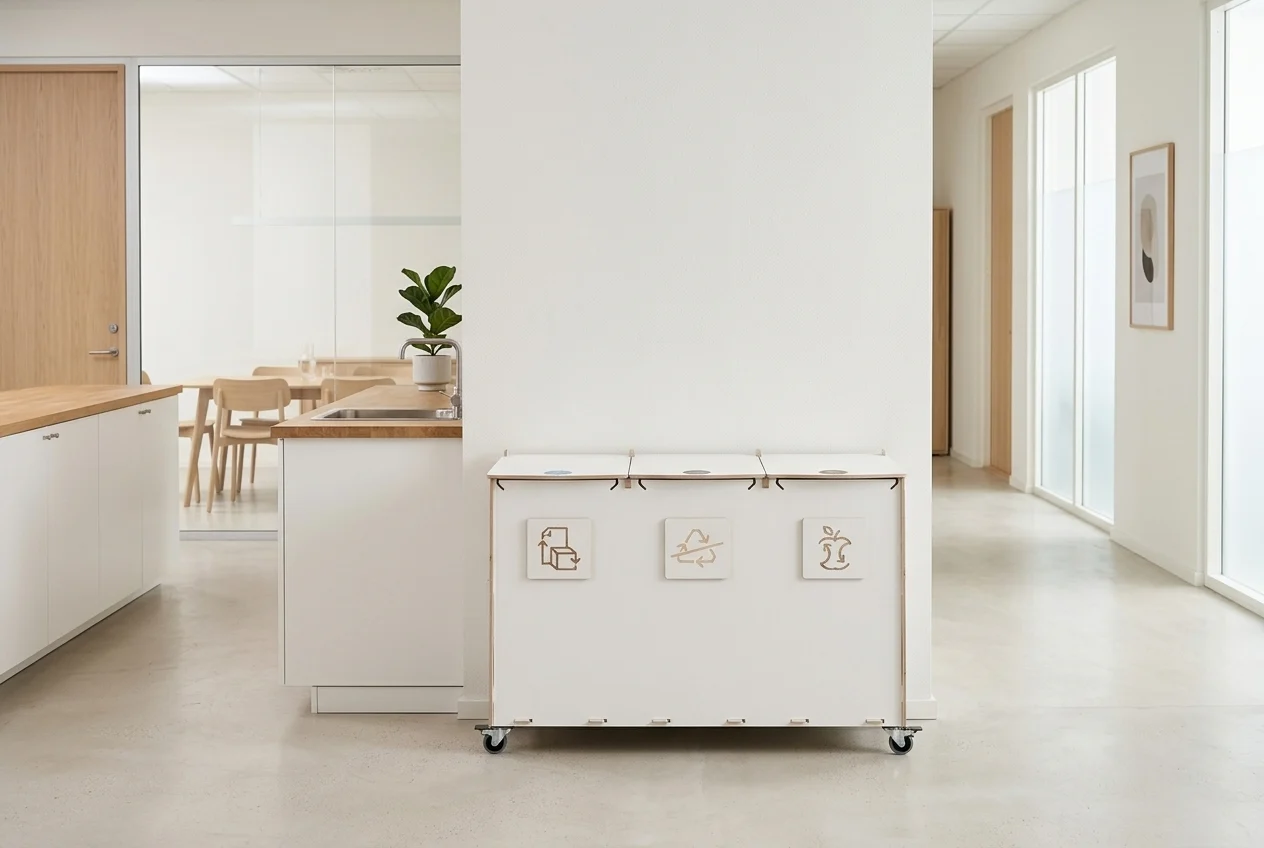
The Sorter series and Sorta series use intuitive visual guidance and moisture-resistant plywood to ensure longevity and sorting accuracy. By choosing systems that prioritize the circular economy and use renewable materials, you simplify the audit process while moving your organization closer to its carbon-reduction targets. Start your transition by auditing your current waste output and selecting a modular system that matches your long-term sustainability ambitions.
-
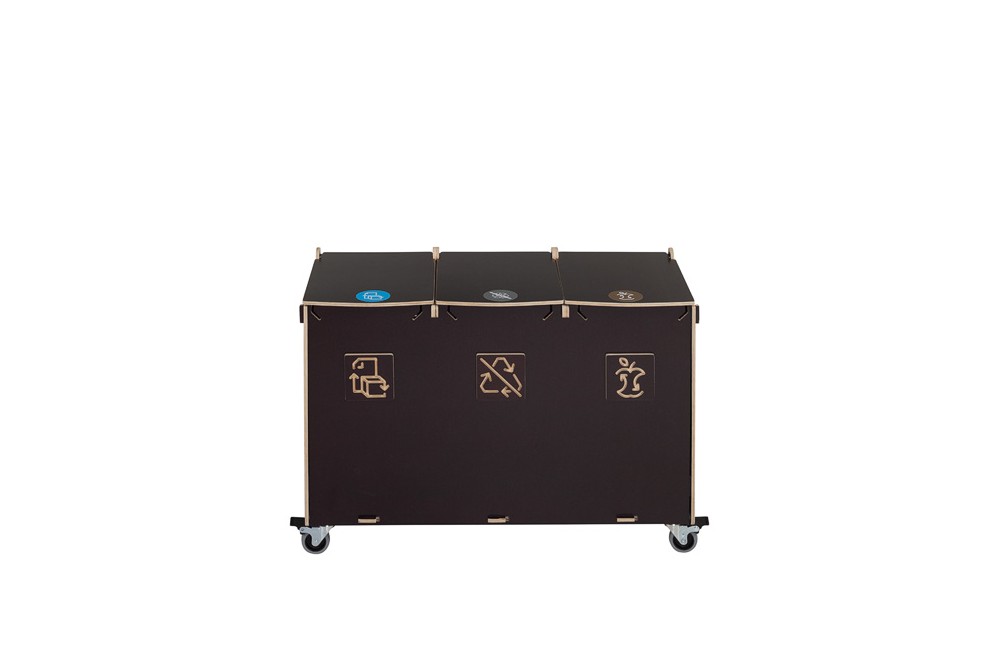
Recycling bin Sorta 20B3
3 types of waste 3 x 20 L384,40 € (incl. 24% VAT)310 € (excl. VAT) -
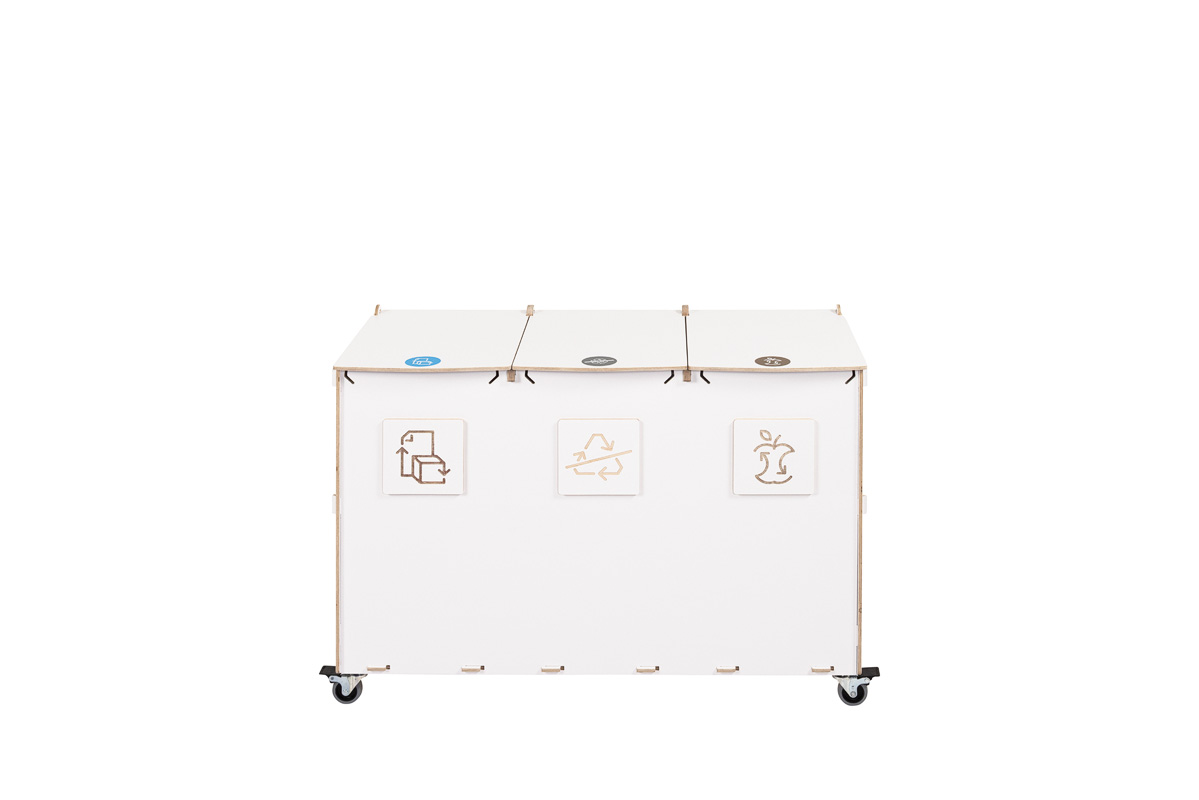
Recycling bin Sorta 40W3
3 types of waste 3 x 40 L657,20 € (incl. 24% VAT)530 € (excl. VAT) -
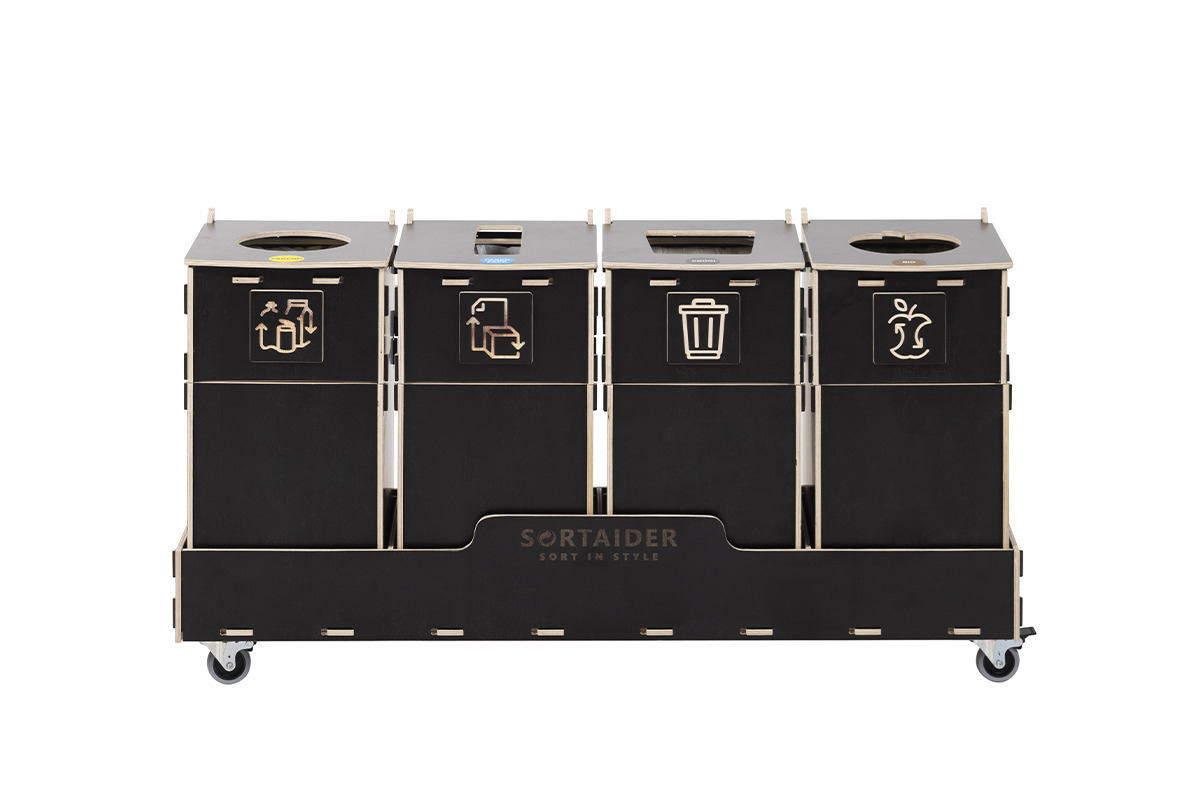
Recycling bin Sorter 20B4
4 types of waste 4 x 20 L607,60 € (incl. 24% VAT)490 € (excl. VAT) -
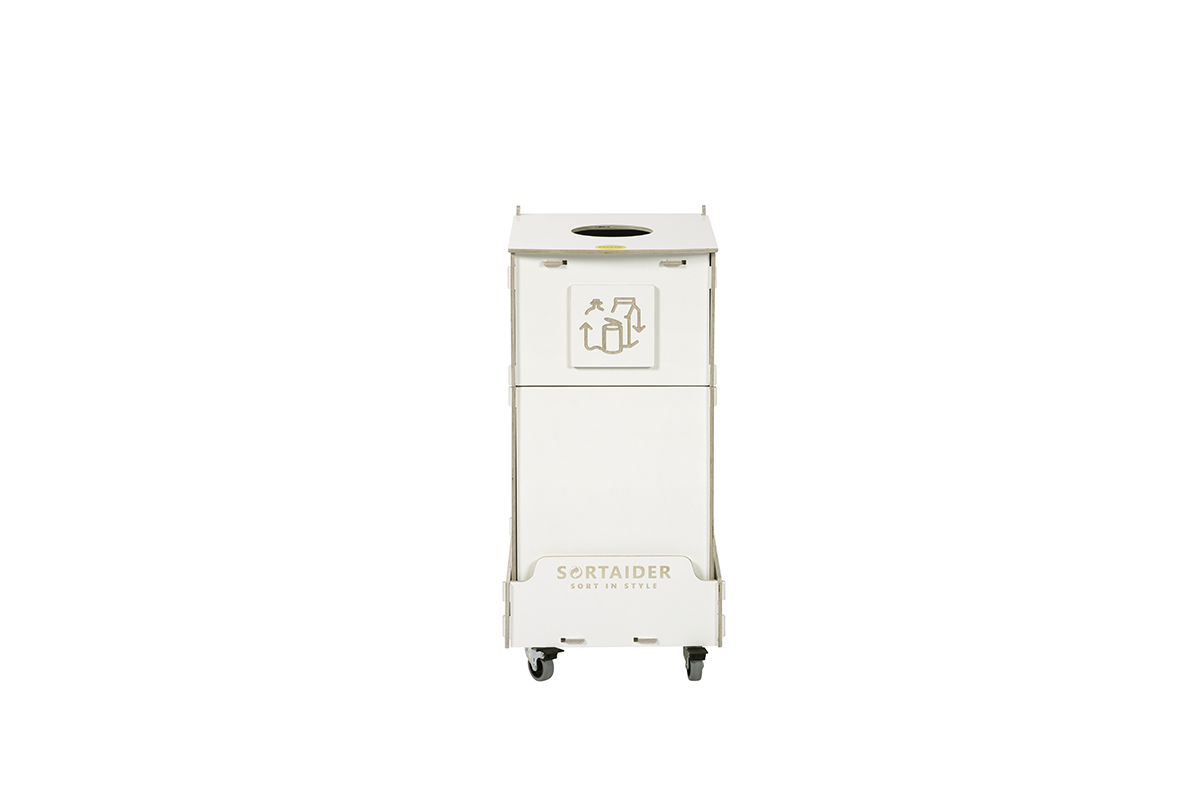
Recycling bin Sorter 60W1
1 type of waste 1 x 60 L458,80 € (incl. 24% VAT)370 € (excl. VAT)