
Did you know the average European office worker generates 2 kg of waste every single day? As regulations tighten, understanding your legal responsibilities for separating, documenting, and disposing of commercial waste is no longer optional – it is a critical operational necessity for every facility manager.
The EU Waste Framework Directive: Your Legal Baseline
Most workplace recycling rules across Europe are rooted in the Waste Framework Directive. This legislation establishes a mandatory five-step waste hierarchy, where waste prevention and reduction are the top priorities, and disposal acts only as a last resort. This hierarchy forces organizations to rethink their entire lifecycle of consumption, prioritizing recovery over landfilling.
As of late 2023, the directive mandates that businesses must separate paper, metal, plastic, and glass at the source wherever technically feasible. Furthermore, the EU has set an ambitious goal to recycle 65% of all municipal waste by 2035. For facility managers, implementing a robust office waste management plan is the most reliable way to meet these escalating recovery targets and ensure long-term compliance with European workplace recycling regulations.
Regional Requirements and Local Nuances
While the EU provides the broad legal framework, individual member states often apply stricter rules tailored to their specific environmental goals. Navigating these regional variations requires an understanding of the nuances in each market where your facility operates.
- Sweden: Separate food waste collection became a mandatory requirement for all businesses in 2024, with even more stringent municipal curbside collection rules for commercial entities expected by 2027.
- Denmark: Facilities producing more than one ton of waste annually are required to hold a specific permit and utilize digital tracking systems for every waste shipment that leaves the premises.
- France: The “5-stream decree” mandates that companies must sort paper, metal, plastic, glass, and wood at the source to prevent cross-contamination.
- Estonia and Latvia: Estonian law requires the separation of five main streams, particularly for sites generating more than 10kg of bio-waste daily. Latvia applies Extended Producer Responsibility (EPR) for packaging exceeding 300kg per year, mandating strict recovery targets.
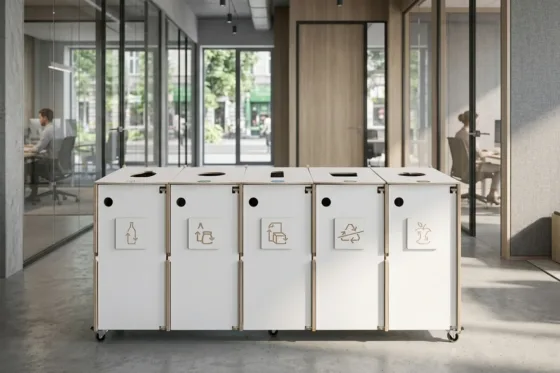
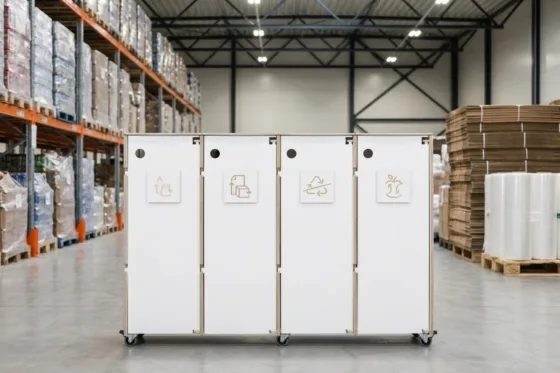
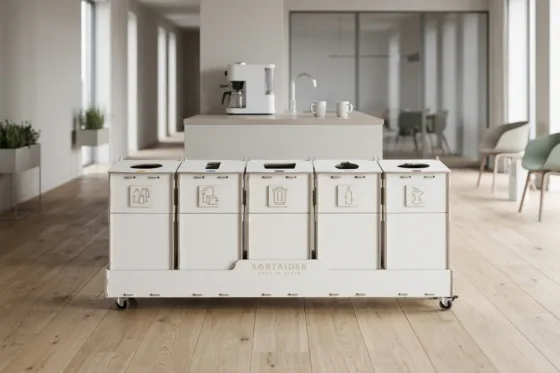
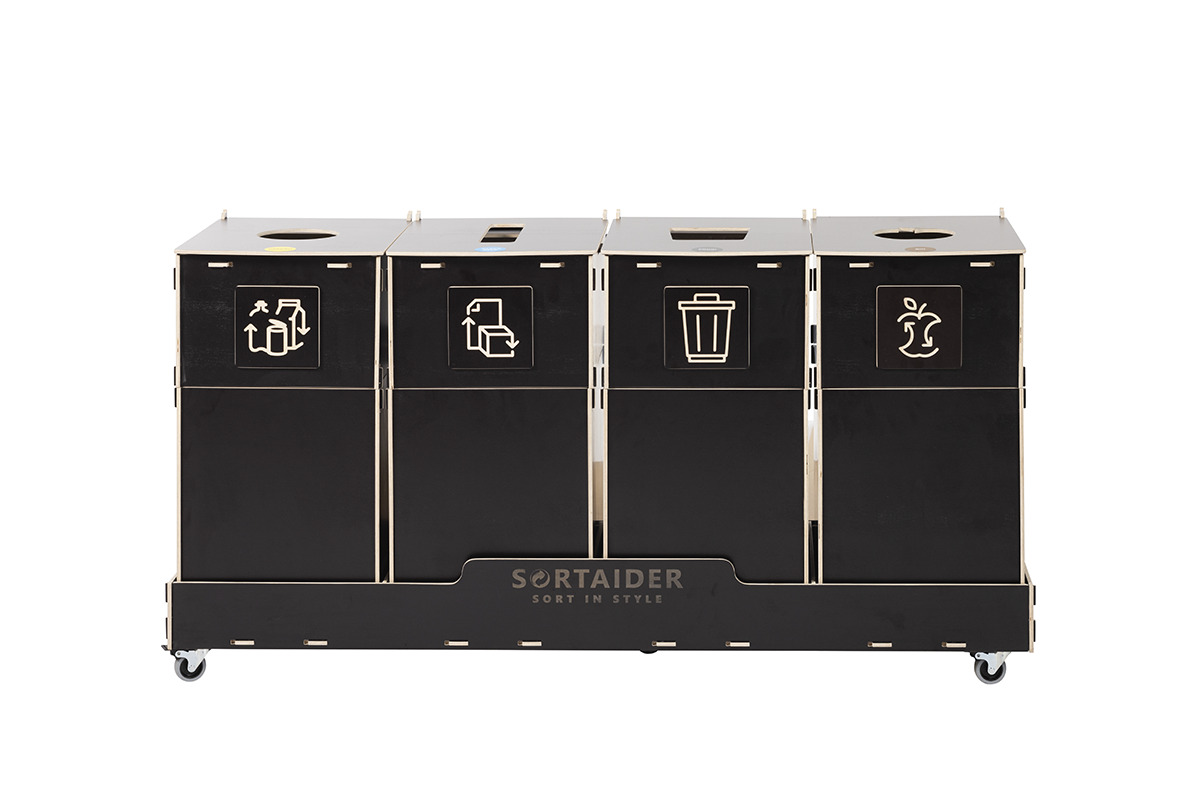
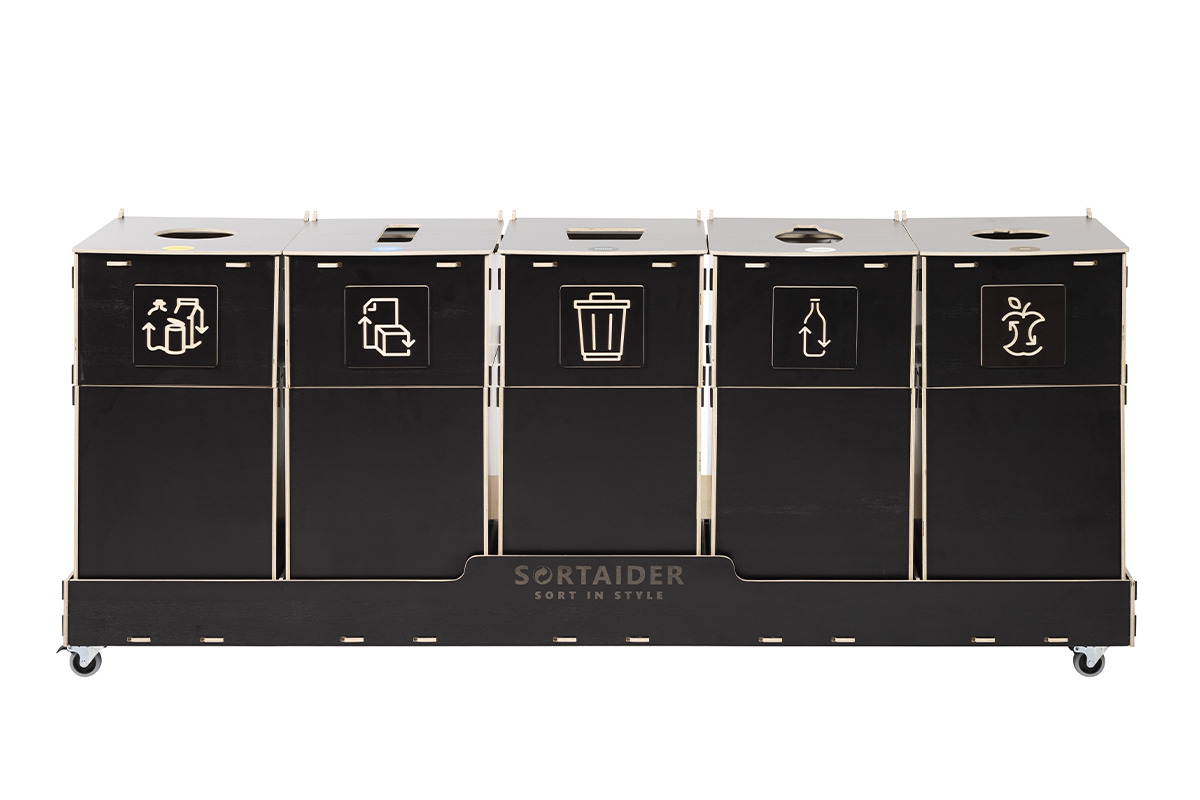
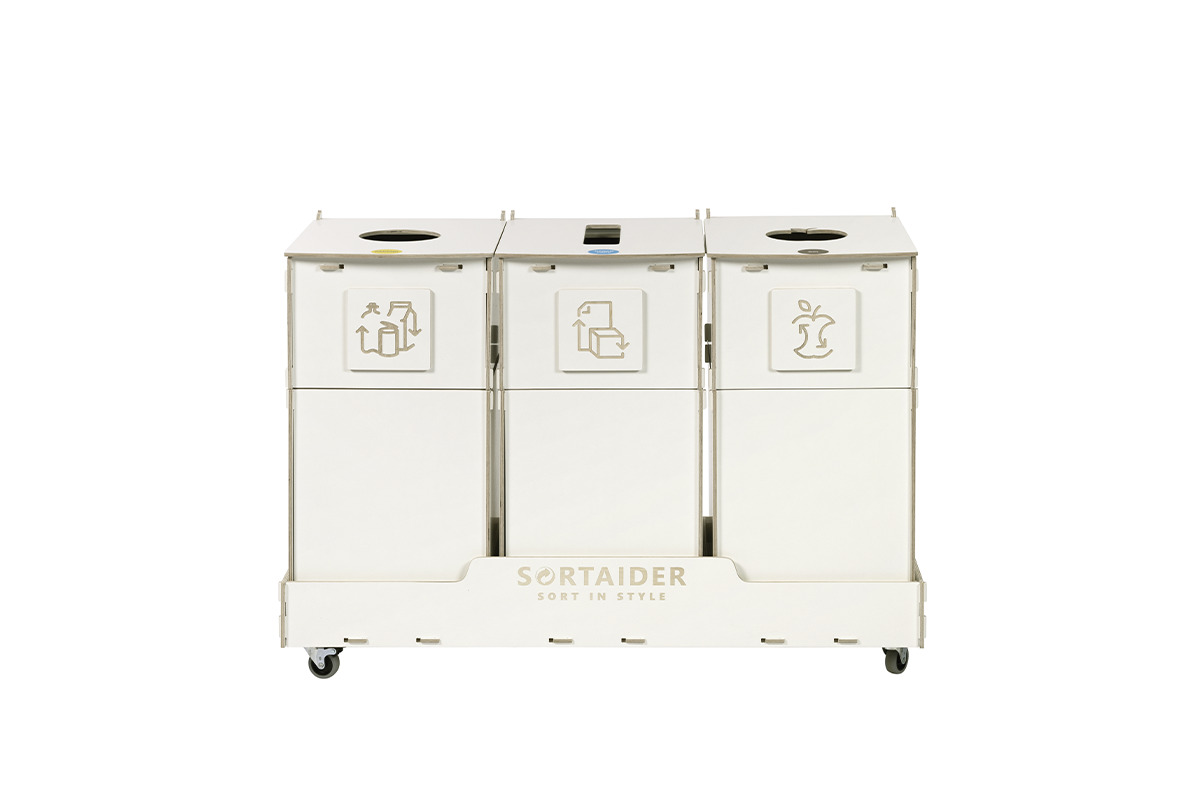
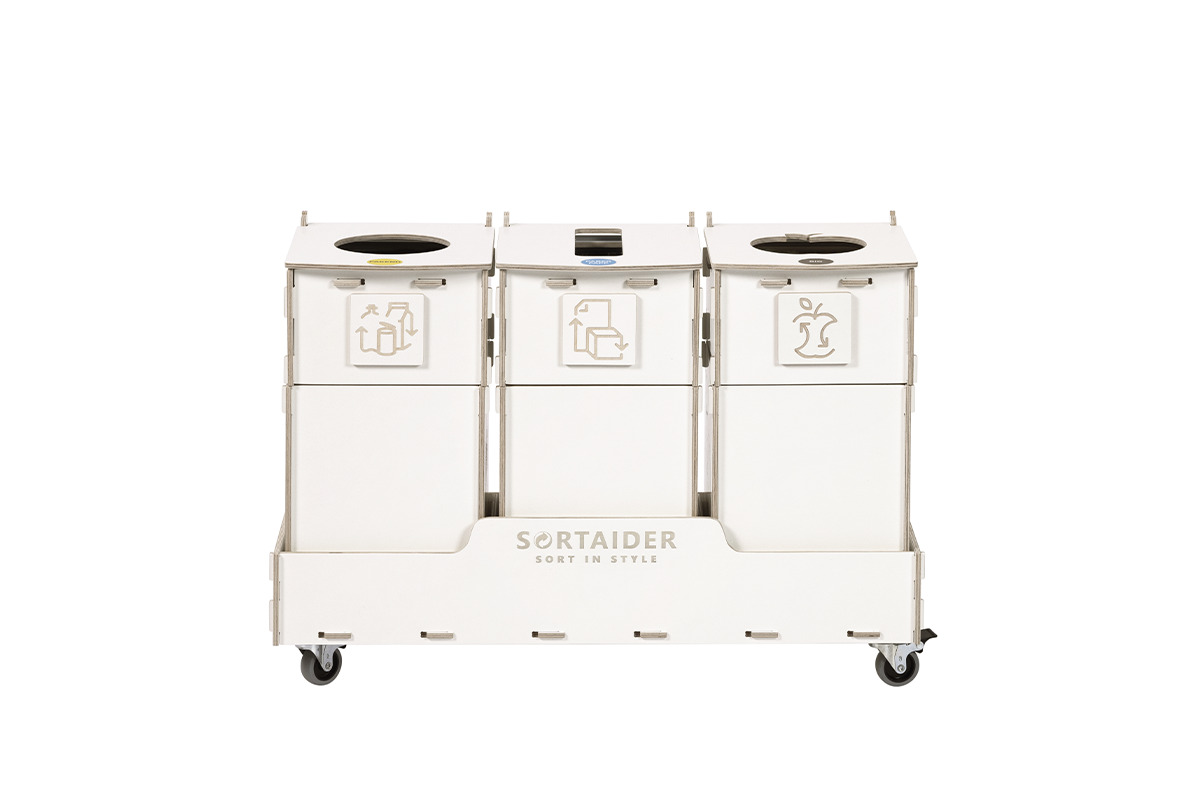
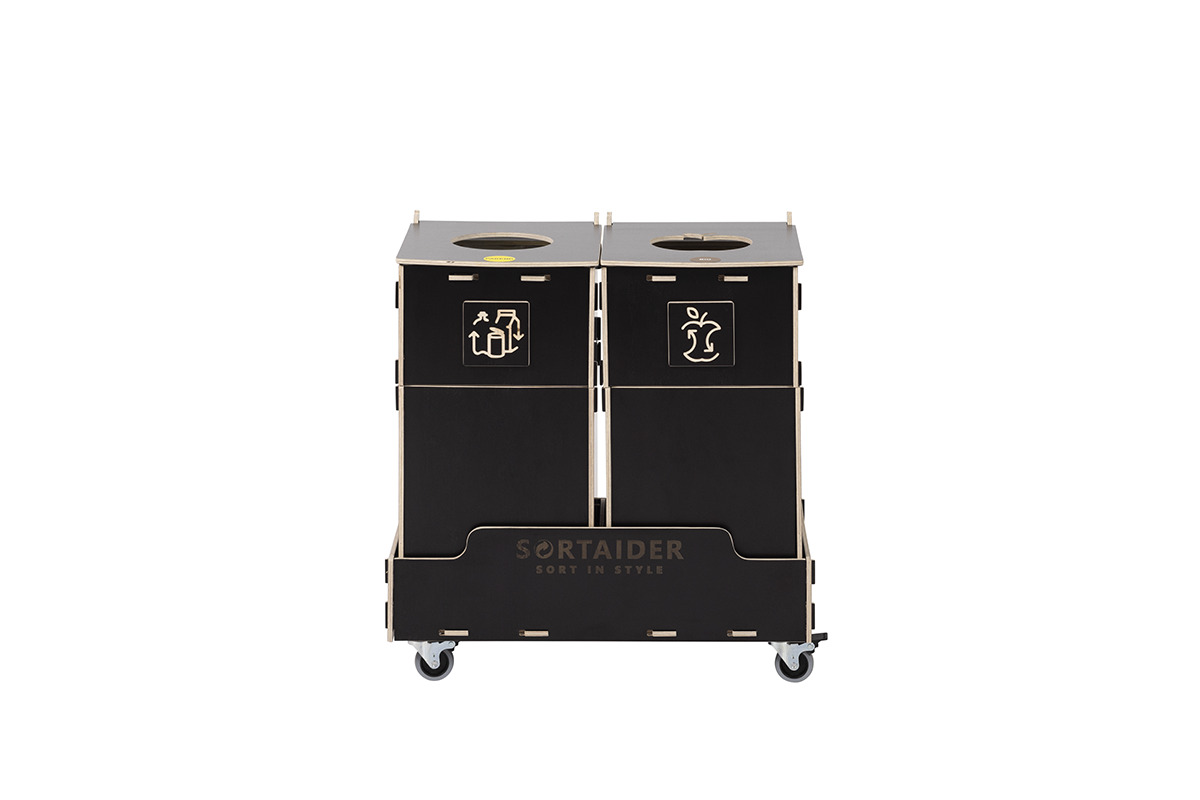
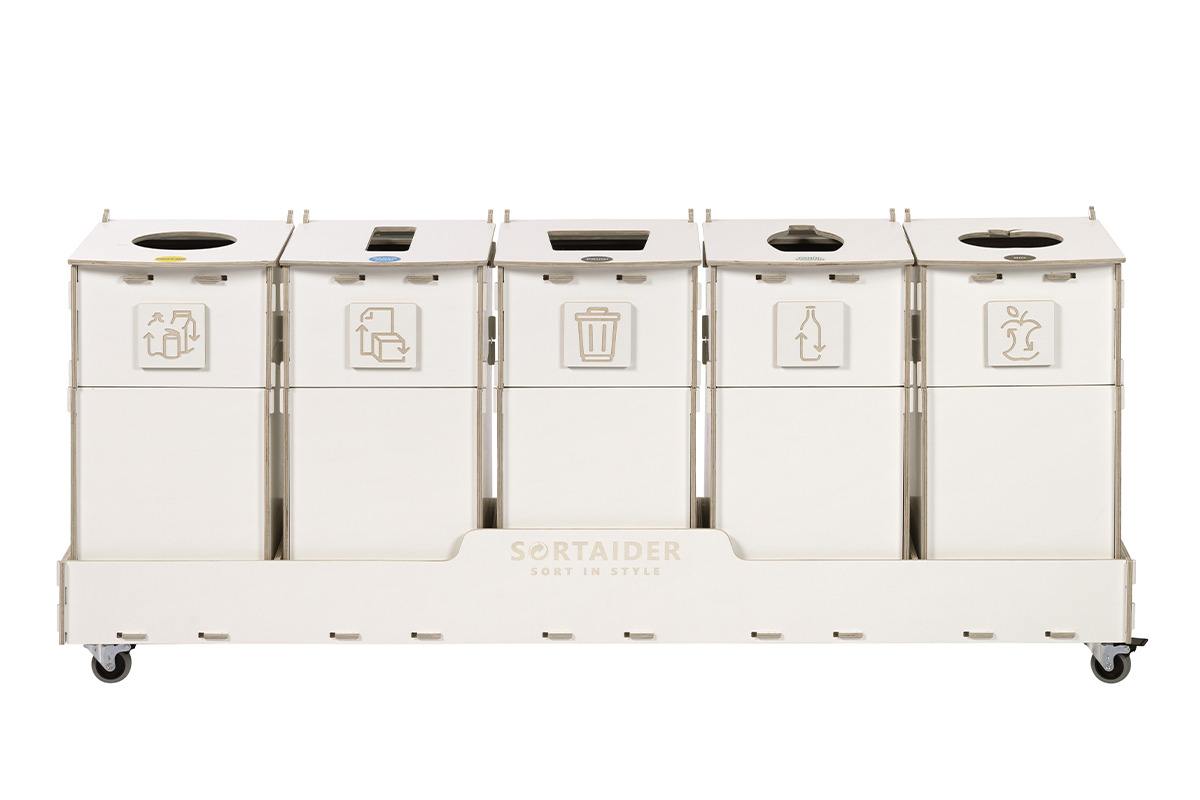
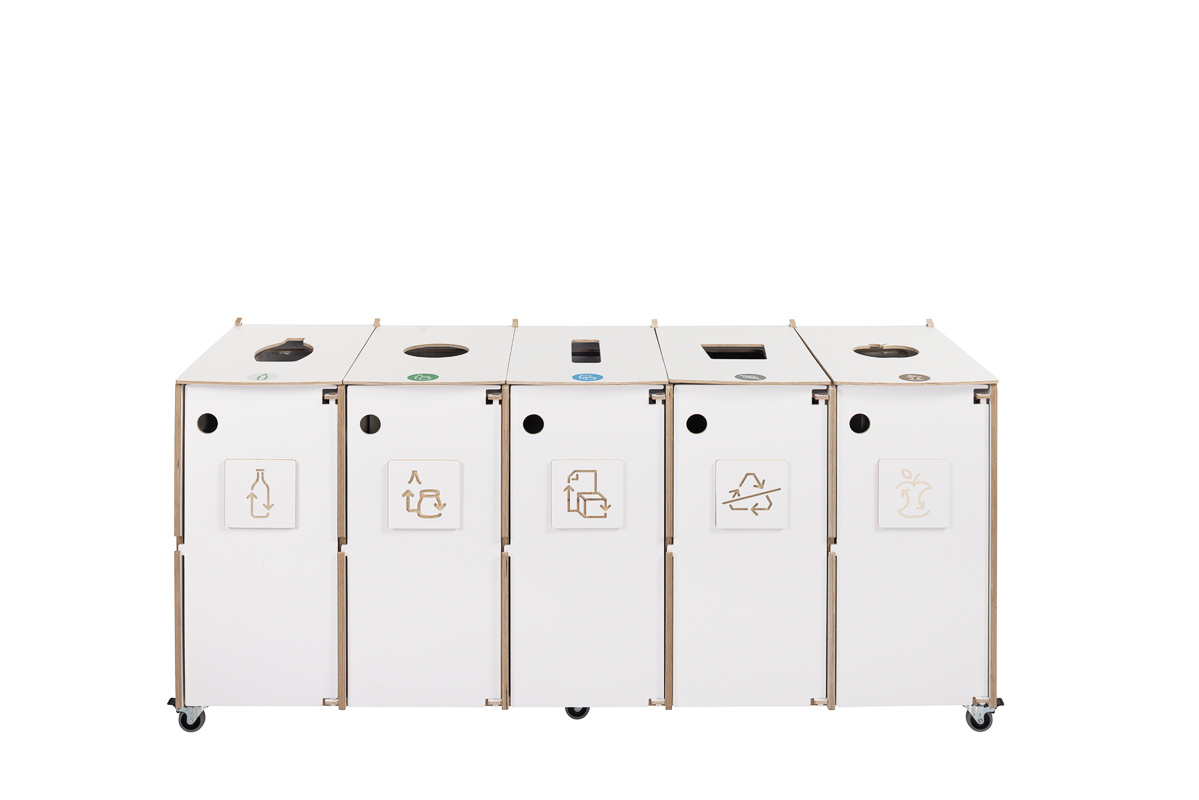
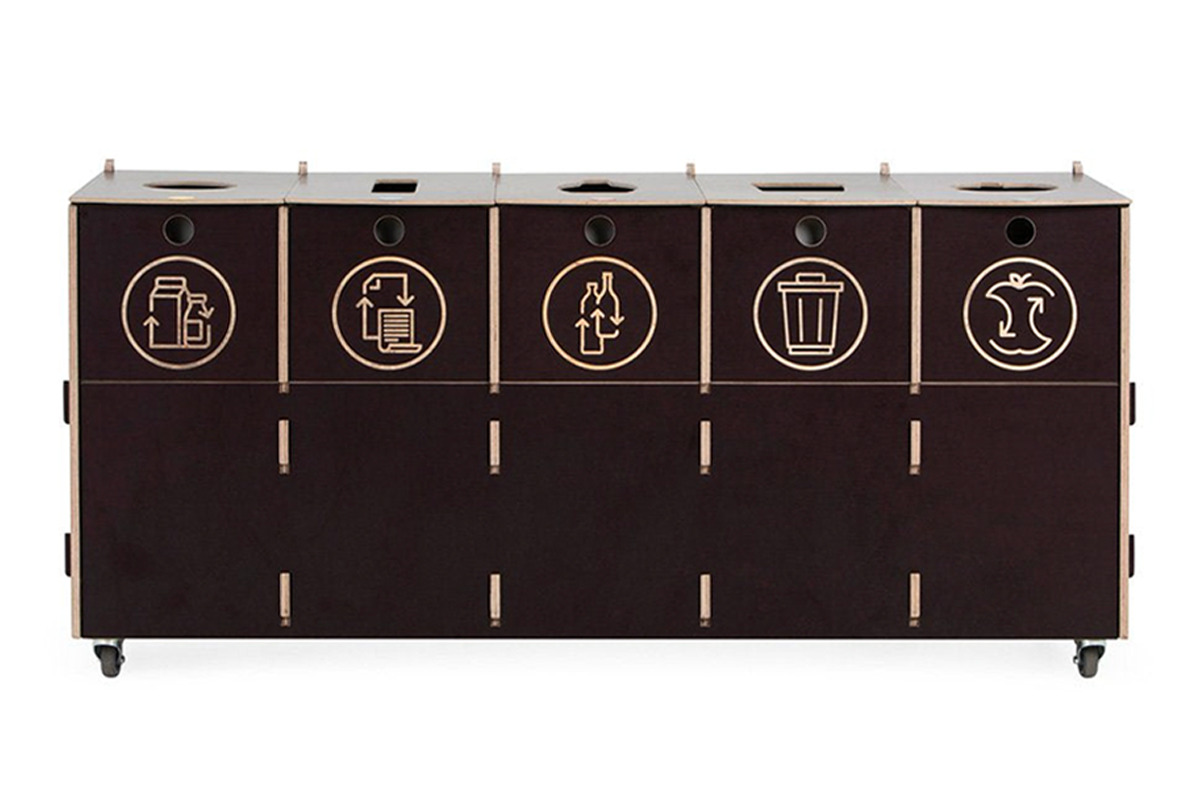
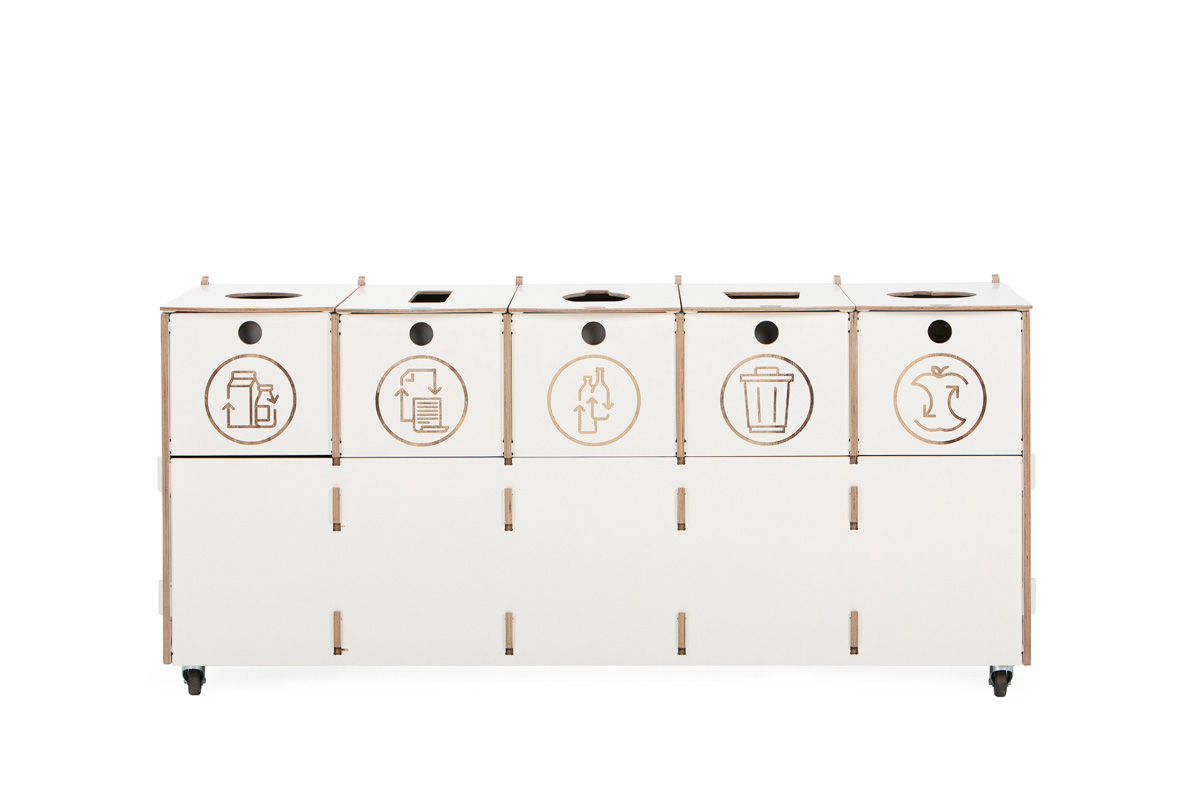
To meet these diverse regulatory needs, many organizations utilize modular recycling bins that can be configured for three to five separate waste streams within a single, space-efficient footprint.
Mandatory Sorting and Contamination Risks
To remain compliant and avoid potential penalties, you must ensure that waste streams remain uncontaminated. Mixing materials, such as throwing food scraps into paper bins, can cause an entire batch to be rejected by recovery facilities. This is often called the “Pizza Box” rule: just one greasy cardboard box can ruin a large batch of clean paper, leading to significant financial waste. Research shows that high contamination levels can increase disposal costs by up to 50% due to increased labor and processing fees.
The Impact of Source Separation
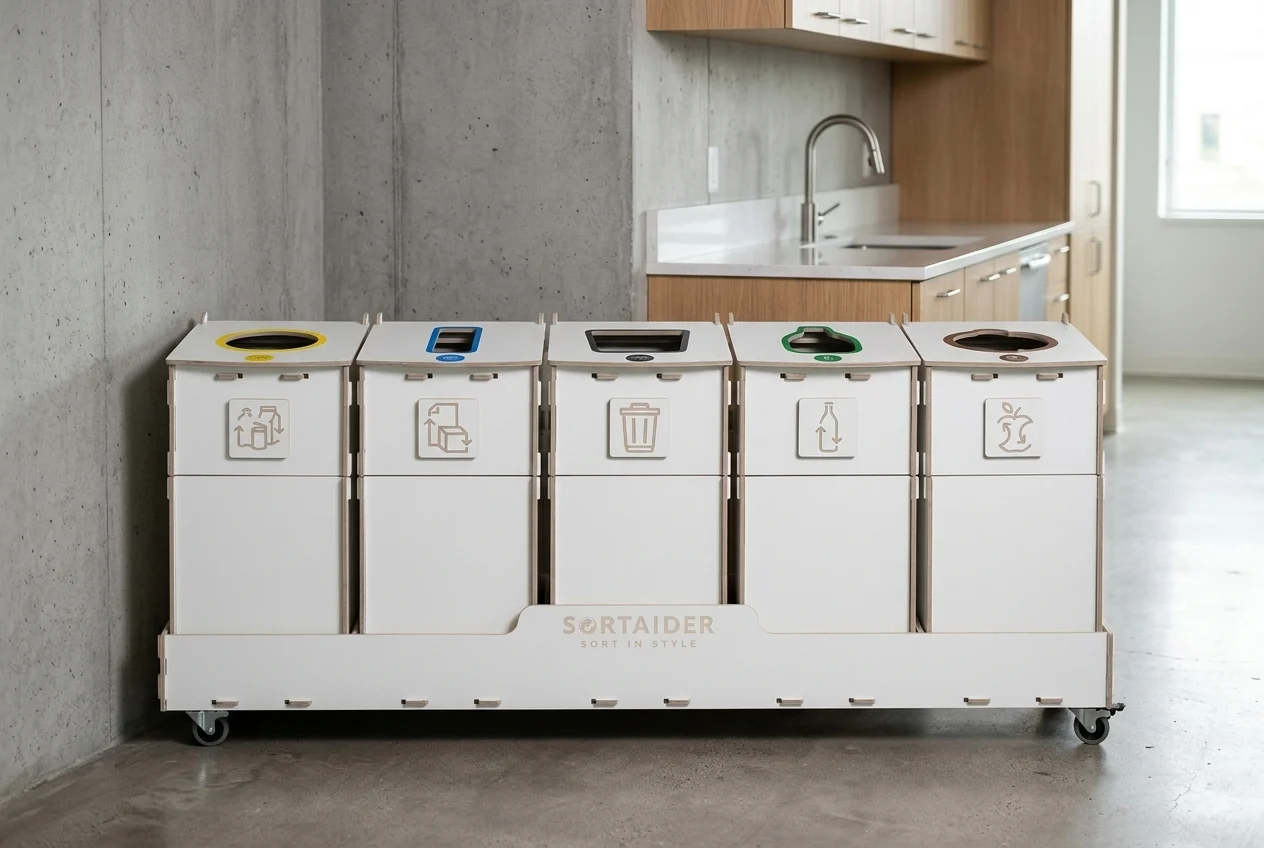
The most effective way to prevent these issues is through strict source separation. Instead of using individual deskside bins – which often encourage “wish-cycling” and high error rates – facility managers are transitioning toward centralized recycling bin sorters. These stations use clear pictograms and high-contrast color-coding to guide users intuitively. By replacing individual bins with these hubs, research suggests you can boost waste diversion rates by up to 40% while maintaining a cleaner professional environment.
Documentation: The Paper Trail of Compliance
Legal compliance is not only determined by how you sort waste but also by how you prove it. Most European jurisdictions now require a digital or physical paper trail to ensure materials are handled by licensed professionals.
- Waste Transfer Notes: Often referred to as consignment notes, these documents must be signed by both your business and a licensed waste carrier for every single collection to prove the waste was handled legally.
- Digital Registries: Real-time logging of waste activity is becoming the standard. Platforms like Lithuania’s APVIS allow regulators to monitor waste volumes and ensure hazardous materials do not enter general streams.
- Waste Audits: Periodic assessments are essential for identifying the specific volumes your office generates. Conducting a waste audit for offices allows you to right-size your collection services, which can reduce disposal fees by 30% to 50% by lowering collection frequency for general waste.
Sustainable Infrastructure for High-Traffic Areas
Compliance is significantly easier to maintain when the hardware is both durable and intuitive. For demanding, high-traffic environments like hospitals, airports, or large corporate hubs, the Ecolong series offers a unique 3-in-1 system. This allows managers to switch between continuous bag solutions, standard waste bags, or bag-free collection for paper within the same modular unit.
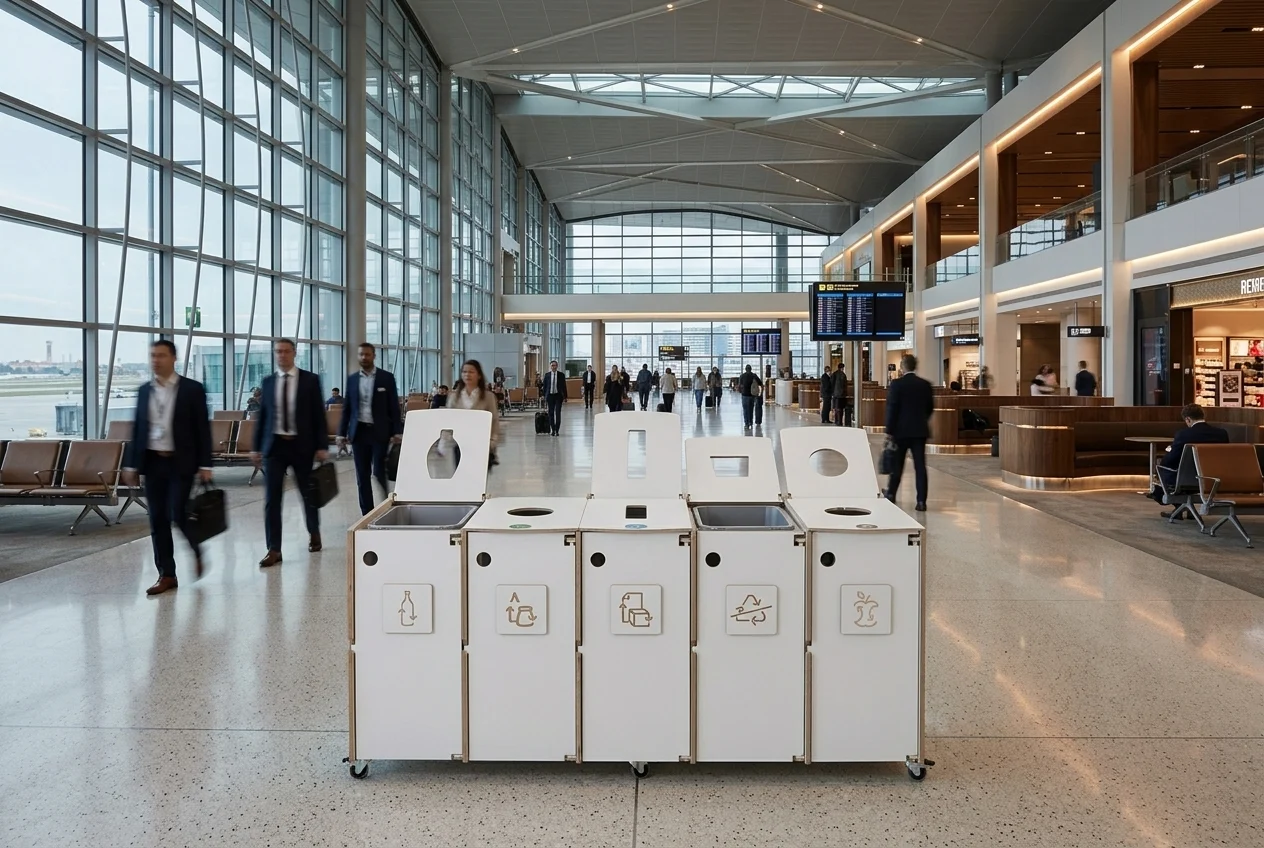
Beyond functionality, the materials you choose reflect your organization’s commitment to sustainability. Opting for furniture-grade solutions made from water-resistant birch plywood can lower your facility’s CO2 lifecycle emissions by 2 to 4 times compared to traditional plastic or metal bins. These modular units, such as the Red Dot Award-winning Container series, provide a professional aesthetic that blends into modern architectural spaces while meeting strict hygienic standards.
Strategic Implementation for Facility Success
To ensure your organization meets its legal obligations while hitting sustainability goals, you should focus on proximity and visibility. Strategic bin placement is the most significant driver of success in office waste management; research indicates that placing centralized hubs in high-visibility areas like kitchenettes, printer rooms, and main hallways boosts participation by 30% to 50%.
By integrating a well-designed sorting system into your facility’s layout, you transform a legal requirement into a visible statement of corporate responsibility. This approach not only ensures you avoid fines but also creates a more engaging environment for employees who value sustainable practices.
Audit your current waste streams today to identify gaps in your compliance and begin moving toward a more circular, cost-effective waste management strategy.