
How does a terminal handling millions of travelers maintain a high waste diversion rate? Managing complex airport waste streams requires more than just extra bins; it demands a strategic alignment of international regulations and passenger psychology to ensure operational success.
Navigating Diverse Airport Waste Streams
Airports are unique environments where municipal solid waste intersects with industrial and highly regulated biological streams. On average, deplaned waste accounts for approximately 20% of a terminal’s total solid waste, consisting of a mix of bottles, cans, paper, and food scraps. However, the true complexity lies in the categorization of these materials.
International catering waste is often regulated under strict biosecurity protocols, such as APHIS in the United States or specific veterinary controls in the European Union, to prevent the spread of foreign pests. This waste usually requires specialized handling, such as incineration or deep burial, and cannot be mixed with general terminal recycling. Meanwhile, concession and retail areas generate high volumes of organic waste and packaging that require robust multi-compartment recycling bins to prevent cross-contamination at the source. Maintenance hangars and gate operations further contribute to the mix with hazardous materials like oils, solvents, and batteries that fall under rigid regulatory frameworks.
Regulatory Landscape and Compliance
Facility managers must navigate a tiered regulatory environment where local laws often overlap with international mandates. While organizations like the FAA provide guidance on recycling and reuse plans, operational compliance often hinges on regional biosecurity laws. In Europe, waste management must align with the Circular Economy Action Plan, which pushes for higher recovery rates and mandatory bio-waste separation across all public transport hubs.
For international hubs, the primary challenge is maintaining a “regulated” path. To ensure compliance, you must establish secure, approved paths for deplaned waste from international flights. Failure to segregate this from domestic streams can lead to entire loads being rejected by recyclers or result in significant fines. These regulations make the choice of sorting infrastructure critical, as bins must facilitate clear separation while standing up to rigorous cleaning protocols.
Best Practices for Terminal Sorting Systems
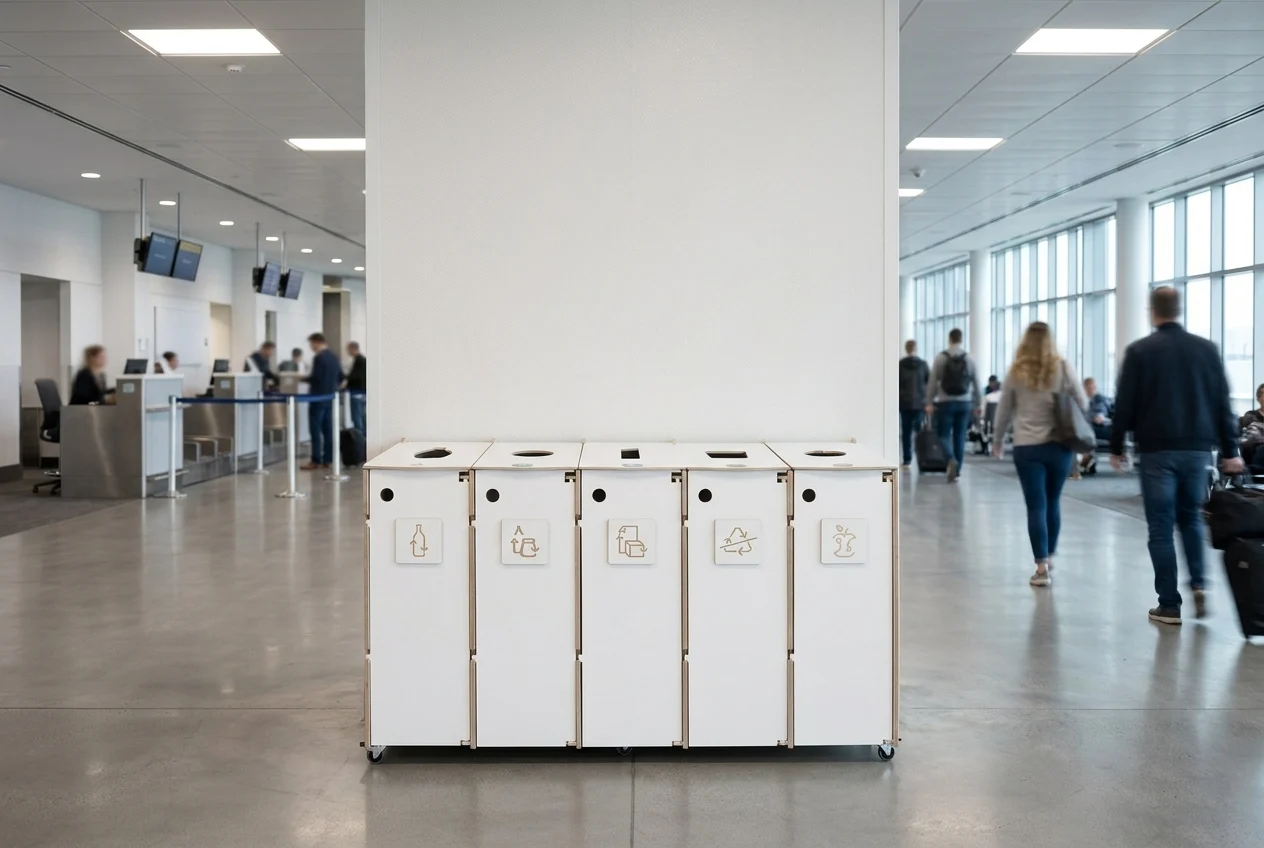
In high-traffic environments, passenger behavior is the most significant variable in your diversion rate. Strategic bin placement and intuitive design are critical for reducing contamination. A fundamental rule for facility managers is the 1:1 ratio: you should never place a waste bin without a corresponding recycling stream. Research indicates that when a passenger cannot find a recycling option within their immediate vicinity, they will default to the nearest bin regardless of its label.
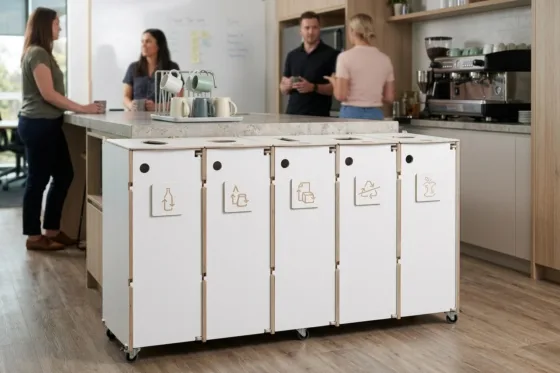
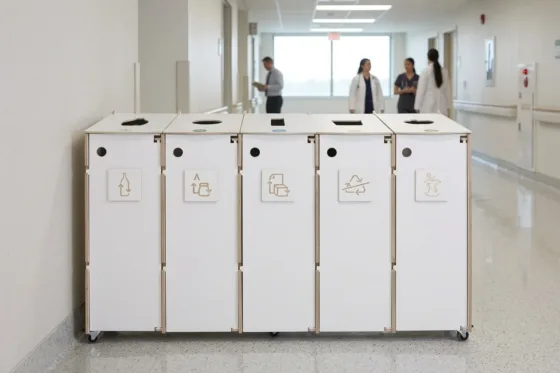
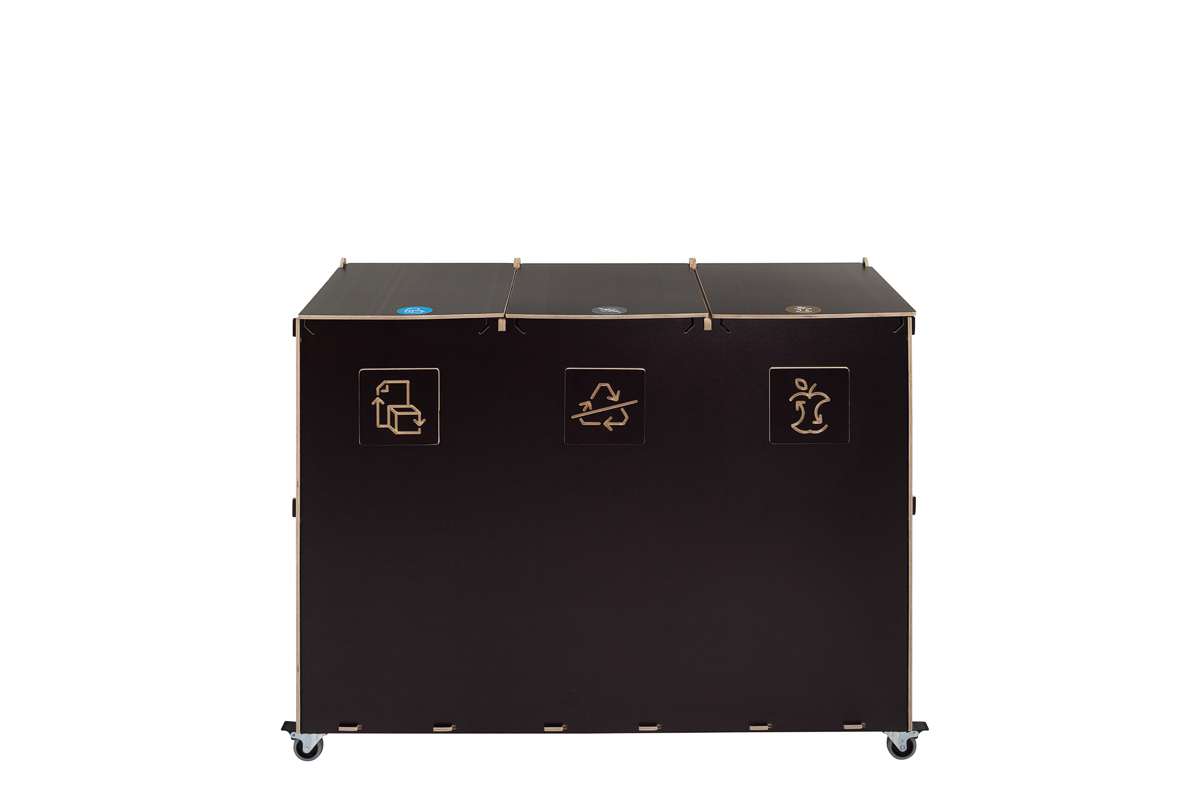
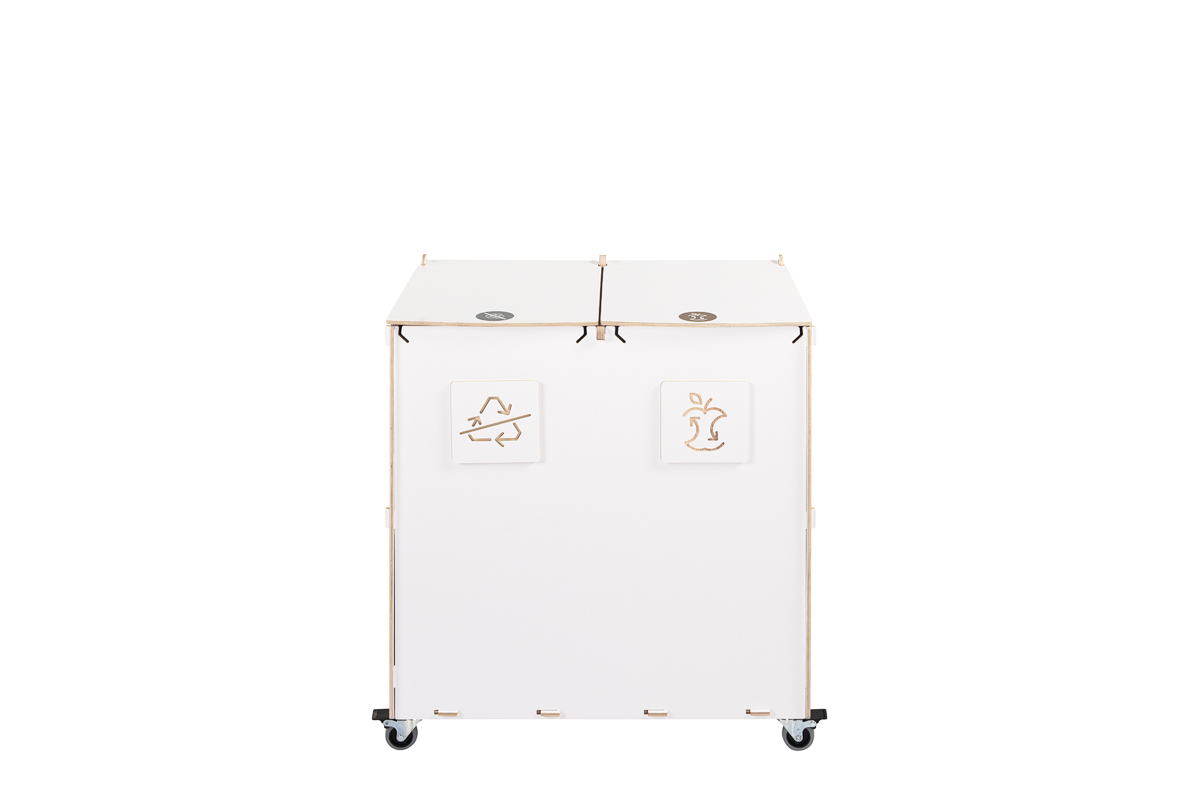
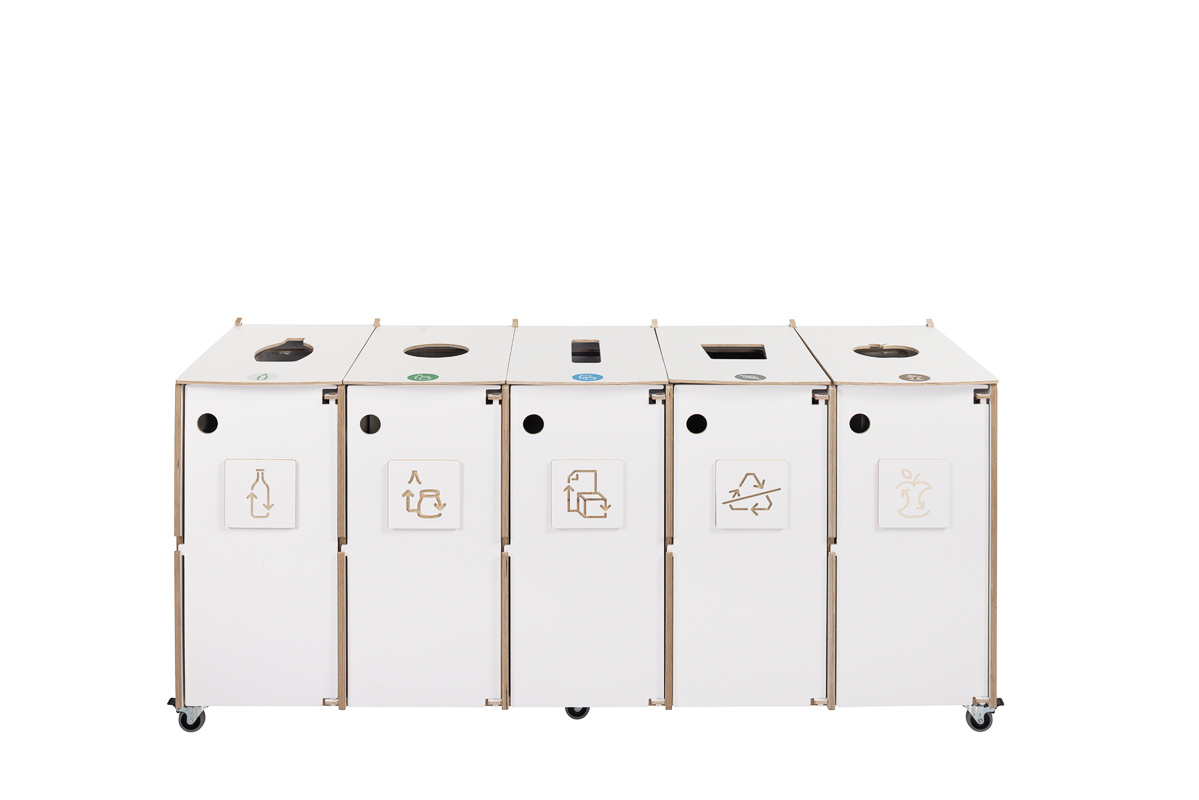
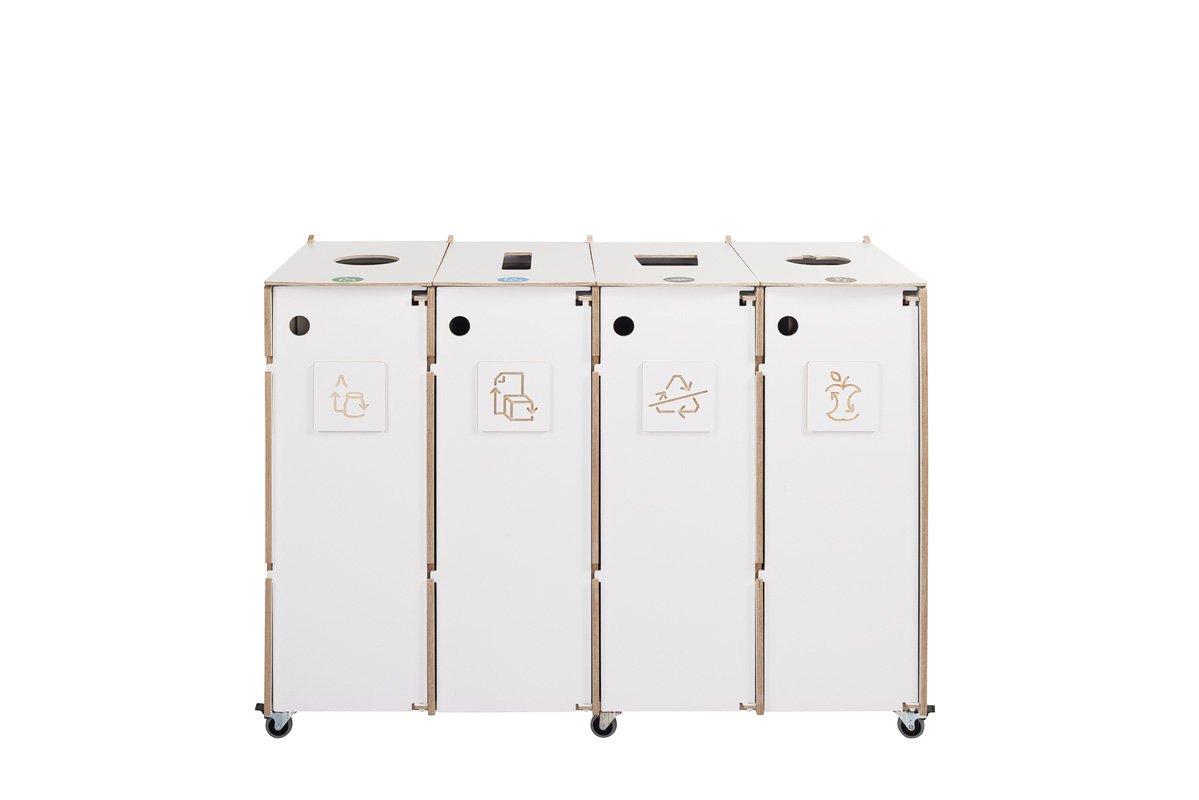
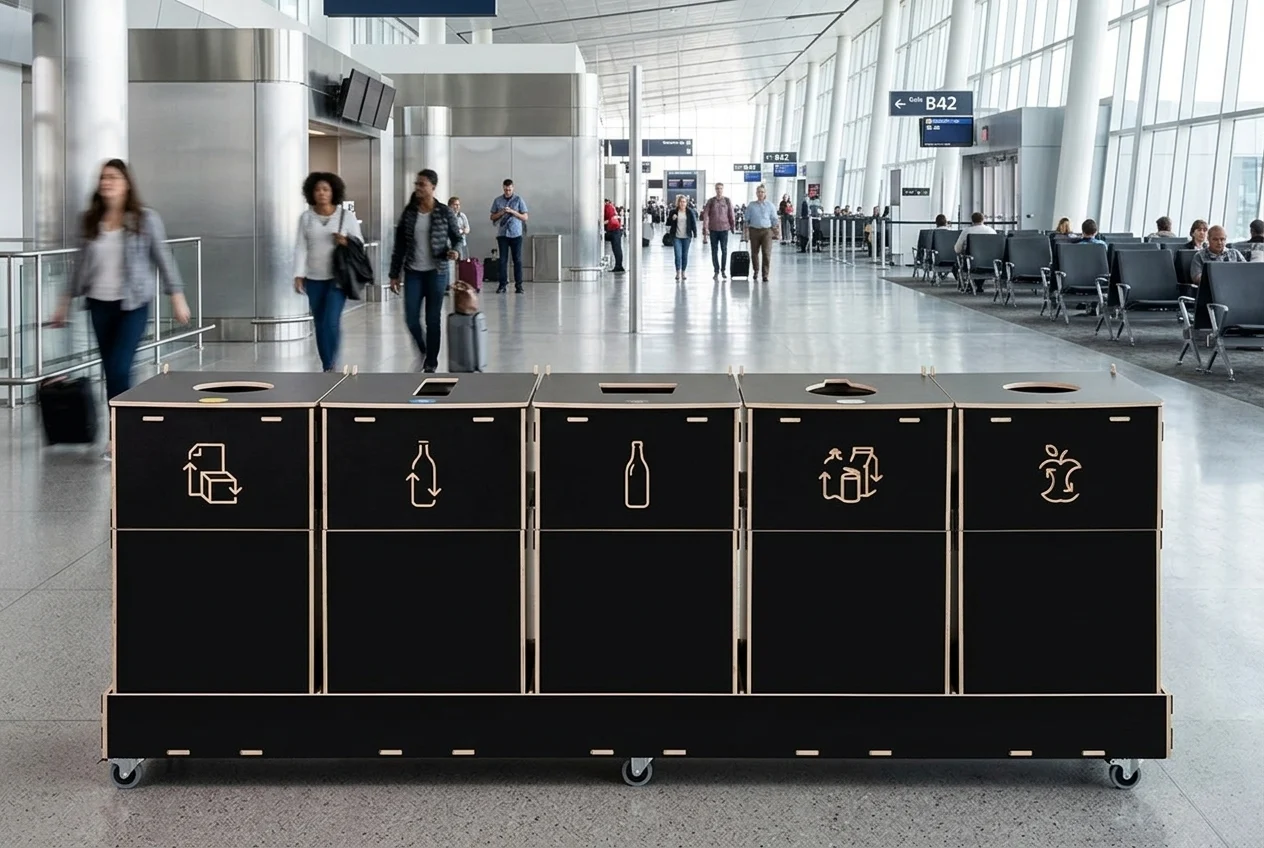
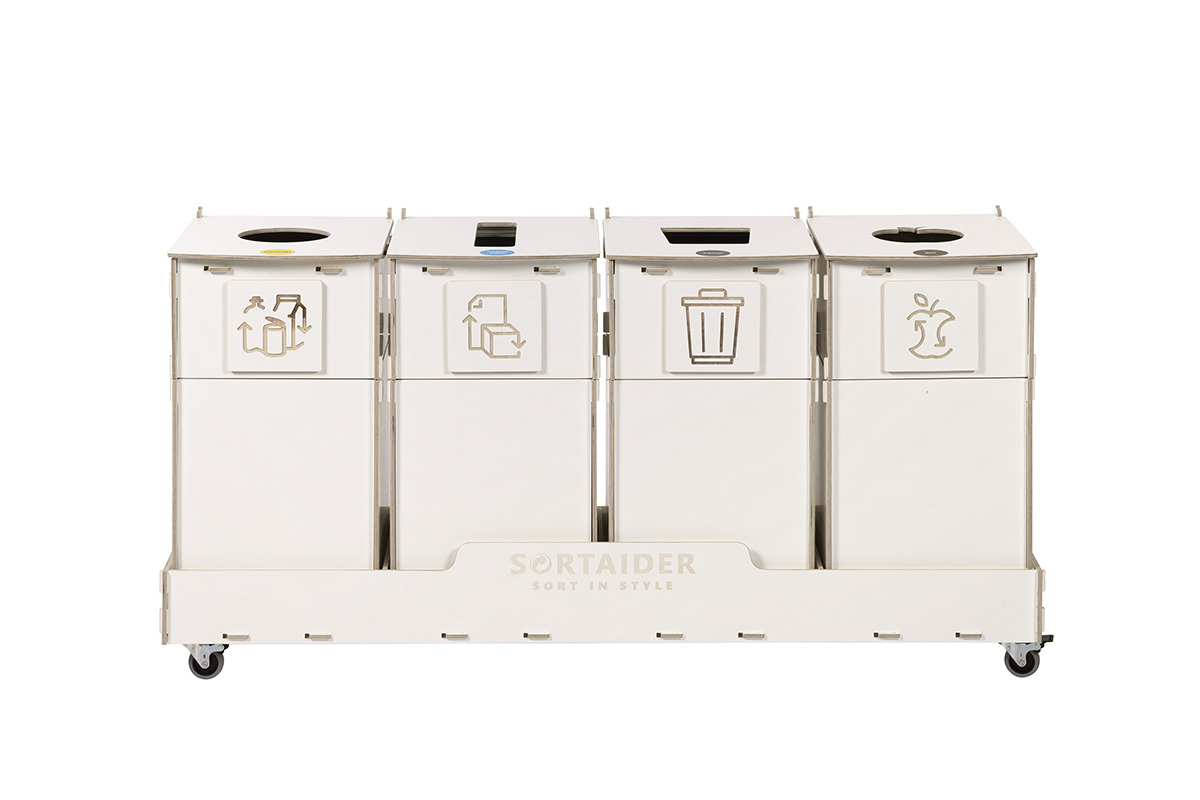
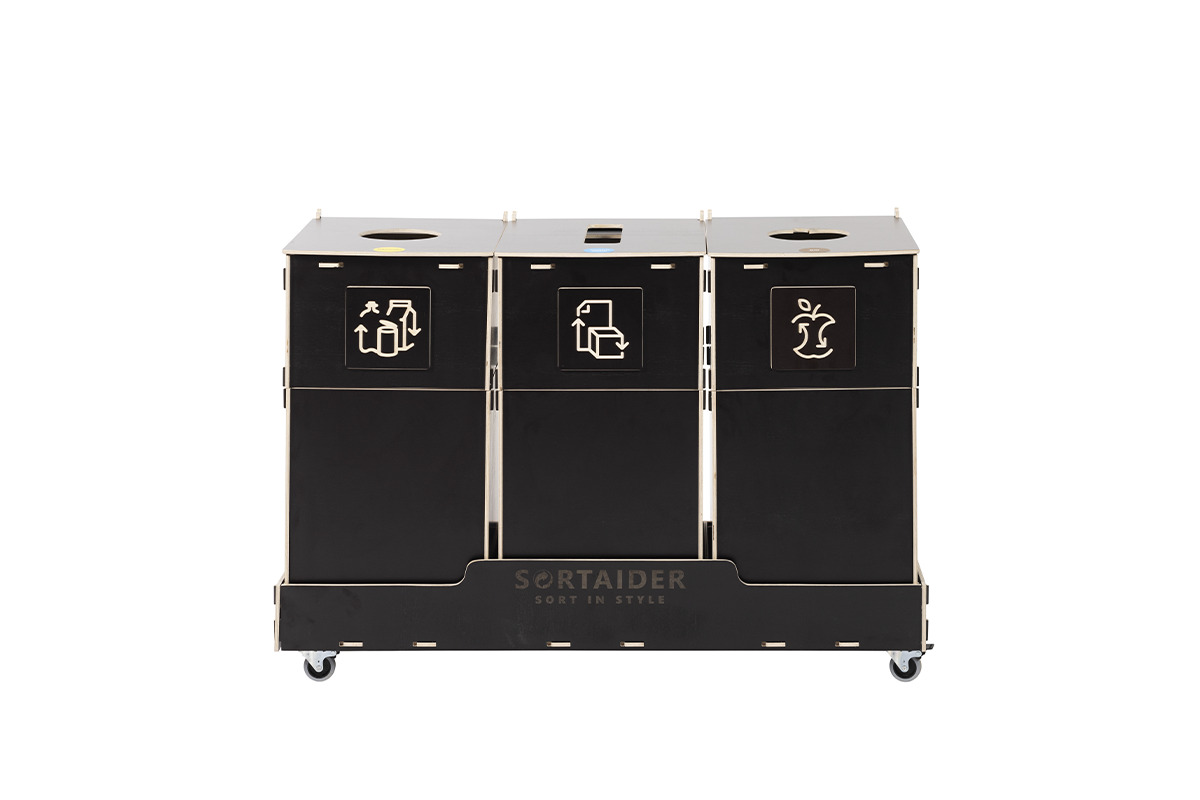
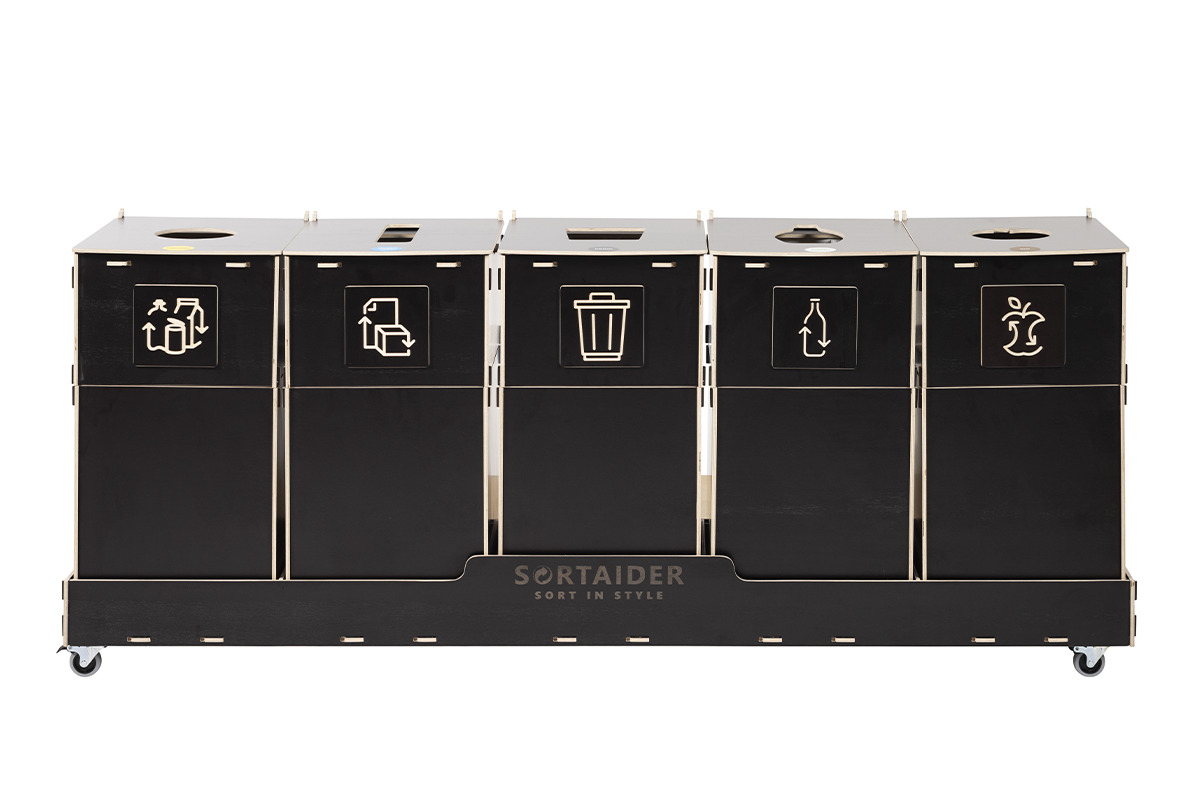
Standardized visual communication is equally important. Using consistent, multilingual icons and color-coding – typically green for organics, blue for paper or plastic, and black for landfill – creates a visual language that transcends the linguistic barriers found in international hubs. Modern infrastructure, such as the Sorta series, utilizes moisture-resistant plywood to provide a premium aesthetic that withstands heavy 24/7 usage while offering a significantly lower CO2 footprint than plastic or metal alternatives.
Operational Workflows: Front-of-House vs. Back-of-House
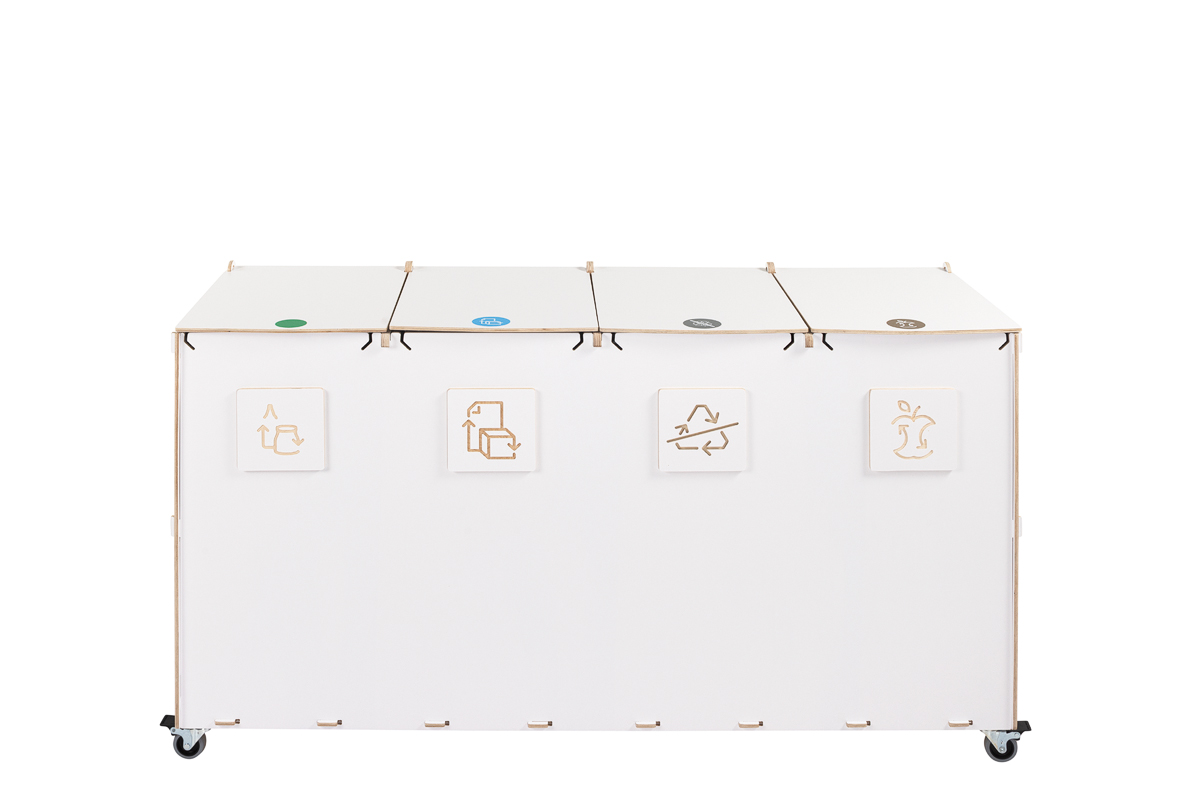
Operational efficiency is found in the separation of passenger-facing collection and tenant-led processing. For passenger-facing areas, you should focus on simplicity. Stations with clear apertures physically limit what can be inserted, such as slim slots for paper or round holes for bottles, which naturally guides the user toward the correct choice.
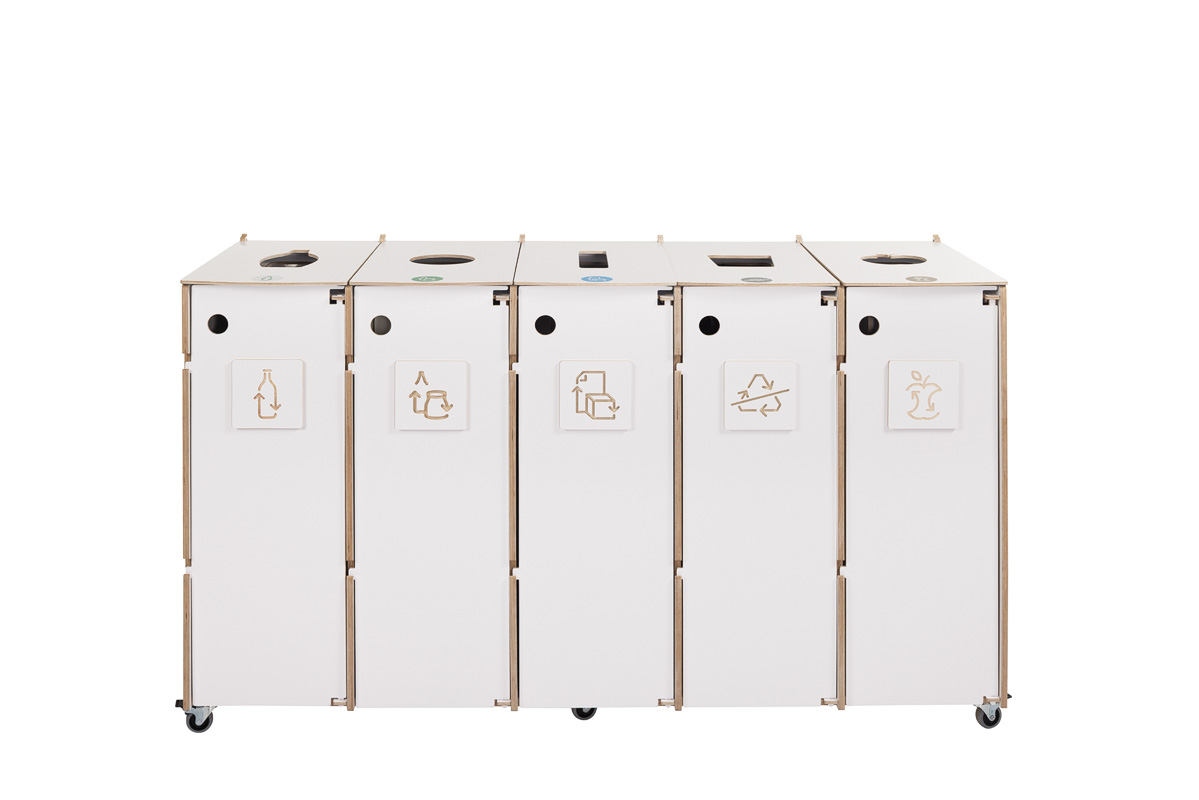
Back-of-house areas, particularly concessions, are where the highest volume of organics is generated. Implementing a “blue bag” or pre-sort system for kitchens allows tenants to divert food waste before it ever reaches the terminal floor. For facilities looking to maximize space in narrow corridors or gate areas, a high-capacity 5-stream unit provides a comprehensive sorting hub in a compact footprint, ensuring that even the most diverse waste streams are captured efficiently.
Monitoring and Data Tracking
Effective management relies on accurate measurement. Leading facilities like Austin-Bergstrom and San Diego International have achieved significant diversion increases by conducting regular waste characterization studies. By auditing what ends up in the landfill stream, you can identify which tenants or terminal zones require better signage or more frequent collection cycles.
Integrating modular waste sorting solutions allows your facility to scale its systems as passenger numbers grow. This flexibility ensures that the infrastructure remains a functional part of the terminal’s design rather than an operational bottleneck. Tracking weights and diversion rates helps demonstrate the ROI of high-quality sorting systems and keeps the facility aligned with evolving sustainability targets.
Successful airport waste management balances the rigid requirements of international law with the fluid movement of thousands of people. By implementing durable, well-labeled, and strategically placed sorting stations, you can significantly improve diversion rates while maintaining the high aesthetic standards expected of modern transport hubs. To explore how modular, Nordic-designed sorting systems can be tailored to your terminal’s specific traffic patterns and sustainability goals, browse our full range of professional waste bins.